Mumbai: The Dharavi Redevelopment Project (DRP) will prioritise the rejuvenation of the Mithi River as the central spine of a new green-blue network designed to improve environmental quality and public spaces across Dharavi, officials said.
Riverfront, parks and tree canopy form a continuous network
The redevelopment masterplan links a restored riverfront with parks, treelined corridors and public open spaces to create a continuous natural network through one of the city’s most densely populated neighbourhoods. The scheme aims to improve air quality, reduce surface temperatures, enhance biodiversity and expand residents’ access to green public areas.
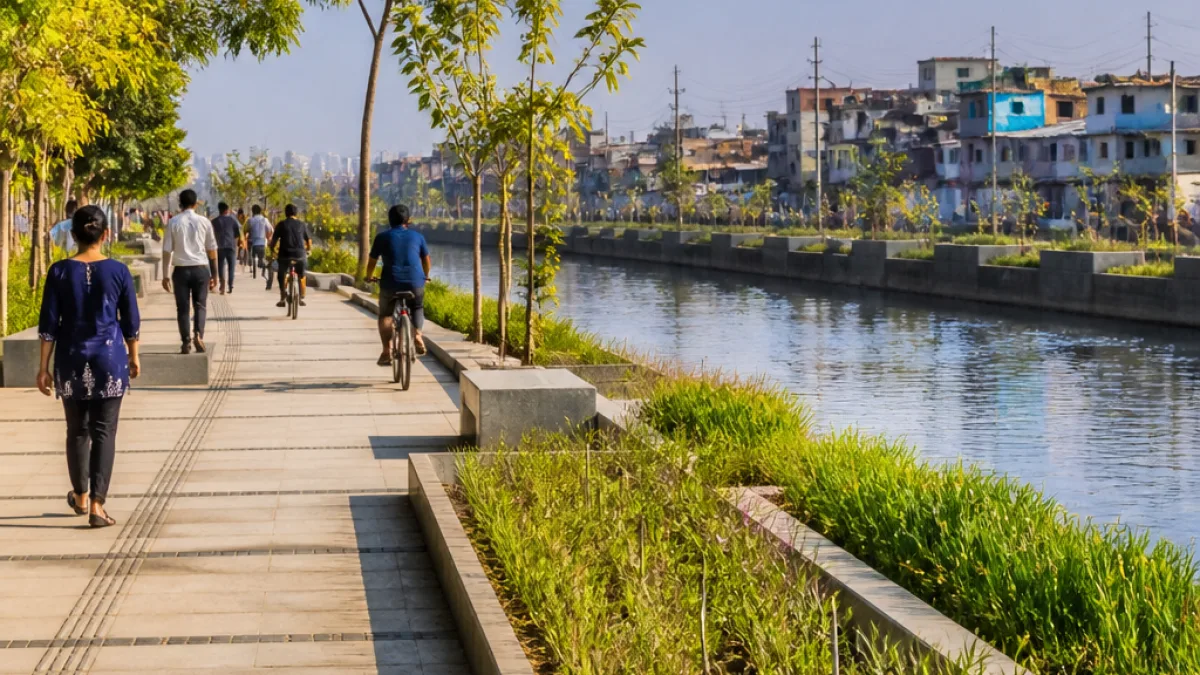
A prominent element of the plan is a 3.3-kilometre public promenade along the rejuvenated Mithi River, stretching from the Matunga culvert to the riverfront. The promenade, which will be open to all Mumbaikars, is planned to include viewing decks, cafes and cultural spaces while seeking to protect and strengthen the river’s ecological character, the developer said in a press release.
"The riverfront will be lined with native trees and pollution-absorbing vegetation. Permeable paving and bioswales have also been planned to improve stormwater management, increase groundwater recharge and support the long-term health of the river ecosystem," an Adani Navbharat Developers Private Limited (ANDPL) official said.
Trees, compensatory planting and stormwater measures
Officials told the Tree Authority that approximately 40,000 trees will be rejuvenated and planted within Dharavi in phases. In addition, nearly two lakh compensatory trees will be planted across the Mumbai Metropolitan Region (MMR) as part of the project’s mitigation measures.
The riverfront and connected green spaces will rely on native planting and pollution-absorbing vegetation. Permeable paving and bioswales have been included in the designs to help manage stormwater, increase groundwater recharge and support the river ecosystem’s long-term health, the developer said.
Green Spine, Central Park and neighbourhood amenities
The riverfront will integrate with a broader network of green spaces proposed in the DRP, including a 15-metre-wide Green Spine dedicated for pedestrians and cyclists, a large Central Park and multiple neighbourhood parks distributed across Dharavi. The project document states these green spaces are planned as one connected system to improve air circulation and reduce the urban heat island effect.
- Public promenade: 3.3 km from Matunga culvert to Mithi riverfront
- Tree interventions: ~40,000 trees rejuvenated/planted within Dharavi; ~2,00,000 compensatory trees across MMR
- Green Spine: 15-metre-wide corridor for pedestrians and cyclists
| Feature | Planned extent / number |
|---|---|
| Public promenade along Mithi | 3.3 km |
| Trees to be rejuvenated/planted in Dharavi | ~40,000 |
| Compensatory trees across MMR | ~2,00,000 |
| Green Spine width | 15 metres |
Public access and ecological safeguards
The promenade is described as a publicly accessible space that will include amenities such as viewing platforms, cafes and cultural zones while preserving ecological character. Native species and pollution-absorbing vegetation will form the primary planting palette, according to the developer.
Design elements intended to strengthen ecological function include permeable surfacing to reduce runoff, bioswales to filter pollutants and features to promote groundwater recharge. Together with the linked parks and corridors, these interventions are expected to bolster biodiversity and improve microclimate conditions across Dharavi.
Implications for Mumbai’s dense urban fabric
Dharavi is one of Mumbai’s most densely populated localities. The masterplan’s emphasis on a connected green network and a riverfront promenade seeks to expand public open space in an area with scarce recreational land. If implemented as proposed, the interventions could provide residents with improved access to greenery, cooler neighbourhood temperatures and enhanced public amenities.
The developer presented the plan as part of the ongoing redevelopment process. Further project phases, timelines for planting and construction, and detailed environmental clearances were not specified in the press material released on August 3, 2026.
The initiative aligns with broader urban trends in Mumbai that prioritise riverfront restoration, stormwater management and urban greening as tools to address heat stress, flooding and limited public space in high-density areas.