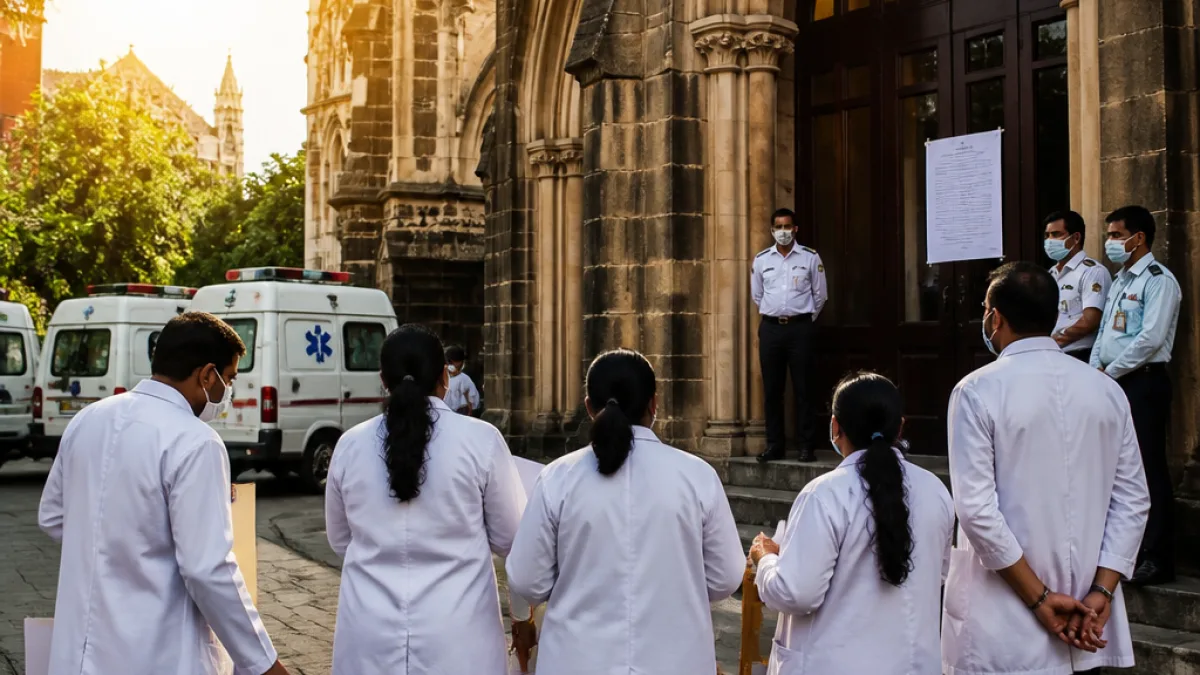
Mumbai: The Bombay High Court on Thursday ordered resident doctors across the state to immediately call off their strike against the proposed registration of homeopaths under the Maharashtra Medical Council, saying patient welfare could not be jeopardised by protests.
Bench warns of stopping wages if strike continues
A bench comprising Acting Chief Justice Ravindra Ghuge and Justice Gautam Ankhad took suo motu cognisance of the work stoppage, expressing alarm at the likely impact on patients in civic hospitals and other government health facilities. The court warned the protesting doctors that it would consider withholding wages if they failed to resume duties immediately.
Representatives present in court, including senior counsel for the Indian Medical Association, S U Kamdar, and Dr Atharva Shinde, president of the Maharashtra Association of Resident Doctors (MARD), assured the bench the strike would be called off.
"We are worried about the health of the thousands of patients and also the residents of Maharashtra," the bench observed, questioning the moral consequences of a strike that could cost lives.
Court appoints amicus to frame directions
The bench appointed senior counsel Vineet Naik and advocate Amogh Singh as amicus curiae to assist the court. The pair were asked to prepare a petition so that the judiciary could consider issuing directions aimed at preventing similar strikes by doctors in future.
The court emphasised its reluctance to see any life lost in civic-run hospitals during the period of industrial action and posted the matter for further hearing on 8 September.
Immediate response from doctors' body
Following the court's intervention and its pointed remarks about the potential consequences of the strike, MARD conveyed that its members would call off the protest and return to duties. The legal team and MARD leadership also signalled readiness to engage through the process initiated by the amicus curiae.
Context and stakes
The work stoppage was mounted by resident doctors protesting the proposed registration of homeopaths under the Maharashtra Medical Council. While the High Court recognised the right to agitate, it drew a firm distinction between lawful protest and action that endangers patients.
During the hearing the bench underlined the unique societal role of medical professionals: unlike economic or legal strikes where losses may be monetary or limited to delayed services, an interruption in medical care can have irreversible consequences for patients.
- Who intervened: Bombay High Court bench — Acting Chief Justice Ravindra Ghuge and Justice Gautam Ankhad.
- Parties assuring compliance: Indian Medical Association counsel S U Kamdar and MARD president Dr Atharva Shinde.
- Amicus appointed: Vineet Naik and Amogh Singh to draft a petition for directions.
Practical implications for hospitals and patients
The court's order requires resident doctors to resume clinical services immediately. Hospital administrations in municipal and state-run institutions will need to monitor staff attendance, reassign duties where necessary and communicate any temporary disruptions to patients and relatives.
Health administrators may also have to prepare contingency measures for vulnerable departments such as emergency, intensive care and labour wards, where the absence of resident doctors could create acute risks.
| Issue | Immediate effect |
|---|---|
| Strike by resident doctors | Disruption of services in hospitals across Maharashtra |
| HC order | Directed resumption of work; warned of wage stoppage; matter posted to Sept 8 |
| Next step | Amicus to prepare petition for directions to prevent future strikes |
What to watch next
The case will return to the Bombay High Court on 8 September when the amicus-curiae petition and any additional submissions from the parties will be considered. The hearing could set a legal precedent on the limits of industrial action by medical personnel and the remedies available to courts when patient safety is at risk.
For now, the immediate priority remains restoration of clinical services in hospitals and assurance that no patient care will be compromised by further protests until the legal process unfolds.