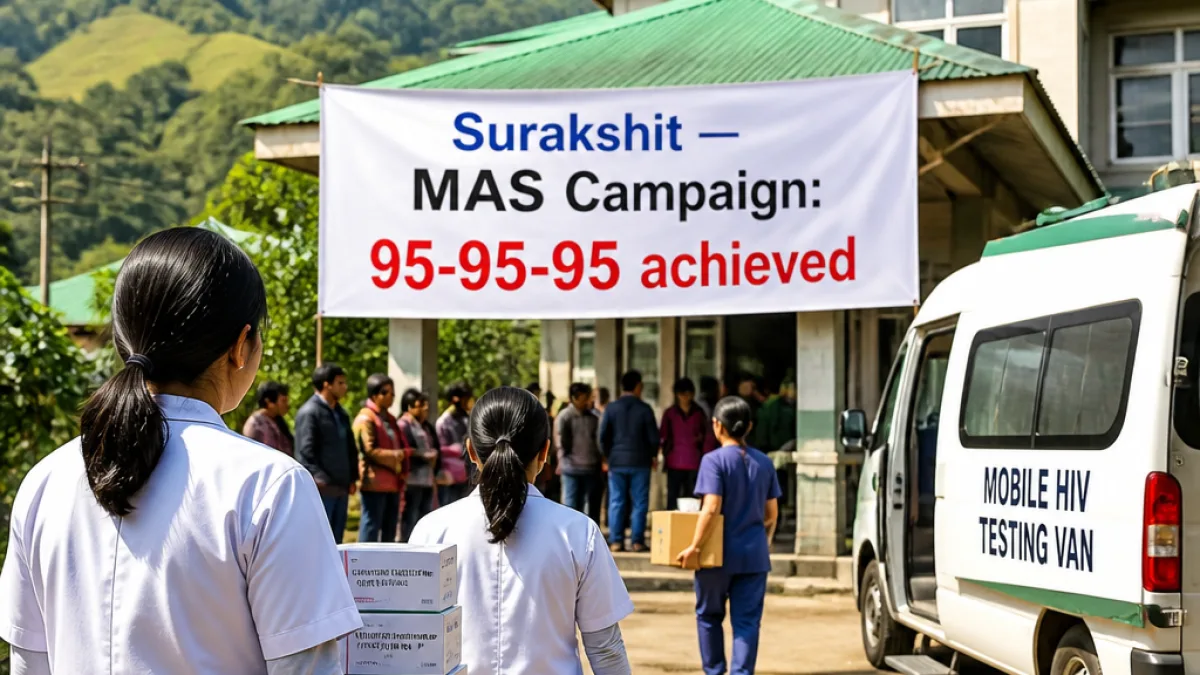
Saitual district in northeastern Mizoram has become the first and only district in the state to be classified as ’Surakshit’ under the National AIDS Control Organisation’s (NACO) Mobilisation AIDS Suraksha (MAS) campaign, officials said. The designation follows the district meeting the three UNAIDS-aligned 95-95-95 targets for HIV diagnosis, treatment and viral suppression.
What the designation signifies
Under the MAS campaign, district performance is measured against the global 95-95-95 framework. A district attains Surakshit status on achieving all three targets, which together indicate strong performance across the HIV care continuum:
- 95% of people estimated to be living with HIV know their status;
- 95% of those diagnosed receive antiretroviral therapy (ART); and
- 95% of those on ART achieve viral load suppression.
The MAS campaign classifies districts into four categories: Sangharshee (no targets met), Saksham (two targets met), Surakshit (all three targets met) and Surakshit+ (all three targets met plus zero mother-to-child transmission).
Local context and implications
Saitual, which shares a border with Manipur, has reached a milestone in the state's effort to strengthen HIV testing, linkage to care and viral suppression. Attaining Surakshit status demonstrates that district health services have improved case finding, retained patients on treatment and achieved control of viral replication among those on ART.
Public health experts consider the achievement significant because the three targets address distinct but connected stages of care: identifying people living with HIV, ensuring they start ART and supporting adherence so that viral load is suppressed. Together these steps reduce illness, prevent drug resistance and lower onward transmission.
Next steps and challenges
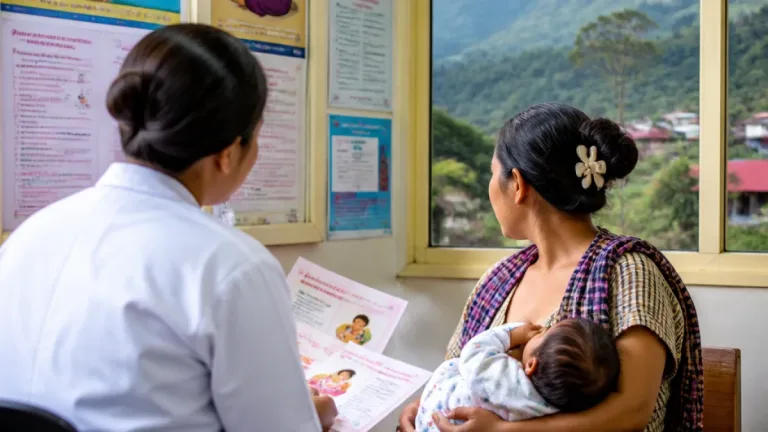
While the designation recognises progress, the district remains one step short of Surakshit+, which additionally requires elimination of mother-to-child transmission. Progress toward that highest tier will require focused maternal and child health interventions, consistent antenatal screening, timely initiation of ART for pregnant women and robust follow-up for infants.
Public health officials and programme managers will also need to maintain high levels of testing, adherence support and viral load monitoring to sustain gains. Continuity of ART supply, trained staff at primary and secondary health facilities, and community mobilisation are essential components to avoid backsliding.
How the targets are tracked
NACO and the MAS campaign monitor district performance through programme data on testing coverage, ART initiation and viral load outcomes. The following table summarises the three targets that Saitual has achieved:
| Target | Goal | District status |
|---|---|---|
| Diagnosis | 95% know their HIV status | Achieved |
| Treatment | 95% of diagnosed on ART | Achieved |
| Viral suppression | 95% of treated achieve suppression | Achieved |
Public information and services
Residents of Saitual and surrounding areas seeking HIV services can approach government primary health centres, district hospitals and designated testing and ART centres. NACO guidelines recommend regular HIV testing for those at risk, immediate linkage to ART for those who test positive and periodic viral load monitoring to assess treatment response.
Community-based organisations and peer support groups play a supporting role in adherence counselling and stigma reduction—factors that affect individuals’ willingness to seek testing and remain in care. Sustained collaboration between health authorities and civil society will be important to maintain the district’s achievements.
State-level perspective
Saitual’s recognition as Surakshit places it ahead of other districts in Mizoram on the MAS performance scale. State health authorities may use the district’s strategies as a model for replication elsewhere in Mizoram, particularly in strengthening testing outreach, ensuring uninterrupted ART supply and scaling up viral load testing.
The milestone will be watched in policy circles as efforts continue to move districts towards the higher Surakshit+ classification and ultimately to broader epidemic control.
Reporting from the hills.