The Maharashtra government has constituted a high‑level expert committee to assess the impact of the proposed Pune–Nashik semi‑high‑speed railway on the Giant Metrewave Radio Telescope (GMRT) at Khodad, officials said. The move seeks to reconcile the state’s drive for improved intercity connectivity with measures to preserve the observatory’s radio‑quiet environment.
Panel leadership, mandate and timeline
The committee will be chaired by former Atomic Energy Commission chairman Anil Kakodkar and includes senior officials such as Vivek Gupta, Member (Infrastructure), Railway Board, along with the Divisional Commissioners of Pune and Nashik. The Government Resolution (GR) issued by the Transport Department gives the panel authority to co‑opt additional experts in radio astronomy, railway engineering, electromagnetics and environmental science.
"The committee will evaluate alignment options while safeguarding the observatory’s radio‑quiet environment," the Government Resolution said.
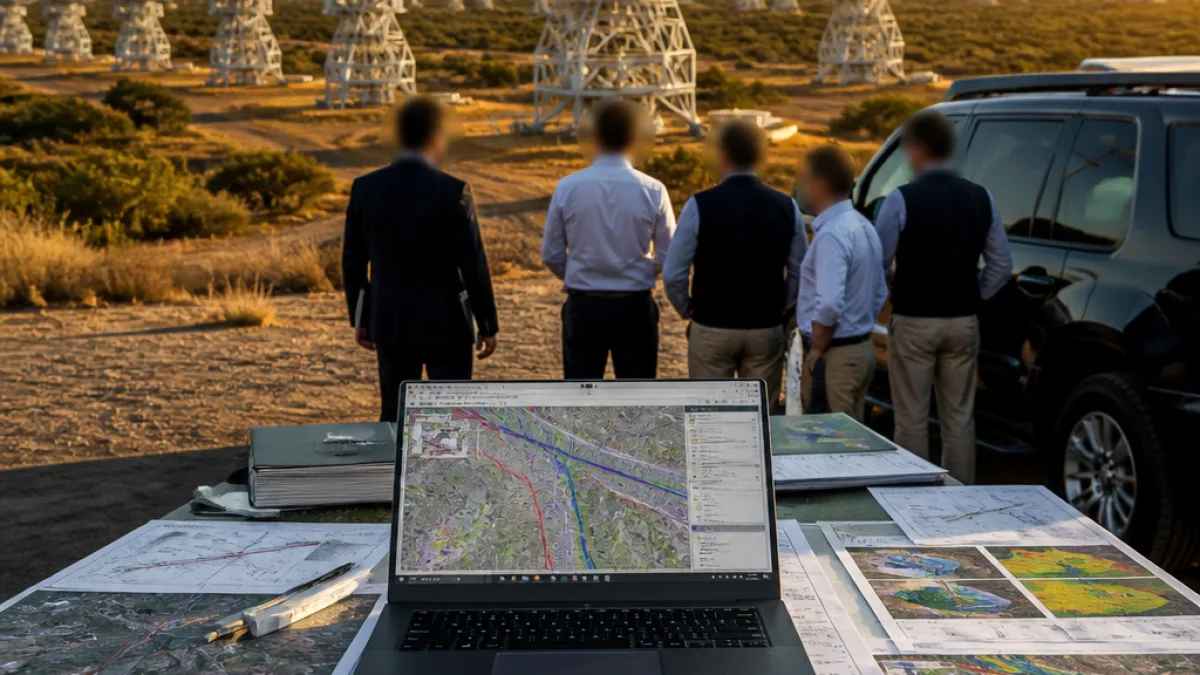
The GR directs the committee to conduct a comprehensive assessment of the electromagnetic, structural and operational impact of both the original and any revised alignments. It will also examine alternative alignment options, including tunnelling and elevated track solutions, where appropriate.
Why the study matters to Nashik residents
The proposed corridor aims to substantially shorten travel time between Pune and Nashik, improving passenger movement, freight logistics and regional economic links. However, the initial alignment ran close to the GMRT site at Khodad in Pune district, raising concerns from the Department of Atomic Energy (DAE), the Department of Science and Technology (DST) and scientific institutions about possible electromagnetic interference that could hamper sensitive astronomical observations.
- Connectivity gains: Faster rail link between Pune and Nashik could spur business, tourism and commuter travel.
- Scientific sensitivity: GMRT is a major international radio astronomy facility; its operations require a protected radio‑quiet zone.
- Technical trade‑offs: Options such as tunnelling or elevated tracks increase project cost and engineering complexity but may reduce interference.
Deliverables and next steps
The committee has been asked to submit its recommendations within 60 days. The GR empowers the panel to assess electromagnetic interference, structural impacts and operational risks stemming from both the original alignment and any feasible alternatives. The inclusion of divisional administration from Nashik indicates active local engagement in arriving at a solution acceptable to both infrastructure planners and the scientific community.
| Aspect | Detail |
|---|---|
| Chair | Anil Kakodkar |
| Members (key) | Vivek Gupta (Railway Board), Divisional Commissioners of Pune and Nashik |
| Mandate | Assess impact on GMRT; examine alternative alignments, tunnelling and elevated tracks; study electromagnetic, structural and operational risks |
| Timeline | 60 days |
Local administrators in Nashik will be expected to coordinate data, land and environmental inputs for the study. The committee’s authority to bring in domain specialists means that detailed electromagnetic surveys and engineering studies could follow if initial findings indicate significant risk to GMRT operations.
Balancing regional development with protection of scientific infrastructure will be central to the committee’s deliberations. Any alignment changes recommended by the panel could affect project cost, schedule and land acquisition plans for the Pune–Nashik corridor, with direct consequences for commuters and stakeholders in Nashik and surrounding districts.
The GR formalising the committee follows directions from Chief Minister Devendra Fadnavis to ensure infrastructure expansion does not compromise one of the world’s leading radio astronomy observatories, the statement noted.