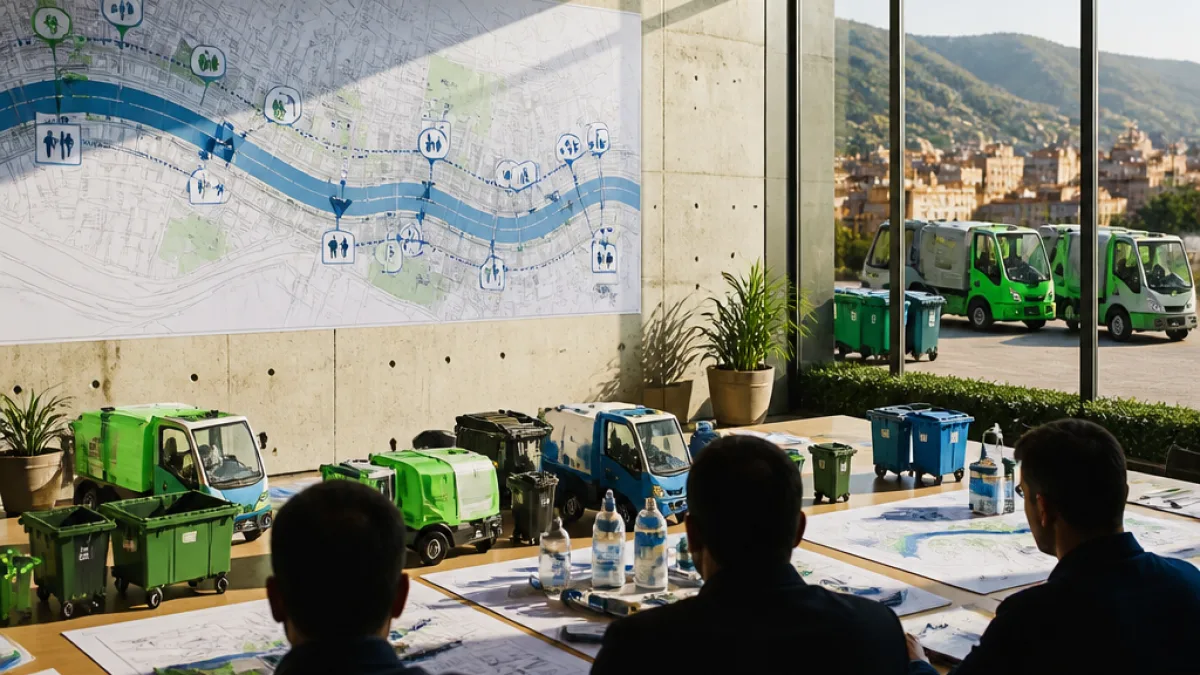
Technical panel recommends science-led sanitation, waste management for Kumbh 2027
The Technical Advisory Committee of the Nashik‑Trimbakeshwar Kumbh Mela Authority (NTKMA) has submitted a comprehensive roadmap for sanitation, solid‑waste management and related facilities aimed at ensuring a clean and pilgrim‑friendly Simhastha Kumbh Mela 2027, reported thenewsmill.com. The recommendations were finalised at a meeting convened at the NTKMA headquarters on January 31, 2026, chaired by NTKMA Commissioner Shekhar Singh.
Officials and domain experts who attended included Additional Commissioner Kamlakar Randive, Chief Officer Amol Chaudhari, and representatives from UNICEF (Anand Ghodke), the WASH Institute (Rajesh Pai), IIT Bombay (Dr. Pradip Kalbar) and the World Bank (J.V.R. Murthy), according to the report.
Key recommendations to guide infrastructure and operations
The committee stressed that infrastructure planning should be determined by the number of required toilet seats and advised a host of practical measures to manage sanitation for the expected influx of pilgrims. Major technical and operational suggestions included:
- Deployment of adequate toilet facilities along ghats and major congregation points, based on projected demand.
- Increased provision of urinals during monsoon months to reduce overuse of toilet blocks.
- Appointment of separate male and female sanitation staff to manage and maintain facilities.
- Installation of sufficient handwashing stations and provision of menstrual hygiene management (MHM) measures for women and girls.
- Grey‑water management using soak pits or connection to existing sewer networks where feasible.
- Designation of dedicated water filling points to support sanitation operations and personal needs of pilgrims.
- Engagement of Self‑Help Groups (SHGs) for door‑to‑door and dustbin collection to boost community participation.
- Adoption of electric vehicles for sanitation activities as an environmentally sustainable alternative to diesel and petrol units.
- Comprehensive training and capacity‑building programmes for sanitation workers and vendors to be completed before the festival begins.
"The committee emphasised scientific sanitation planning and advised that infrastructure be based on the required number of toilet seats,"
Water access and accessibility measures highlighted
The panel specifically proposed the provision of drinking water facilities at regular intervals along major approach roads to the Kumbh zone. The recommended spacing for water points is approximately three to five kilometres, the report stated. Such provisions are intended to support sanitation operations and meet basic needs of pilgrims arriving on foot, by road or rail.
Environmental and community measures
To reduce the carbon footprint of event operations, the committee favoured electric vehicles for collection and transportation of waste, together with an emphasis on source segregation and community‑level engagement. The involvement of SHGs for waste collection was recommended to improve responsiveness and local employment.
| Area | Recommendation |
|---|---|
| Toilets | Deploy adequate seats at ghats; separate male/female staff for maintenance |
| Water | Drinking points at ~3–5 km intervals on approach roads |
| Waste Transport | Use electric vehicles instead of diesel/petrol |
Next steps and local implications
The NTKMA recommendations provide a technical framework for municipal and festival planners to finalise procurement, site preparation and human‑resource training ahead of the 2027 event. If implemented, the measures will require coordination between civic bodies, state government departments, community organisations and international technical partners already represented on the committee.
For Nashik residents, the plan signals an increased focus on public‑health safeguards, improved waste handling and greater reliance on community groups for on‑ground operations during the Kumbh period. Authorities will need to translate the advisory into detailed schedules, budgets and monitoring mechanisms to ensure the large‑scale event proceeds with minimal disruption and public‑health risk.