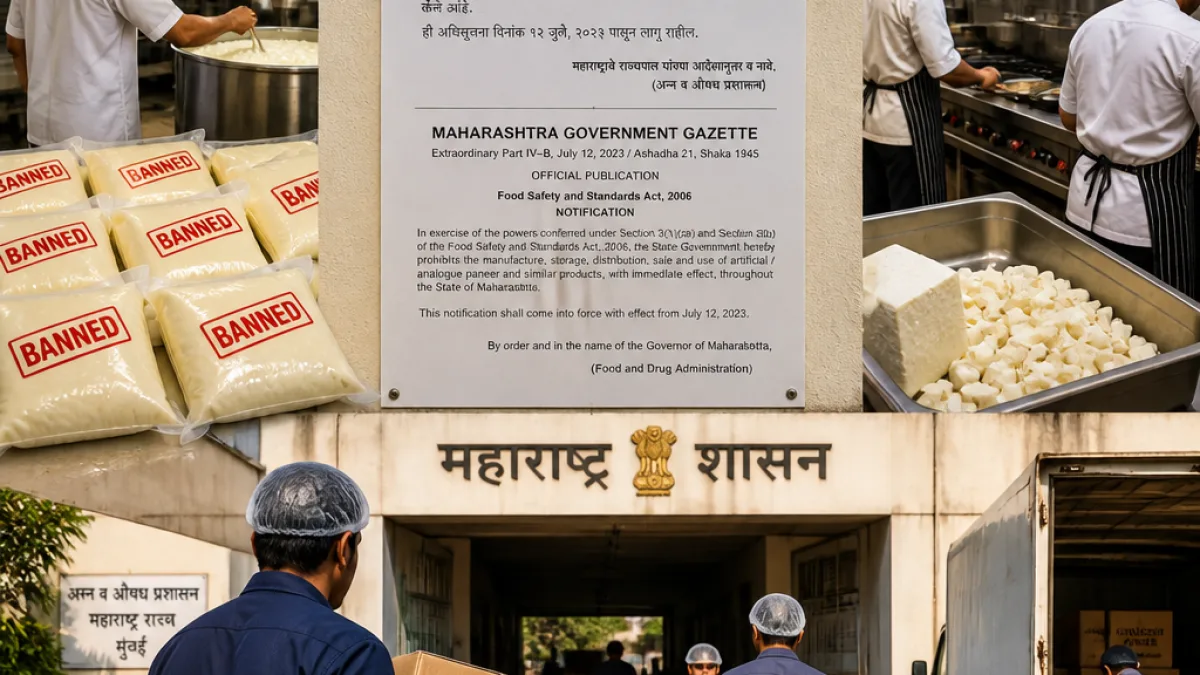
Maharashtra has imposed a one-year ban on the production and sale of analogue paneer, the state Food and Drug Administration (FDA) said in a gazette order issued on July 30. The directive also forbids restaurants, caterers and cloud kitchens from preparing, using or serving the non-dairy substitute.
Regulatory basis and public-health rationale
The FDA cited public-health concerns and referred to a 2016 Supreme Court directive that urged the Centre and states to implement the Food Safety and Standards Act, 2006, more effectively. The agency said that the court’s directions impose a continuing obligation to guard against adulteration of milk and dairy products.
A Central Advisory Committee constituted by the state food regulator in October reviewed available evidence and noted that no formal quality parameters or standards have been defined for analogue products in the dairy context. In the absence of such defined standards, the committee concluded that analogue paneer was:
"essentially a sub-standard product" that "only increases deliberate adulteration"
Laboratory findings and extent of adulteration
The FDA said laboratory tests conducted between April 2025 and March 2026 showed a high failure rate for paneer samples because of vegetable fat adulteration. Many of the tested samples were found to contain non-fat milk solids or foreign fats not naturally present in dairy products.
| Period | Finding |
|---|---|
| April 2025–March 2026 | Over 35% of paneer samples failed quality checks due to vegetable fat adulteration |
Nutrition and consumer awareness concerns
The advisory committee recorded that analogue paneer substitutes milk fat and milk solids with cheaper vegetable oils and other components, yielding a product that provides limited nutritional benefits compared with genuine paneer. The committee said the substitute offers "no nutritional benefits particularly to vegetarians who depend on paneer as a source of protein," and expressed concern that low consumer awareness prevents an informed choice between analogue and genuine paneer.
Scope of the ban and who it affects
The gazette notification bars the manufacture, sale and distribution of analogue paneer within Maharashtra for one year. It specifically prohibits:
- Production of analogue paneer by manufacturers and processing units;
- Sale and distribution through retail and wholesale channels;
- Preparation, use and service of analogue paneer by restaurants, caterers and cloud kitchens.
The FDA has framed the action as preventive, aimed at stemming the deliberate adulteration and protecting consumers who may not be able to distinguish between genuine dairy paneer and non-dairy substitutes.
Implications for industry and enforcement
The ban will require food-service businesses and dairy manufacturers to review procurement and production practices. Food units will need to ensure sourcing of authentic paneer made from milk fat and milk solids, and disclose ingredients where substitutes were previously used.
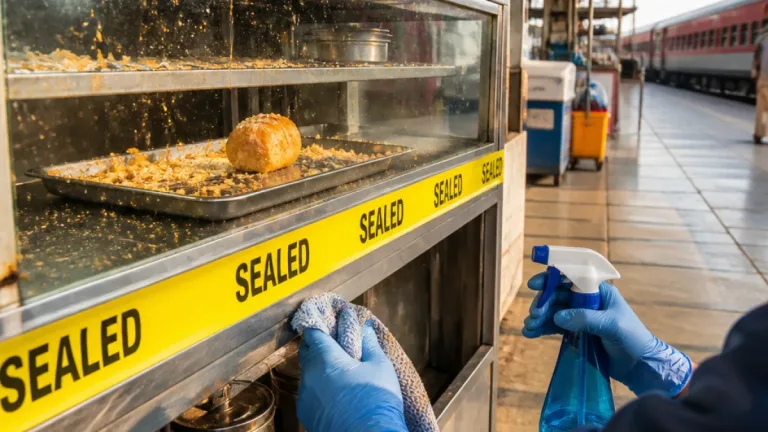
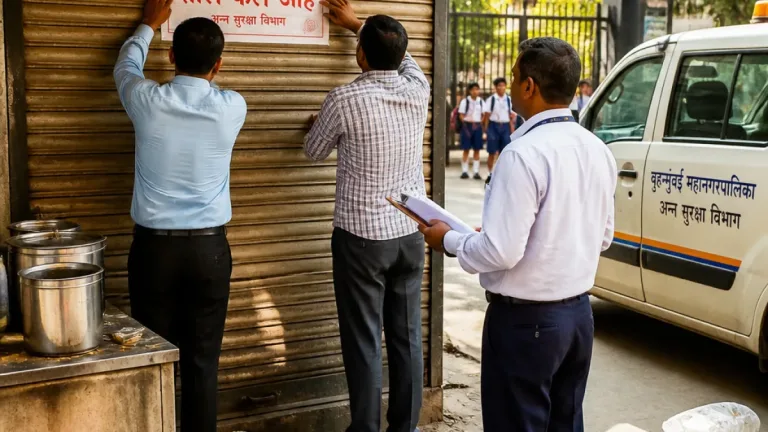
The gazette order does not specify penalties in the text made public, but the state food regulator’s enforcement usually involves sample testing, notices, sealing of establishments and penalties under the Food Safety and Standards Act where violations are found.
Wider context
Maharashtra’s move highlights ongoing regulatory challenges in policing processed dairy products. The absence of codified standards for analogue products has complicated quality assurance and labelling. By imposing a temporary ban, the state aims to close a regulatory gap until clear parameters and standards can be established to distinguish permitted dairy preparations from adulterated or non-dairy imitations.
Consumers are advised to check labels and, where possible, prefer paneer from reputable sources that clearly state ingredients. Businesses dependent on paneer in their menus should verify their suppliers’ documentation and be prepared to switch to genuine dairy paneer to comply with the order.
The FDA’s notification follows the advisory committee’s findings and the Supreme Court’s earlier instructions to strengthen enforcement under the Food Safety and Standards Act. The state has not yet announced the roadmap for establishing specific standards for analogue dairy products.