State seeks to extend bike‑taxi regulatory regime to delivery platforms
The Maharashtra government is preparing to widen the scope of its bike‑taxi regulations to cover food delivery and e‑commerce platforms, potentially obliging companies such as Swiggy, Zomato and Zepto to operate electric vehicles and to contribute to a driver welfare fund, according to a report.
The state transport department, headed by Minister Pratap Sarnaik, has proposed amendments to the Maharashtra Bike‑Taxi Rules, 2025, to explicitly include "delivery service providers" — a category that would cover entities that own or operate vehicle fleets for products, parcels and packages. The suggested changes draw on provisions introduced in the Maharashtra Motor Vehicle Aggregator Rules, 2026, the report said.
What the proposed rules would require
If the amendments are adopted, delivery platforms that operate two‑wheelers would face a set of compliance requirements modelled on existing aggregator norms. Key measures under consideration include:
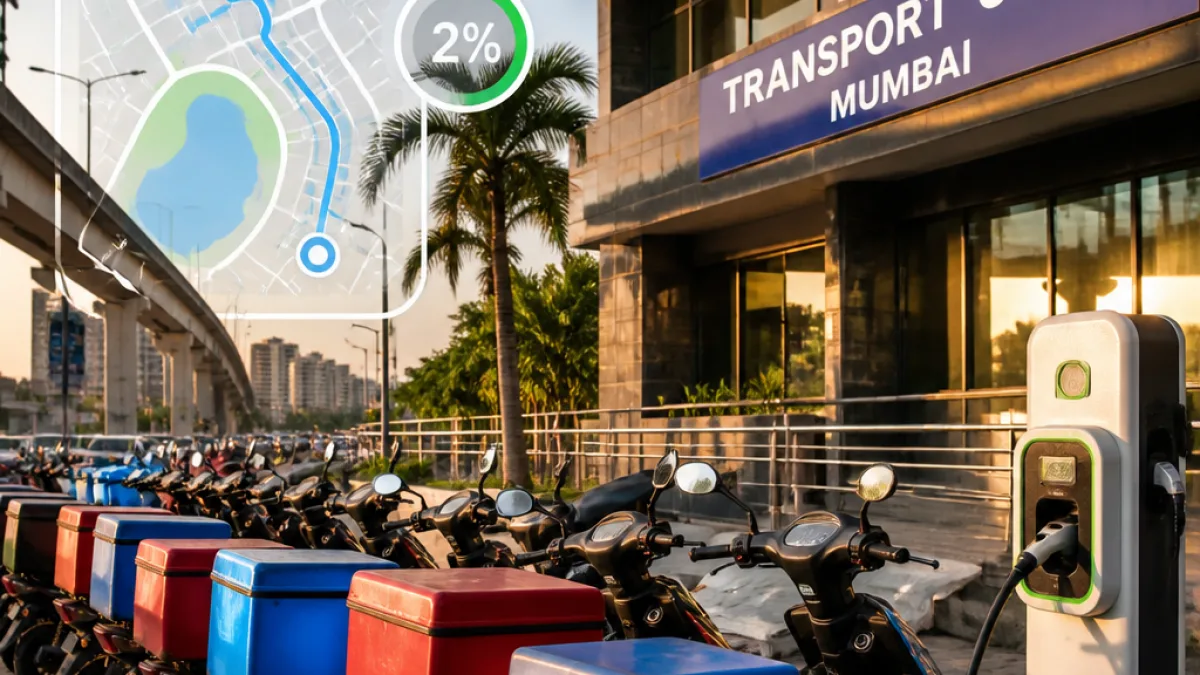
- operation of an EV‑only fleet for delivery two‑wheelers;
- mandatory GPS tracking for drivers and vehicles;
- obligation to provide insurance cover for drivers;
- submission to fare regulation as prescribed by the Regional Transport Authority;
- issuance of a unique licence identification number for platforms; and
- contribution of 2 per cent of the fare per ride to a driver welfare fund.
The proposed framework would also mandate a dedicated portal, to be developed by the State Transport Commissioner, for real‑time monitoring of vehicles operating on bike‑taxi and delivery platforms, mirroring elements of the Motor Vehicle Aggregator Rules, 2026.
Rationale and likely impact
According to the report, the amendments aim to extend safeguards for riders and delivery personnel while bringing platform operations under a unified state regulatory regime. Platforms currently fall mainly within central statutes such as the Consumer Protection Act, 2019, the Consumer Protection (E‑Commerce) Rules, 2020, and the Code on Social Security, 2020, but do not face the state‑level aggregator obligations that ride‑hailing apps do.
Bringing delivery services under the bike‑taxi rules would likely create additional compliance costs for companies and could accelerate the shift to electric two‑wheelers. The proposed 2% levy per ride is aimed at financing a welfare mechanism for gig workers, similar to recent initiatives elsewhere to secure social protection for platform workers.
Challenges for implementation
There are practical and commercial questions that regulators and platforms will need to address. Transitioning entire fleets to electric vehicles will require capital expenditure, charging infrastructure and possible phasing timelines. Platforms will also need to integrate GPS tracking and data feeds into the state portal envisaged by the transport department.
Regulatory oversight of fares through Regional Transport Authorities could constrain dynamic pricing models used by platforms. Additionally, administering the welfare fund and defining beneficiaries will require detailed rules on eligibility, contribution collection and disbursal mechanisms.
| Proposed obligation | Implication for platforms |
|---|---|
| EV‑only fleet | Capital and operational changes; need for charging/maintenance networks |
| 2% fare contribution | Regular levy collection; compliance and fund administration |
| GPS tracking & portal | Real‑time data sharing with state; IT integration |
Context — national and state precedents
States and the Centre have moved in recent years to address the regulatory vacuum around gig work and aggregator services. Maharashtra's Aggregator Rules, 2026, already govern ride‑hailing services such as Ola, Uber and Rapido, imposing licensing, safety and data‑sharing norms. The proposed amendment would extend a similar regime to delivery and e‑commerce fleets for the first time in the state.
Writer and news outlets have reported that the draft also takes cues from other state efforts to require platform contributions towards worker welfare. How precisely Maharashtra will reconcile central rules on e‑commerce and social security with state‑level transport regulation remains a technical and legal question likely to be tested as the draft proceeds through consultations and possible notification.
Next steps
The transport department is understood to be finalising the amendment text. The proposal will need formal approval and notification before it can be enforced. Once notified, platforms and stakeholders will have to align operations and comply with licensing and monitoring protocols laid down by the state.
“The proposed amendments define ‘delivery service providers’ as entities that own or operate vehicle fleets for product, parcel, and package services,” the report said.
Industry players, consumer groups and gig worker representatives will be watching the consultation process closely, given the potential implications for costs, worker protections and urban delivery models.