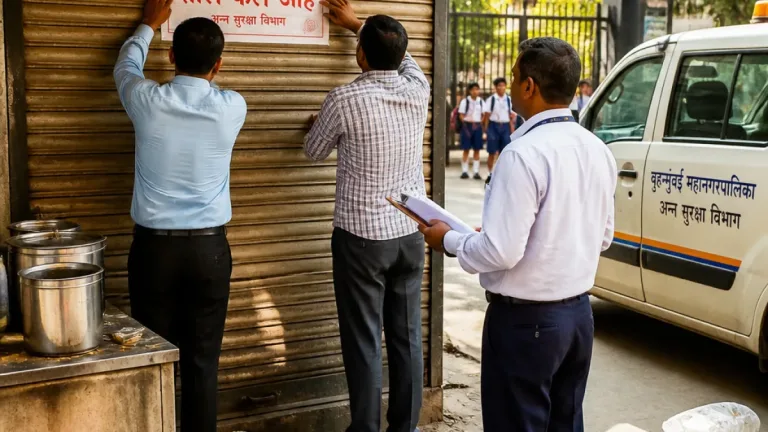
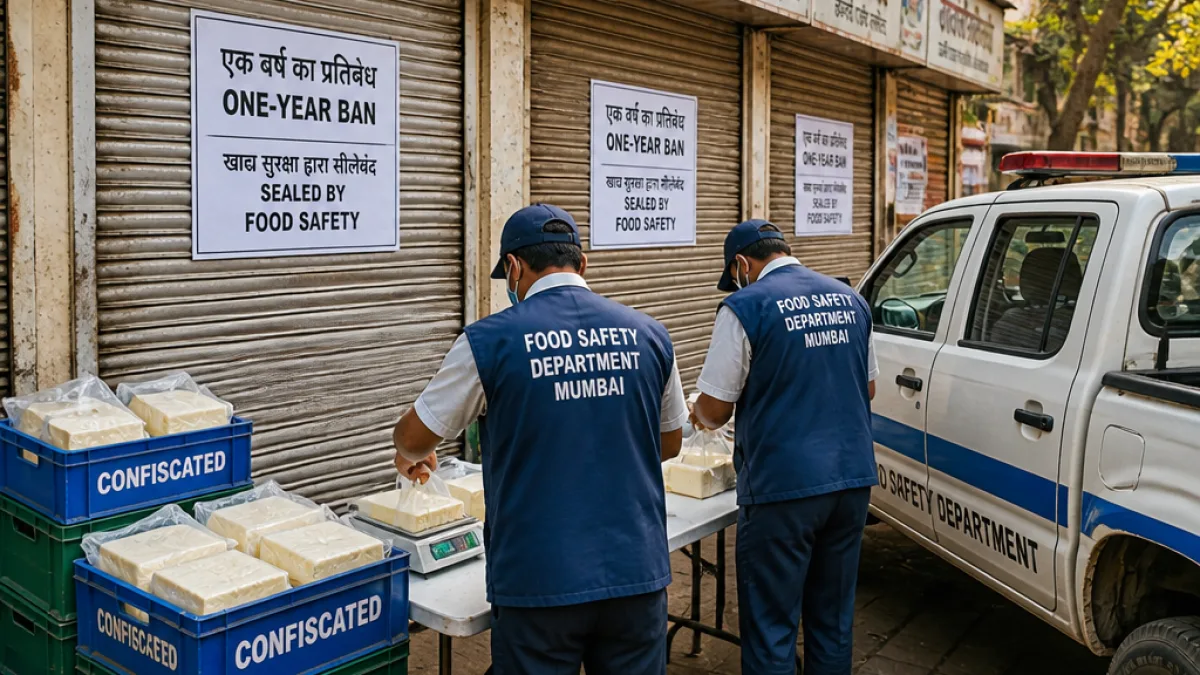
The Maharashtra government has imposed a one-year ban on the manufacture, storage, transport, distribution and sale of analogue or non-dairy paneer across the state, the Food Safety Commissioner, Tukaram Mundhe, has ordered under the Food Safety and Standards Act, 2006. The directive took effect immediately.
Surveillance finds large-scale non-compliance
The decision follows a year-long surveillance exercise carried out by state food safety authorities. Between April 2025 and March 2026, officials analysed 308 samples of paneer and dairy-analogue products. Of these, 109 samples (35.4%) were found not to meet prescribed standards: 79 were deemed substandard and 30 were declared unsafe.
| Period | Samples analysed | Substandard | Unsafe | Failed total |
|---|---|---|---|---|
| Apr 2025–Mar 2026 | 308 | 79 | 30 | 109 |
Laboratory reports reportedly identified the use of vegetable or other non-milk fats in place of milk fat in several samples, rendering those products both unsafe and misbranded under existing rules. Under food safety regulations, paneer is a standardised dairy product and must be made from milk; replacements of milk fat or milk solids with vegetable fats must be clearly declared on packaging and menus, authorities said.
Legal provisions and penalties
The order reiterates that any product in which milk fat or milk solids are substituted with non-milk ingredients cannot legally be sold as “paneer”. Such analogue products, when permissible, must carry explicit declarations such as “Contains Vegetable Fat” or “Contains No Milk Fat”.
Authorities have warned of criminal penalties for violations. The state action follows warnings under the Food Safety and Standards Act. Officials say those contravening the ban could face up to six months’ imprisonment and a fine of up to ₹1 lakh. More serious offences involving unsafe food that results in death may attract life imprisonment and a minimum fine of ₹10 lakh, according to the published directives.
From disclosure to prohibition
The ban represents an escalation from measures introduced earlier in the year, when the state had instructed hotels, restaurants, caterers and other food businesses to disclose whether dishes contained natural dairy paneer or analogue paneer on menus and display boards. That move sought to enhance transparency after inspections reportedly found numerous establishments either failing to disclose the use of analogue paneer or allegedly passing it off as traditional dairy paneer.
- Who is affected: Manufacturers, processors, packagers, transporters, distributors, retailers, hotels, restaurants and caterers across Maharashtra.
- Immediate effect: The ban applies statewide from the date of the order for one year.
- Label requirements: Analogue cheese products cannot be marketed as “paneer” without clear, compliant labelling.
Practical implications for consumers and businesses
Businesses that sell paneer or paneer-based dishes will need to verify sources and inventories to ensure compliance with the prohibition. Food service operators who previously used analogue products will have to switch to genuine dairy paneer or suspend sales of affected menu items for the ban period, unless they can demonstrate statutory compliance and appropriate labelling as allowed under central norms.
Consumers seeking clarity on purchased or served paneer should look for package declarations or menu statements indicating the composition. The Food Safety Commissioner’s order emphasises that misbranding and the substitution of milk constituents with non-milk fats not only misleads buyers but may also pose health risks.
Wider context
Maharashtra is the second state reported to adopt an outright prohibition following similar action in Chhattisgarh. The Food Safety and Standards Authority of India (FSSAI) has previously underscored that cheese analogue products cannot be marketed as paneer and must be clearly labelled to avoid consumer deception.
The state order is likely to prompt renewed scrutiny of supply chains and labelling practices across the dairy and foodservice sectors. Enforcement teams and laboratory testing will play a central role in monitoring compliance during the ban period.
Food business operators and consumers seeking further guidance will have to follow communications from the state food safety department and the Food Safety Commissioner’s office for specific compliance procedures and testing protocols.