New Delhi: Senior officials of the Ministry of Science and Technology on Friday defended the selection process for recipients of the Research, Development and Innovation (RDI) Fund, saying conflict-of-interest guidelines were followed as required, after media reports suggested multiple firms awarded loans had ties to members of the selection panel.
Officials point to disclosure and recusal mechanisms
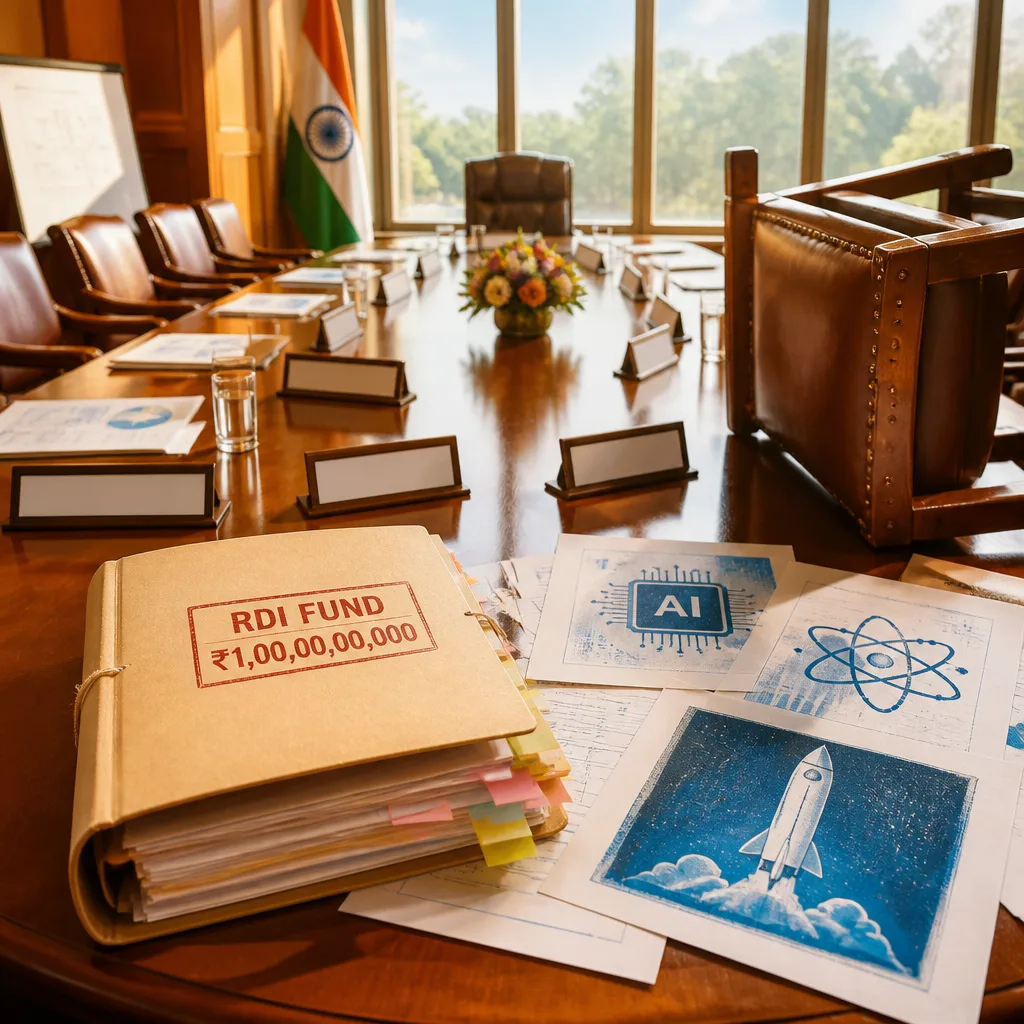
The RDI Fund, created by the government in 2025 to provide low-cost, long-term loans to private companies engaged in advanced research and innovation, has a corpus of ₹1 lakh crore and targets priority deep-tech sectors including artificial intelligence, quantum technologies and space science.
Questions arose after reports alleged that several companies selected for loans had connections with members of the Investment Committee of the Technology Development Board (TDB), the statutory body that advises on financing for start-ups and companies during commercialisation. The committee, established in 1996, has a membership of 11 private-sector members and one non-voting government representative.
TDB Secretary Rajesh Kumar Pathak said the RDI implementation guidelines recognise that experts on selection panels may have some investments directly or through funds, and that the policy is designed to manage such conflicts rather than to pretend they can be entirely avoided.
"The (RDI implementation) guidelines explicitly say that conflict of interest in this situation cannot be avoided, as experts would have some investments directly or through the funds. That is why there is a policy to manage the conflict of interest," he said.
Pathak added that the guidelines mandate disclosure of interests, structured decision-making processes, and recusal wherever a potential conflict arises. He also emphasised that members who declare a conflict do not take part in discussions or vote on the relevant proposal.
How the committee is constituted and expected to act
The Investment Committee of the TDB comprises private-sector subject-matter experts and a single non-voting government nominee. Officials said this composition is intended to preserve technical expertise while protecting the integrity of funding decisions through procedural safeguards.
- Corpus: ₹1 lakh crore for long-term, low-cost loans to deep-tech firms.
- Committee make-up: 11 private members, 1 non-voting government representative.
- Conflict management: Mandatory disclosure, structured decision-making, recusal from discussion and voting when a conflict exists.
Officials asserted that these mechanisms are applied during the Investment Committee's deliberations, and that recusal is used to manage potential conflicts while retaining necessary technical expertise on the panel.
Context and consequences
The RDI Fund is a central instrument of the government’s strategy to scale private-sector deep-tech research through concessional finance. With sectors such as artificial intelligence, quantum technology and space science prioritised, the programme aims to bridge the financing gap at the commercialisation stage.
Allegations of conflicts involving selection-panel members, if proven, could raise concerns about the impartiality of loan disbursement and the credibility of the fund’s governance. Officials maintain that the existing rules — disclosure and recusal — address the risks while allowing domain experts to participate in decision-making.
The TDB was set up to support indigenous technology ventures and to provide assistance at the point where research moves towards commercially viable products. The Investment Committee’s composition and processes therefore reflect a trade-off between securing specialised private-sector judgement and ensuring objective allocation of public financing.
| Item | Detail |
|---|---|
| Fund corpus | ₹1 lakh crore |
| Target sectors | AI, quantum technology, space science (priority deep-tech areas) |
| Investment Committee | 11 private members; 1 non-voting government representative |
| Conflict rules | Mandatory disclosure; structured decision-making; recusal from discussion and voting |
Officials said the process aims to strike a balance: retaining technical expertise on the committee while implementing clear administrative steps to prevent conflicted participation in final decisions. The ministry’s clarifications come as stakeholders and the public watch the implementation of a high-value programme intended to accelerate India’s deep-tech capabilities.