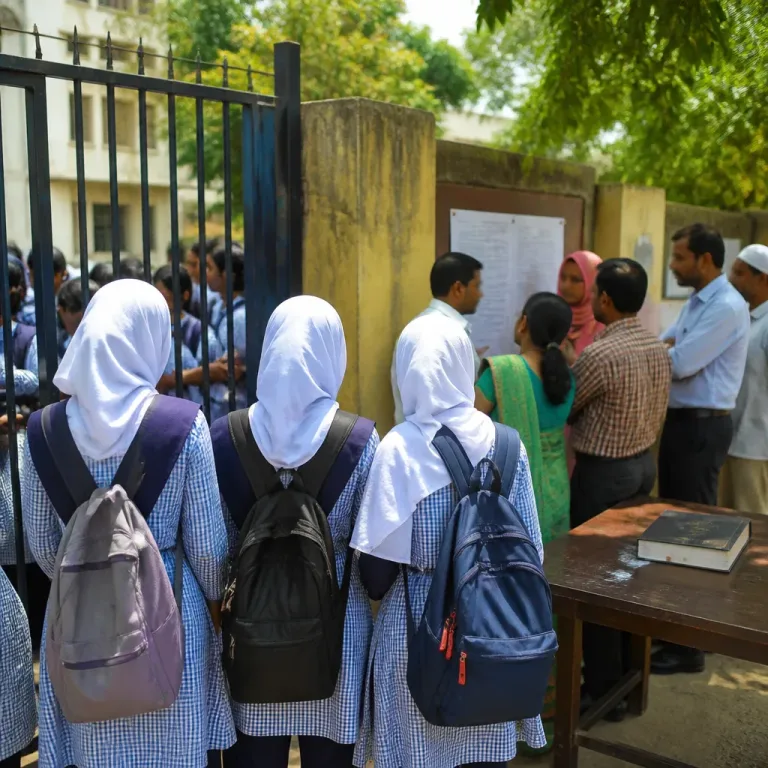

New Delhi: Questions over whether mass street mobilisation is eroding constitutional institutions have resurfaced amid the long sit‑in by the Citizens’ Justice Party (CJP) over the NEET paper leak, the resignation of Union Education Minister Dharmendra Pradhan and critical remarks by a bench of the Chief Justice of India (CJI).
Protests, resignation and the courts
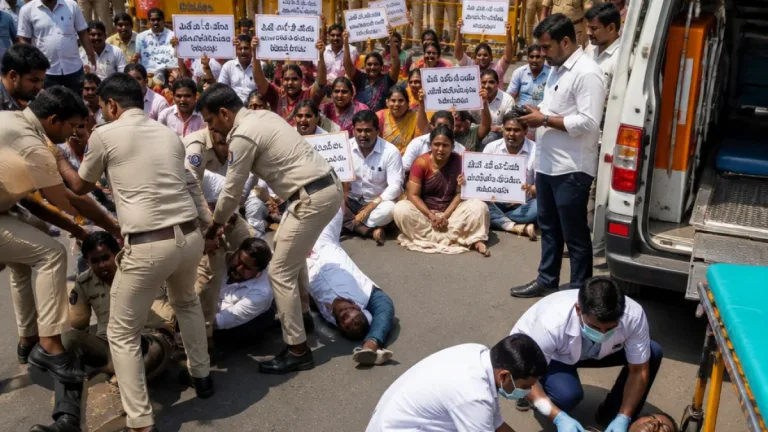
The CJP staged a sit‑in for more than a month demanding action after the NEET paper leak and the resignation of the Education Minister, a sequence of events that has reignited debate about the role of public demonstrations in effecting policy change. The protests, which were mounted in the name of accountability over the medical entrance examination breach, culminated in Mr Pradhan tendering his resignation, according to the source material.
On 15 May 2026, a bench led by the Chief Justice of India dismissed what it described as an unnecessary petition. In the course of its remarks the bench used sharply critical language to describe litigants it saw as abusing the judicial process, calling such elements “cockroaches” and “parasites”, the reporting said.
Public discourse and reactions online
Within a short span after the CJI bench's observations, the comment became a focal point in public discourse. A satirical account titled “Cockroach Janata Party” was created on Twitter by a person identified as Abhijeet Deepak, reportedly residing in Boston, United States. The account described itself as “the voice of the lazy and the unemployed” and, the source reports, accumulated 5 million followers within five days under what the report characterised as ‘suspicious circumstances’.
“If we abandon constitutional methods for achieving our social and economic objectives, it will lead to anarchy. We must give up movements that promote anarchy.”
The quotation above from Dr B. R. Ambedkar, cited in the original commentary, was invoked to question the legitimacy of replacing constitutional processes with prolonged street action. The invocation of Ambedkar’s warning frames the debate in historical and constitutional terms and has been deployed by commentators who argue that democratic aims should be pursued within institutional channels.
Implications for institutions and civic action
Analysts and commentators — as reflected in the source material — have used the episode to ask whether sustained street mobilisation in the name of democracy risks weakening Parliament, the judiciary and other constitutional mechanisms. The original piece questions whether republics can be constructed solely through public agitations and reiterates the framers’ emphasis on representative institutions and deliberative processes.
- CJP sit‑in: over a month-long protest against NEET paper leak and seeking ministerial accountability.
- Resignation: Union Education Minister Dharmendra Pradhan resigned amid the controversy.
- CJI bench remarks: bench dismissed a petition on 15 May 2026 and used strong language against what it described as irresponsible litigants.
- Social media reaction: a satirical account linked to the bench's language grew rapidly to 5 million followers in five days, according to the reporting.
| Date | Event |
|---|---|
| 15 May 2026 | CJI bench dismissed petition and used critical language |
| Subsequent days (within five days) | Satirical Twitter account gained 5 million followers |
The episode raises practical questions for policymakers and the judiciary about balancing robust public dissent with the protection of institutional integrity. It also highlights how judicial comments, public protests and social media can interact quickly, amplifying narratives and complicating efforts at reasoned debate.
Whether the controversy prompts reforms in how protests are managed, litigation filtered, or how official speech is framed by courts remains an open question. The debate as recorded in the reporting underscores the tension between immediate public demands and the slower, procedural mechanisms that underpin the constitutional order.