New Delhi, Jul 29: The environment ministry’s expert appraisal committee (EAC) has recommended environment clearance for a 2,700 MW pumped storage project (PSP) by Adani Green Energy Limited in Maharashtra’s Satara district that lies roughly 150 metres from the buffer of the Sahyadri Tiger Reserve and within the Western Ghats eco-sensitive area (ESA).
Clearance subject to wildlife panel approval
The EAC’s recommendation, made at its meeting on July 15 and reported on July 29, was granted on the explicit condition that the project proponent obtain clearance from the Standing Committee of the National Board for Wildlife (NBWL) prior to the commencement of construction activities. The project is identified as the Nivakane (Integrated) Pumped Storage Project.
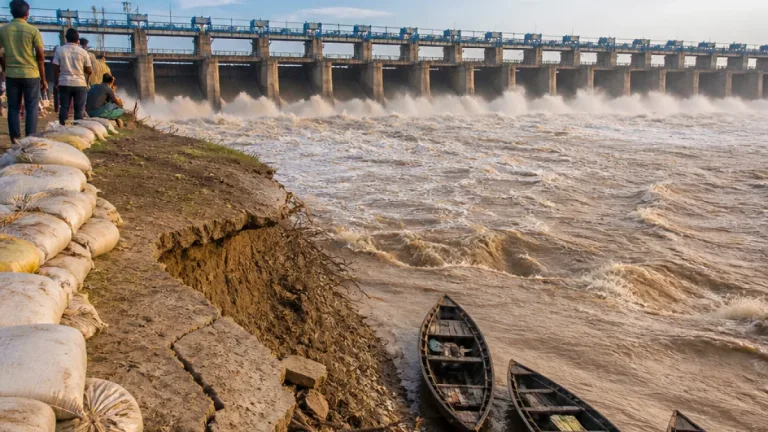
According to planning documents, the PSP will span more than 360 square kilometres. Pumped storage projects operate with a pair of reservoirs at different elevations; water is pumped to the upper reservoir during low-demand periods and released through turbines to generate electricity during peak demand.
Location falls within renewed ESA notification
The site is located within the Western Ghats ESA notified by the Centre. A fresh iteration of the ESA notification was issued in July after a previous draft lapsed following 725 days. The ministry’s earlier, 2013 notification allows hydro-projects in parts of the Ghats ESA, a provision that is relevant to the current decision.
Wildlife on site and impact assessment
The project’s environmental impact assessment (EIA), prepared in June, records the presence of several Schedule-I species at the site. The EIA lists 14 mammal species including the Indian bison (gaur), barking deer and leopard, and two bird species — the white-eyed buzzard and the Indian peafowl.
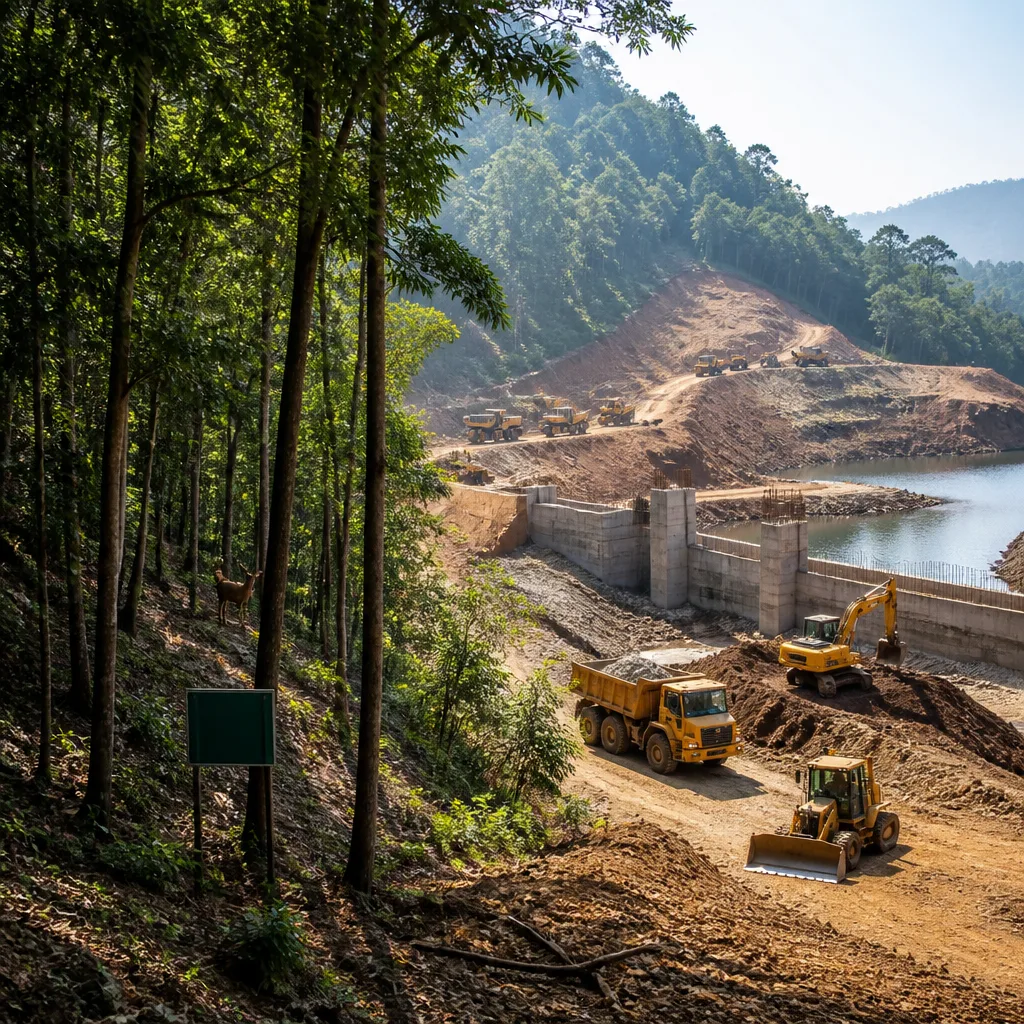
“Construction activities at the project site, including machinery operation, blasting and establishment of camps and workshops, may disturb local wildlife… Noise, vibration and increased human activity may cause temporary wildlife displacement,”
The EIA states mitigation measures have been proposed, such as controlled blasting, to minimise impacts on both terrestrial and avifaunal populations. It highlights potential disturbances from construction-phase activities including machinery operation and establishment of construction camps.
- Proximity to protected area: ~150 m from Sahyadri Tiger Reserve buffer
- Project size: >360 sq km
- Capacity: 2,700 MW (pumped storage)
- Wildlife: Schedule-I species present — 14 mammals and 2 birds recorded in EIA
- Condition: NBWL Standing Committee clearance required before construction
Policy and conservation implications
The EAC’s recommendation brings into focus the balance between India’s growing need for grid-scale energy storage and statutory obligations to protect biodiversity in recognised ecologically sensitive landscapes. The Western Ghats are among the country’s most biodiverse regions and the presence of Schedule-I species elevates the scrutiny such projects receive under wildlife and forest clearances.
The NBWL Standing Committee’s review will be a critical step. Its clearance is a statutory requirement where projects are located close to notified protected areas or where impacts on wildlife are assessed as significant. The committee typically evaluates project-specific mitigation, compensatory conservation measures, and whether alternatives or alterations to project design are necessary to reduce risk to wildlife.
Construction-phase disturbances cited in the EIA — noise, vibration, increased human presence and blasting — are standard concerns for infrastructure projects near protected habitats. Proposed mitigation such as controlled blasting is mentioned in the impact assessment, but the effectiveness of such measures is typically examined closely by the NBWL and other statutory authorities during clearance processes.
The EAC decision and the subsequent NBWL consideration will be watched by conservationists, energy planners and local stakeholders as a test case of how large energy-storage projects can proceed within high-conservation landscapes while meeting statutory safeguards.