
New Delhi: Indian organised crime has undergone a structural change in recent years, evolving from territorially bound gangs into decentralised, cross‑border networks that can rapidly mobilise manpower, logistics and finances, according to reporting and recent international enforcement actions.
Incident exposed operational sophistication
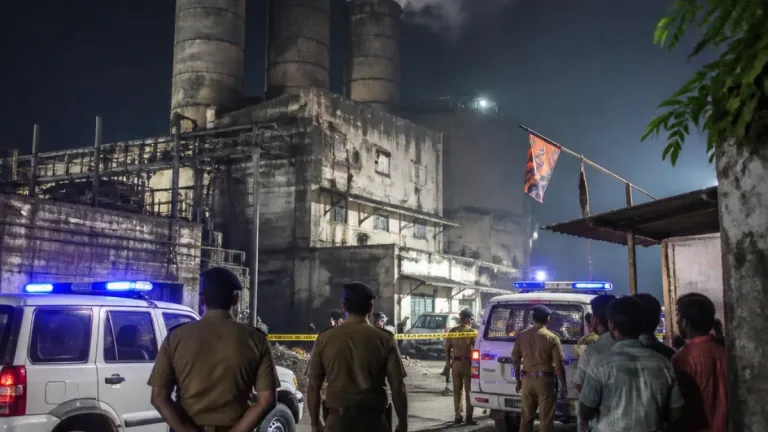
On the afternoon of 1 February 2020, a convoy of Haryana Police escorting gangster Sandeep, also known as Kala Jathedi, was intercepted near Faridabad by armed men in multiple SUVs. The attackers allegedly opened fire, injuring Assistant Sub‑Inspector Jitender Singh and enabling Jathedi to escape. The assailants are reported to have then hijacked another vehicle before fleeing the scene.
That operation, which lasted only a few minutes, indicated a level of planning and coordination that police said went beyond local turf disputes. Investigators found the capability to activate armed associates across state borders, organise transport and logistics and vanish before reinforcements could arrive.
From local gangs to networked syndicates
Reporting traced Jathedi’s reach across Haryana, Delhi, Rajasthan and western Uttar Pradesh, noting he did not rely on fixed territory. Instead, his structure used associates, contract shooters, financiers and logistics providers who could be tapped as required. By the time Jathedi was arrested by the Delhi Police Special Cell in July 2021, officials said the pattern suggested investigators were confronting a new, interconnected ecosystem rather than isolated, local groups.
- Decentralisation: Groups operate without fixed turf, relying on mobile associates.
- Operational methods: Migration, encrypted communication and informal financial systems facilitate survival when leaders are jailed or killed.
- Cross‑border reach: Overseas safe havens and networks have been reported to sustain activities beyond India.
International action underscores transnational threat
The assessment of organised crime’s changing shape found resonance in recent international enforcement. The US Department of Justice indictment against jailed gangster Lawrence Bishnoi and his Canada‑based associate Goldy Brar over the June 2023 killing of Khalistani separatist Hardeep Singh Nijjar in Surrey, British Columbia, formed part of a multinational probe named Operation Hard Ball, reported theweek.in.
According to the reporting, the indictment portrays an India‑linked organised crime enterprise operating across India, Canada and the United States, engaging in extortion, contract killings, narcotics trafficking and money‑laundering. The international action signalled that western law‑enforcement agencies now characterise some India‑connected criminal groups as transnational enterprises rather than purely domestic gangs.
| Aspect | Reported characteristics |
|---|---|
| Geographic reach | Interstate in India; overseas safe havens in North America |
| Operational model | Decentralised, contract‑based mobilisation of shooters, financiers and logisticians |
| Criminal activities | Extortion, contract killing, narcotics trafficking, money‑laundering |
Investigators and analysts, as reported, say these syndicates deploy migration, encrypted communications and informal financial systems to persist even when prominent operatives are neutralised. The approach complicates detection and prosecution, especially when elements of the network operate from abroad.
Police responses have included cross‑jurisdictional manhunts and the exploitation of special units. The incident involving Kala Jathedi prompted coordinated action by police in Haryana, Delhi, Rajasthan and Punjab; the later arrest of Jathedi by the Delhi Police Special Cell came after months of investigation.
International prosecutions and indictments, such as those under Operation Hard Ball, highlight the necessity for strengthened cooperation between Indian agencies and foreign counterparts. The reported pattern indicates that domestic enforcement alone may be insufficient to dismantle networks that use overseas infrastructure to plan, finance and execute serious crimes.
As law‑enforcement agencies adapt, officials are likely to confront challenges including encrypted communication channels, informal value transfer systems and the dispersal of operatives across multiple jurisdictions. The reporting suggests a sustained focus on these modalities will be central to disrupting the evolving networks.