The World Health Organization (WHO) has placed India among nations facing high to very high health risks as the 2026 El Niño event strengthens, warning that the climate pattern is likely to produce drier-than-normal weather and above-average heat across much of South Asia in the coming months.
WHO assessment and what it means
The WHO’s Global Public Health Situation Analysis – El Niño 2026 describes the phenomenon as a driver that can alter temperature and rainfall patterns and act as a "risk modifier" rather than a direct cause of specific disease outbreaks. The agency cautioned that, by shifting climatic conditions, El Niño can amplify existing vulnerabilities in health systems and communities.
"El Niño should be viewed as a risk modifier, rather than a direct cause of current dengue or malaria cases," the WHO report said.
Health authorities across India will need to account for the combined effects of higher temperatures, changes in rainfall distribution and other environmental stresses when planning surveillance, vector control and heat-mitigation measures.
Current disease trends and immediate concerns
Public-health officials are already noting rises in vector-borne illnesses in some regions. Data cited in the WHO briefing and related reporting show that Delhi recorded 90 dengue cases in August, taking the seasonal total to 311 by August 29. Malaria case counts in the capital also increased, from 17 in July to 53 in August.
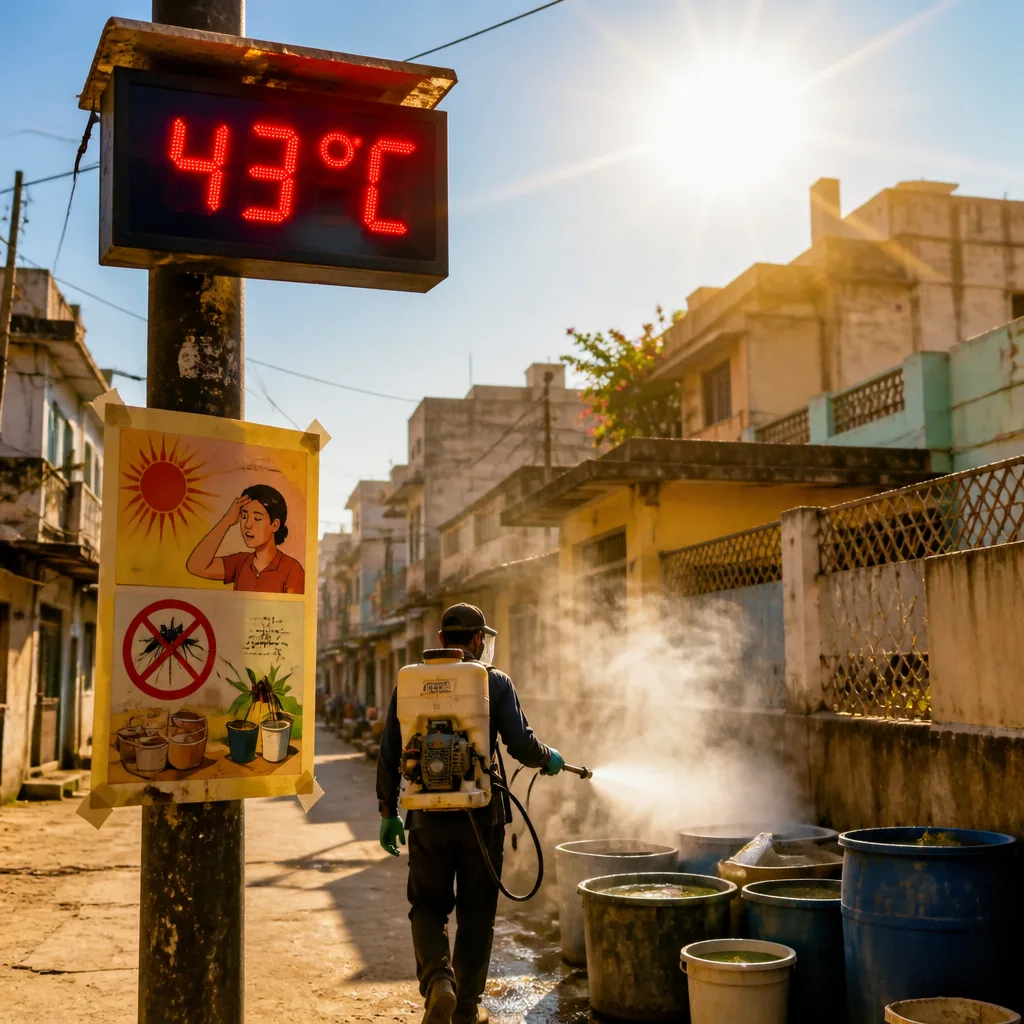
Those figures illustrate how ongoing transmission can be sensitive to climatic drivers. Higher temperatures can speed up mosquito development and virus replication, while changes in rainfall — including both deficits and erratic precipitation — can create environments favourable to different mosquito species.
- Heat-related illness: Prolonged above-average heat raises risks of heatstroke and dehydration, especially for outdoor workers, the elderly and those with chronic conditions.
- Vector-borne disease: Altered rainfall and temperature can modify mosquito breeding habitats and transmission seasons for dengue and malaria.
- Health system pressure: Seasonal surges in cases, combined with heat-related admissions, can strain primary and secondary healthcare facilities.
Preparedness and public-health responses
The WHO analysis underscores the need for proactive measures focused on surveillance, early warning and community-level interventions. Public-health authorities typically respond to such risk signals by intensifying vector-control operations, expanding diagnostic capacity, issuing heat advisories and reinforcing clinical guidelines for case management.
Experts stress that El Niño’s effect is context-specific: regions already experiencing poor water, sanitation or housing conditions, or those with limited access to healthcare, are likely to be most affected. The WHO advice aims to help governments and health services integrate climate projections into routine preparedness planning.
Data snapshot
| Indicator | Recent figures (Delhi) |
|---|---|
| Dengue cases in August | 90 |
| Seasonal dengue total (by Aug 29) | 311 |
| Malaria cases (July) | 17 |
| Malaria cases (August) | 53 |
While the WHO does not attribute current case counts directly to El Niño, the agency’s characterisation of the event as a modifier is intended to prompt heightened vigilance and targeted public-health action in susceptible areas.
For individuals, standard protective measures remain important: adopt heat-avoidance behaviours during peak hours, ensure adequate hydration, use mosquito repellents and nets where appropriate, and seek early medical attention for febrile illness. For policymakers, the window ahead is to align surveillance data with meteorological forecasts and to prioritise resource mobilisation to neighbourhood-level interventions where risk is rising.
The WHO bulletin comes as meteorological services monitor evolving oceanic and atmospheric indicators that will determine the intensity and regional footprint of the El Niño event in the months ahead. Health planners will be watching those forecasts closely to time interventions and manage potential surges in climate-sensitive morbidity.