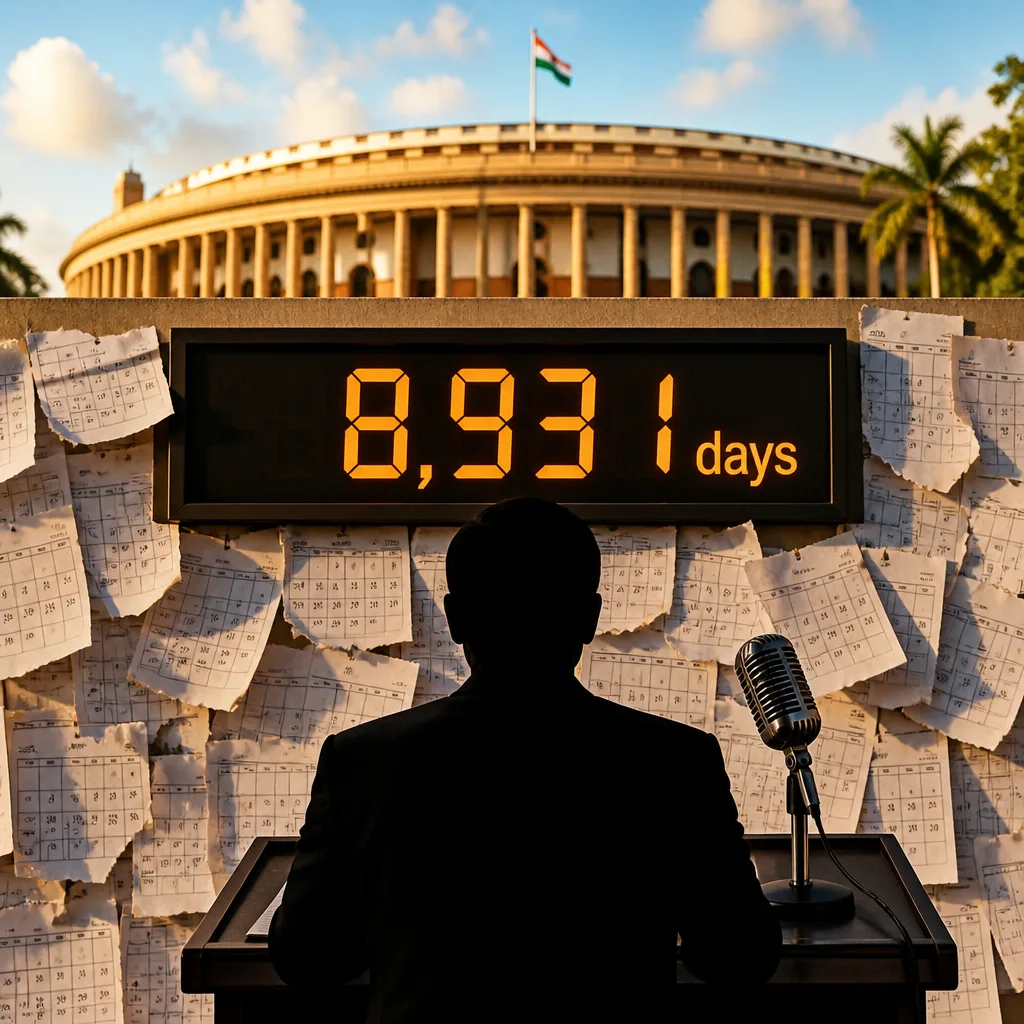
Prime Minister Narendra Modi has become the longest-serving elected head of government in India, completing 8,931 days in office when his time as Gujarat chief minister and as Prime Minister are combined, Akashvani reported on Sunday.
Tenure milestones and records
According to the public broadcaster, Mr Modi first assumed the office of Chief Minister of Gujarat on 7 October 2001 and remained in that post until 21 May 2014. He was sworn in as Prime Minister on 26 May 2014. The combined span of these tenures has now reached 8,931 days, surpassing the previous record of 8,930 days held by former Sikkim Chief Minister Pawan Kumar Chamling.
Akashvani's account noted several other records associated with Mr Modi’s political career: he has been the longest-serving Chief Minister of Gujarat; he is the Prime Minister with the lengthiest prior experience as a state chief minister; and he is the first Prime Minister born after independence. He has also won three consecutive Lok Sabha elections — in 2014, 2019 and 2024 — underlining sustained electoral support for his party at the national level, the report said.
Digital reach noted alongside political longevity
The broadcaster also highlighted Mr Modi’s digital footprint. It reported that earlier this month he reached 30 million subscribers on his YouTube channel and that, in February, he crossed 100 million followers on Instagram. The report framed these numbers as reinforcing his status among current and former heads of government in terms of social-media reach.
Context and possible political implications
The milestone consolidates a narrative of uninterrupted public office stretching into a 25th year for Mr Modi, a political trajectory that began at the state level and moved to the national stage. Political longevity of this kind can have multiple consequences: it shapes internal party dynamics, informs opposition strategy, and influences public perceptions of leadership continuity and experience.
Observers often treat duration in office as one among several measures of political influence. While long tenures can signal electoral durability and organisational strength, they also invite scrutiny about policy outcomes, governance record and generational change within party ranks. Akashvani’s report did not offer analysis from commentators; it confined itself to reporting the milestone and the associated numeric benchmarks.
Quick reference
| Event | Date | Notes |
|---|---|---|
| Assumed office as Gujarat CM | 7 October 2001 | Beginning of state-level tenure |
| Left office as Gujarat CM | 21 May 2014 | Transition to national role |
| Sworn in as Prime Minister | 26 May 2014 | Start of national tenure |
| Combined days in office | 8,931 days | Record for elected heads of government in India |
- Past record-holder: Pawan Kumar Chamling — 8,930 days as Chief Minister of Sikkim.
- Electoral achievements: Three consecutive Lok Sabha victories — 2014, 2019 and 2024.
- Digital benchmarks: Reported 30 million YouTube subscribers and over 100 million Instagram followers.
Akashvani reported that Mr Modi has now entered his 25th year in a leadership role, describing the milestone as rare and significant.
The public broadcaster's report provides a factual account of duration and related records; it did not include comment from government spokespeople, opposition leaders or independent analysts. How political actors and voters interpret the significance of the longevity mark is likely to unfold in coming weeks, particularly as the narrative is referenced in campaign messaging, policy debates and intra-party discussions.
For now, the numerical milestone stands on the official timeline of Mr Modi’s career and will be cited in assessments of modern Indian political leadership and continuity.