Portable optical sensor aims to strengthen water-quality monitoring in and around Guwahati
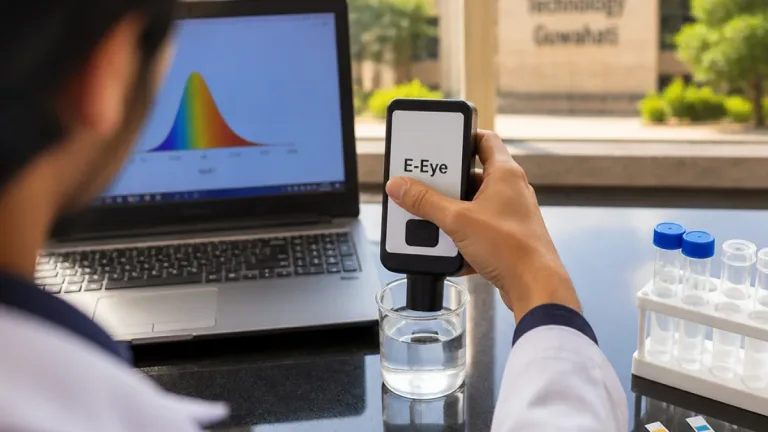
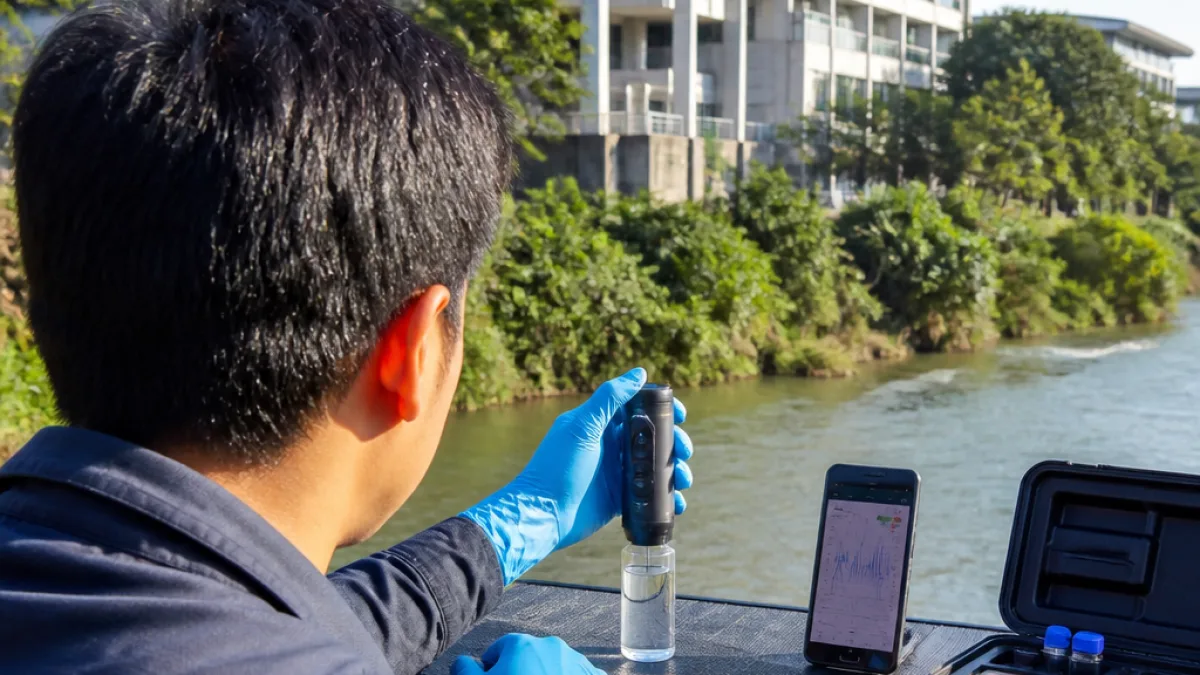
Guwahati, Aug 6: Researchers at the Indian Institute of Technology Guwahati have developed a portable optical sensing device, called E-Eye, capable of instantly detecting a range of heavy metals and other toxicants in water and biological samples and transmitting the results wirelessly to treatment centres.
The team said the innovation is aligned with the Government of India’s Jal Jeevan Mission, which seeks to provide tap water connections to every household but faces the continuing challenge of ensuring delivered water is safe for consumption. Field-deployable, low-cost testing tools are being pursued as a practical complement to centralised laboratory facilities.
The device analyses colour changes that arise when specific reagents react with target toxicants. Using basic optical principles and digital electronics, E-Eye converts those optical signals into numerical concentration readouts that can be displayed immediately.
- On-site detection: Designed for direct use at water sources, bypassing the need to transport samples to distant laboratories.
- Comparability with standard instruments: Laboratory tests indicated measurements from E-Eye were comparable to results from UV-Visible spectrophotometers and Atomic Absorption Spectrophotometers (AAS).
- Digital integration: The device records data digitally and supports wireless transmission to water treatment facilities for monitoring and response.
The research findings were published in the IEEE Sensors Journal. The paper lists Prof. Tapas K. Mandal and Prof. Harshal B. Nemade of IIT Guwahati as co-authors, along with research scholars Shrikant Kashyap, Smriti Sachan and Neha Majee from IIT Guwahati, Maitrayee Bhuyan from KIIT Bhubaneswar and Humayun Kabir from Ramakrishna Mission Residential College, Kolkata.
Prof. Tapas K. Mandal said the device combines optical sensing with digital electronics and operates on the Beer–Lambert law.
According to the research team, the sensing approach relies on the formation of coloured compounds when reagents interact with particular toxicants; the intensity of the colour correlates with concentration, enabling quantification via optical measurement. The team emphasised that the instrument’s portability and wireless data output make it suitable for rapid screening at the point of collection.
Implications for Assam’s water-security efforts
Assam faces seasonal and source-dependent variations in water quality. Groundwater in some districts is known to contain elevated concentrations of arsenic and other metals, while surface water can be affected by industrial effluents and biological contamination. Local authorities implementing the Jal Jeevan Mission have repeatedly highlighted the need for scalable monitoring tools that can quickly identify risks and trigger remedial action.
A device like E-Eye, if validated and deployed at scale, could allow local water supply managers, panchayats and public-health teams to:
- Carry out frequent, distributed testing at taps, wells and treatment inlets;
- Rapidly map contamination hotspots and prioritise treatment or source substitution;
- Create real-time data streams that inform maintenance and outreach efforts.
The developers noted that conventional laboratory instruments such as UV-Visible spectrophotometers and AAS remain the reference standards for accuracy but are costly and not suited for routine field screening. By contrast, E-Eye is intended as an affordable, field-ready alternative that can reduce dependence on central laboratories while complementing them for confirmatory analyses.
The research paper provides experimental comparisons from laboratory tests, showing the new device’s outputs align closely with standard instruments. The team is expected to pursue further validation under varied field conditions and investigate pathways for technology translation and deployment with relevant agencies.
| Feature | Benefit |
|---|---|
| Portable optical measurement | Enables on-site testing at water sources |
| Digital and wireless output | Facilitates centralised monitoring and record-keeping |
| Comparable results to UV-Vis/AAS | Suitability for screening and decision support |
Further work and stakeholder engagement will determine how quickly this laboratory-developed prototype can be adapted for widespread use across Assam and other regions where rapid water-quality screening is required.