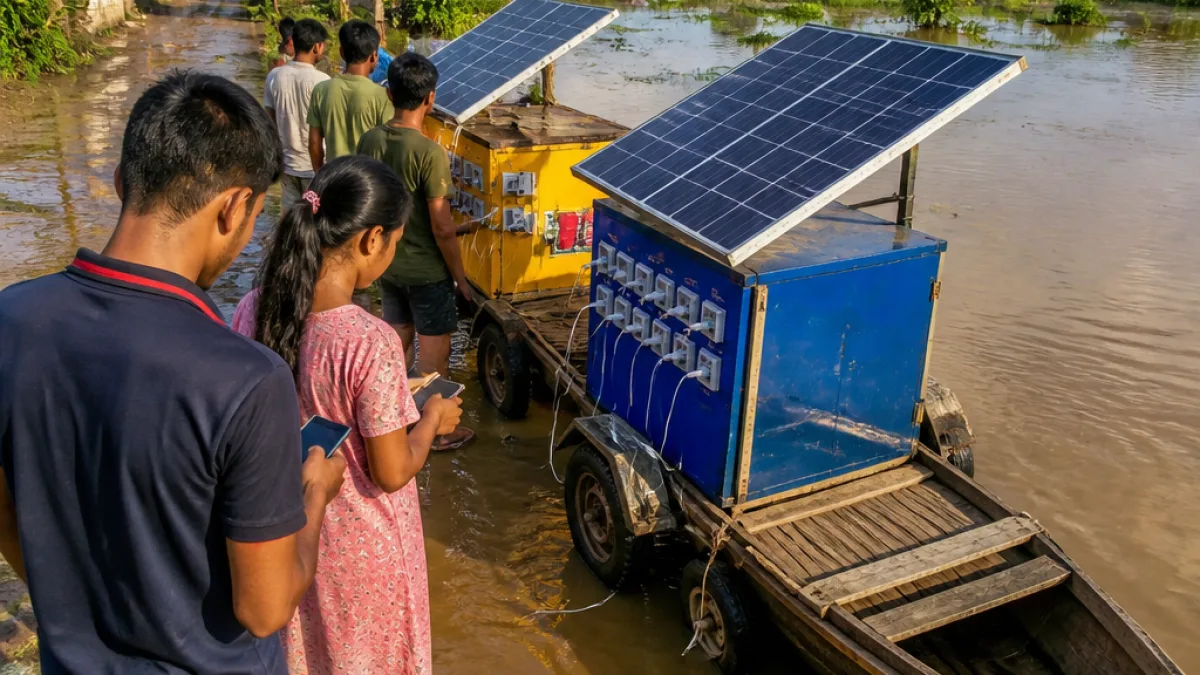
Portable solar units bring a lifeline as power failures isolate flood victims
As Assam contends with one of the season’s most severe flood disasters, a small-scale technological intervention is helping restore crucial communication in submerged areas. Abhijeet Dowarah, an innovator from Sivasagar district, has developed and moved portable solar-powered mobile charging stations to flood-affected villages, News18 reported on Friday.
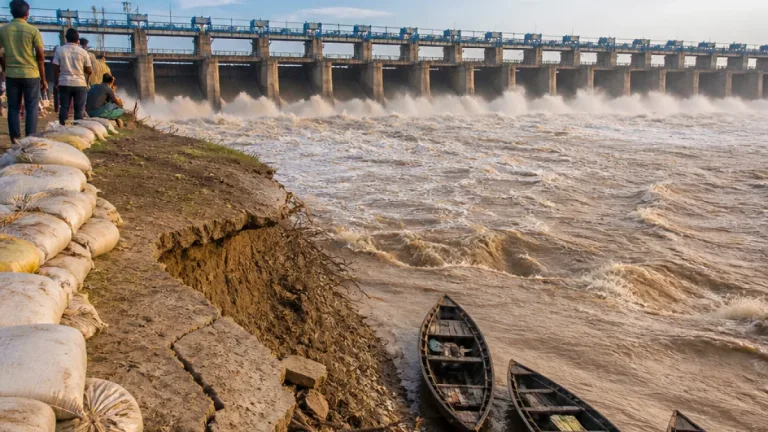
State disaster data cited in the report show the human and agricultural toll of the floods: the death count has risen to 81, while a total of 3,00,031 people remain affected across the state. The Assam State Disaster Management Authority (ASDMA) stated that these people live in 551 villages spread across 21 revenue circles, and floodwaters have submerged 21,523 hectares of cropland.
- Portable solar charging stations have been set up in nearly 10 villages in the Sivasagar area.
- Prolonged power outages across upper Assam have left communities unable to charge mobile phones, hampering communication during rescue and relief operations.
- The solar units aim to restore contact for families seeking medical assistance, government advisories and coordination with relief teams.
The charging units, carried from village to village by the innovator, address a specific but critical need: when grid electricity fails, mobile phones — the primary means of contact — become unusable. News18 reported that Dowarah used his technical knowledge and personal resources to create portable stations that communities can use to recharge devices during the emergency.
"The stations allow residents to charge their phones when grid power is unavailable," News18 reported.
Officials and relief workers have repeatedly emphasised the importance of communication during floods — for reporting missing persons, requesting medical help, receiving official advisories and coordinating distribution of relief materials. The lack of charging facilities has compounded the isolation experienced by many residents in inundated areas, particularly across upper Assam where outages have been prolonged.
| Indicator | Figure (as reported) |
|---|---|
| Flood death toll | 81 |
| People affected | 3,00,031 |
| Villages affected | 551 |
| Revenue circles affected | 21 |
| Cropland submerged (hectares) | 21,523 |
| Villages with solar units (approx.) | Nearly 10 |
Local-level innovations such as Dowarah’s portable chargers complement government and non-government relief measures by filling gaps in immediate needs. While large-scale restorations of power and road access require coordinated state and central action, mobile charging points can be deployed quickly and maintained at low cost to keep lines of communication open.
Relief officials have not been quoted directly in the News18 story, but the ASDMA figures underscore the scale of the crisis confronting Assam’s administration and rescue agencies. With over three lakh people affected and extensive crop losses reported, ensuring timely information flow is essential to prioritise rescues, allocate relief and assess agricultural damage.
Residents in affected pockets have described the charging stations as a practical lifeline in the days following major outages. Such initiatives also highlight the role of local technical expertise and community-level resilience in disaster response, especially where infrastructure repair may be delayed by widespread inundation.
As the state continues relief operations and damage assessment, portable renewable solutions could be considered for wider deployment in areas prone to prolonged outages. For now, the small solar units in Sivasagar’s villages are helping maintain connectivity at a time when every call may be vital.