The deadly heat that gripped parts of southern India in May has highlighted the intersection of extreme weather, poverty and precarious rural livelihoods, after the death of a woman who collapsed while working under soaring temperatures.
Worker on government scheme succumbs amid extreme temperatures
A 50‑year‑old woman, identified in reporting as Palli Mahalaxmi, died from heatstroke while engaged in manual labour under a scorching sun in a village in Andhra Pradesh. She was employed under a central rural employment programme that guarantees work to poor households and provides a vital, if low‑paid, source of income for millions.
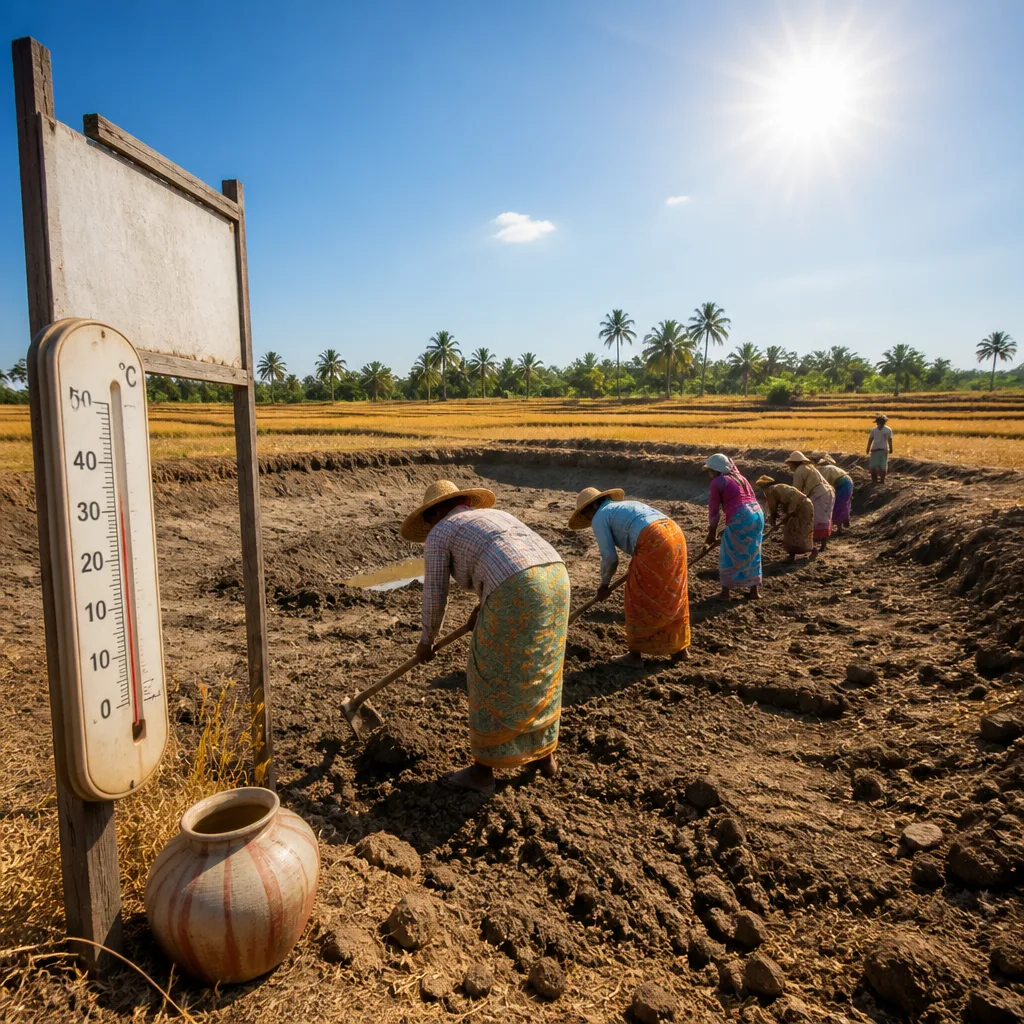
The work that day involved digging a water reservoir in rice fields with no shade, as temperatures rose above 40°C. Colleagues were described as exhausted on arrival; many had to continue because the daily wage was the household’s only means of survival.
“The heat was terrible and that makes the work very difficult,” said Parvati Purilla, who worked alongside Mahalaxmi. “When you drink water, you just sweat it out immediately.”
According to reporting, Mahalaxmi depended on the rural employment scheme to support her household — her husband was unable to work, she had a disabled son and debt from a wedding. The scheme’s daily wage of ₹180 (about £1.41 at the time of reporting) and the guarantee of 100 days of work were described as a lifeline. The scheme currently employs more than 80 million people across India.
Heat, work and vulnerability
The incident casts light on recurring tensions between poverty‑driven labour needs and occupational safety during extreme heat. Low‑paid rural workers often lack access to protective measures at worksites such as shade, scheduled rest breaks, cooling facilities or flexible working hours. The location in this instance — rice fields by a river with no trees to shield workers — is typical of many sites where physically intense tasks must be done outdoors.
Heatwave mortality and morbidity are expected to rise as global temperatures increase, placing disproportionate burdens on populations that cannot afford to stop daily wage work. The combination of high ambient temperature and strenuous physical labour increases the risk of heatstroke, dehydration and other heat‑related illnesses.
- Scheme coverage: Guarantees 100 days of work to eligible households and provides employment to over 80 million people nationwide.
- Daily wage: Reported at ₹180 per day for the work described.
- Reported temperature: Exceeded 40°C at the worksite.
Policy and practical implications
The incident underscores the need for stronger on‑ground safeguards when public works are undertaken in extreme heat. Practical measures that have been advocated in other contexts include adjusting work schedules to cooler hours, providing reliable access to potable water, mandating rest breaks and shaded rest areas, and building heat‑risk guidance into the design and implementation of public employment programmes.
At the policy level, the case raises questions about whether existing implementation guidelines for rural employment schemes sufficiently account for climate extremes and protect the most vulnerable beneficiaries. Ensuring compliance at local worksites, along with training for supervisors on heat‑related risks, may reduce future fatalities.
Beyond immediate workplace protections, the episode points to the broader challenge of climate adaptation for low‑income rural households. When households cannot afford to forego a day’s wages, they are compelled to accept hazardous working conditions. Strengthening social protection, improving access to cooling infrastructure and integrating climate resilience into rural livelihoods programming are measures that could reduce exposure.
The death in Andhra Pradesh is a reminder that as heatwaves become more frequent and intense, public‑works programmes and labour protections must adapt rapidly to prevent avoidable loss of life among those who are already economically marginalised.
| Item | Reported figure |
|---|---|
| Daily wage for the work described | ₹180 |
| Guaranteed days of work per household | 100 days |
| Number of people employed by the scheme | 80 million+ |
| Worksite temperature reported | Above 40°C |