Union Health Minister Jagat Prakash Nadda on Friday reaffirmed India’s commitment to eliminate cervical cancer as a public health problem and outlined details of a nationwide vaccination and screening push, according to an official report of his virtual address with WHO Director‑General Tedros Adhanom Ghebreyesus.
National drive and screening progress
The minister said India has adopted a multi‑pronged strategy focusing on prevention, screening, early detection and timely treatment for cervical cancer, and highlighted two major elements of the effort.
- Screening: Visual Inspection with Acetic Acid (VIA) services are now available at Ayushman Arogya Mandirs and other health facilities for women aged 30–65 years. Under the National Programme for Prevention and Control of Non‑Communicable Diseases, more than 86 million women have been screened to date, the minister said.
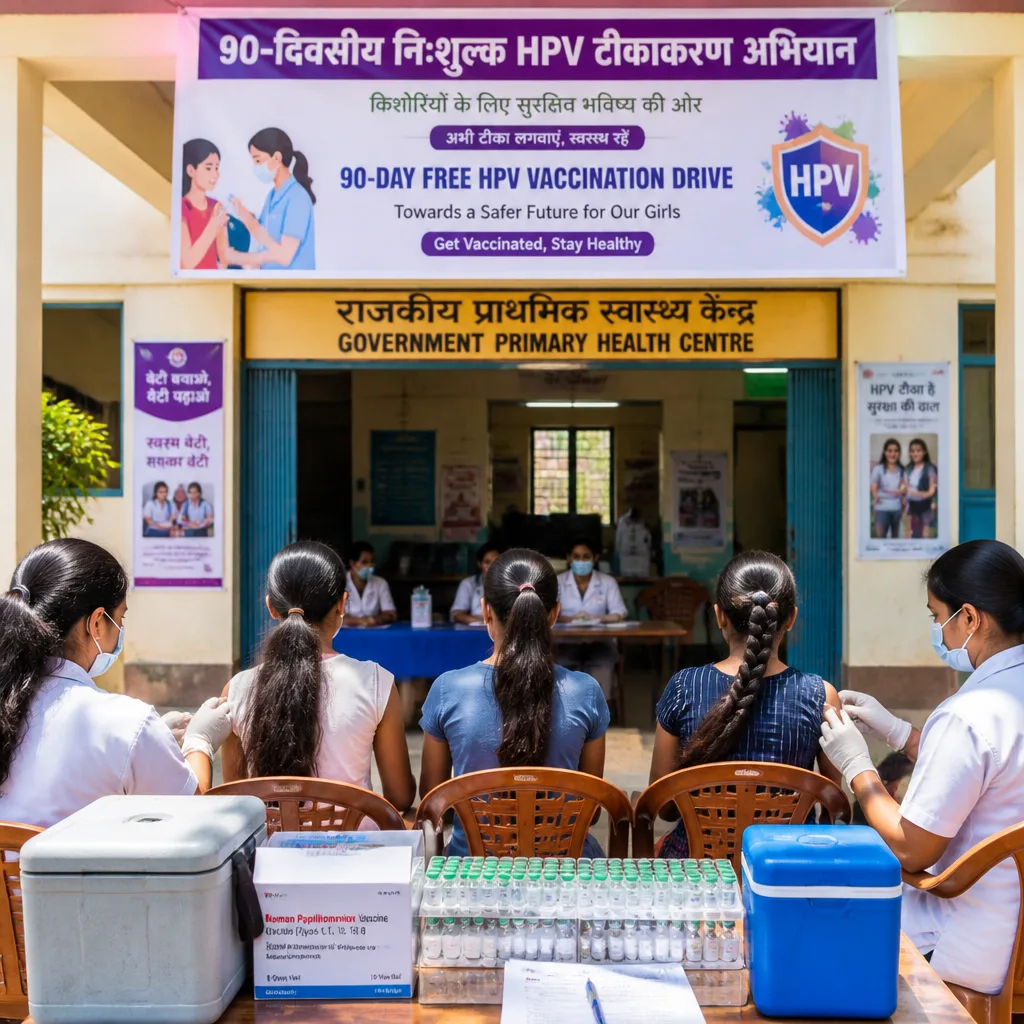
- Vaccination: A nationwide Human Papillomavirus (HPV) vaccination campaign was launched on 28 February by Prime Minister Narendra Modi. The campaign aims to vaccinate about 12 million adolescent girls aged 14 years over a 90‑day period using a single‑dose schedule of the Gardasil Quadrivalent vaccine, provided free at government health facilities, the minister said.
Programme principles and consent
Nadda said the initiative reflects the vision of Swasth Nari, Sashakt Parivar by placing prevention and equitable healthcare for women at the centre. He described the HPV drive as voluntary and dependent on parental consent, adding that it was designed to respect community values, according to the official account of his remarks.
WHO targets and international context
The minister reaffirmed that India fully supports the World Health Organization’s global strategy to eliminate cervical cancer and to achieve the 90‑70‑90 targets by 2030: vaccinating 90 per cent of girls, screening 70 per cent of women and treating 90 per cent of women diagnosed with cervical disease. The WHO Director‑General, Tedros Adhanom Ghebreyesus, is reported to have praised India’s nationwide HPV vaccination campaign, describing it as the world’s largest free vaccination drive and a landmark step toward elimination.
| Element | India target / progress (as reported) |
|---|---|
| HPV vaccination campaign | 12 million girls (age 14), 90 days, single‑dose Gardasil Quadrivalent, free at government facilities |
| Screening (VIA) | VIA services for women aged 30–65 years; 86 million women screened under NPCDCS |
| WHO 2030 targets | 90‑70‑90 — vaccine 90% of girls; screen 70% of women; treat 90% of diagnosed women |
Implications and next steps
If implemented at scale, the single‑dose HPV campaign and expanded VIA screening could accelerate achievement of WHO elimination benchmarks. The minister’s account notes the government will provide vaccines free of cost at public facilities and will follow parental consent protocols for adolescent vaccination. No further operational details — such as the schedule of rollout at state level, cold‑chain logistics, training of vaccinators, or mechanisms for monitoring adverse events following immunisation — were provided in the press summary of the virtual briefing.
Public health experts and programme managers will closely monitor vaccine uptake, screening coverage of eligible women and linkage to timely treatment for screen‑positive women to assess progress toward the 2030 targets, observers say. The WHO Director‑General’s commendation, as reported, frames the campaign as a major international public‑health milestone but does not substitute for detailed implementation data that will be required to verify population impact.
This report is based on the official account of Union Health Minister Jagat Prakash Nadda’s virtual briefing with WHO Director‑General Tedros Adhanom Ghebreyesus.