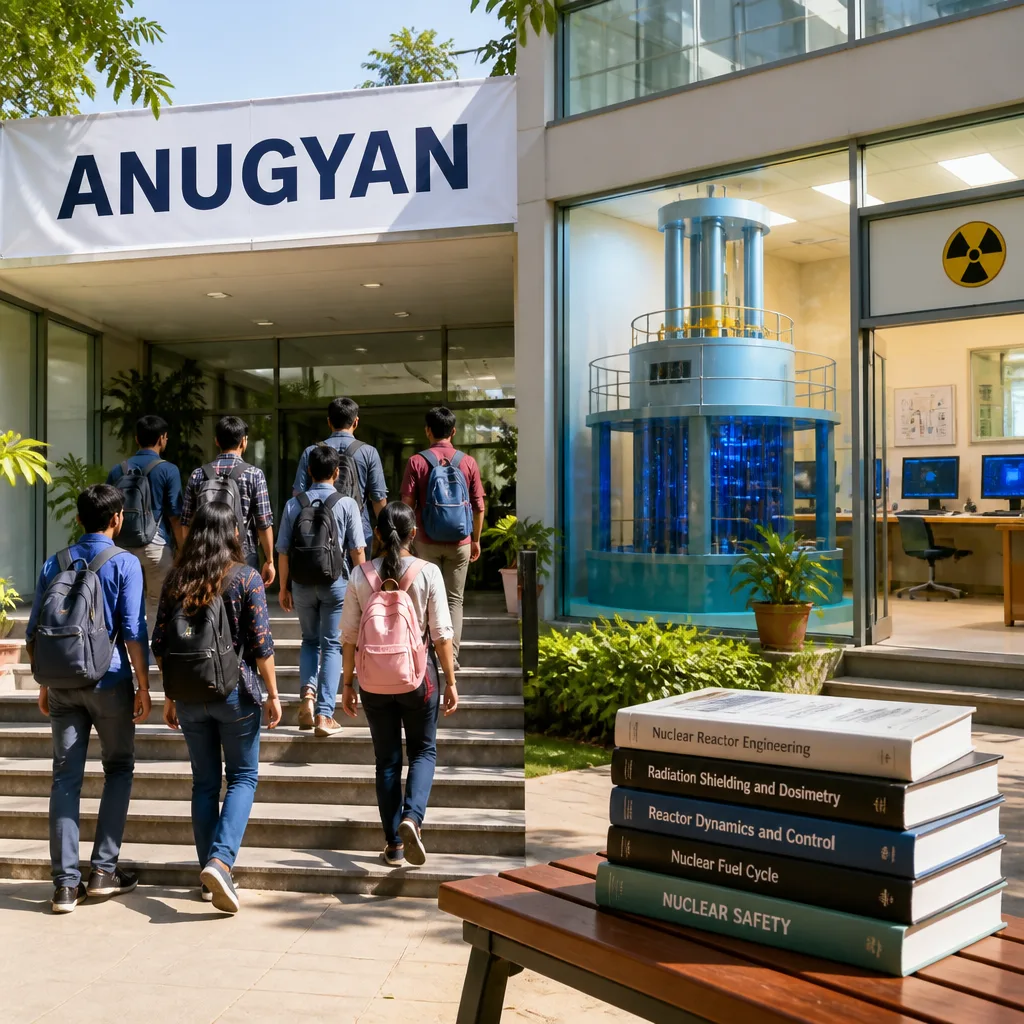
The Indian Institute of Technology Hyderabad (IITH) on Monday launched ANUGYAN — a Nuclear Technology Orientation Programme (NTOP) developed in collaboration with Crimson Energy Experts Pvt Ltd — to train engineers and industry professionals for the country’s rapidly expanding civil nuclear sector.
Programme design and objectives
Described by the institute as India’s first formal industry–academia programme in nuclear technology, ANUGYAN is a fully residential, three‑month course that combines IITH’s academic resources with the practical expertise of senior professionals from Crimson Energy Experts. The programme aims to provide participants with classroom learning as well as industry exposure to prepare them for roles across the nuclear value chain.
The course is intended to serve a broad audience, including recent engineering graduates, working professionals, executives from public sector undertakings (PSUs), engineering, procurement and construction (EPC) contractors, and manufacturers of industrial equipment who seek capabilities relevant to the emerging nuclear supply chain.
Curriculum highlights and regulatory focus
According to the institute, the ANUGYAN curriculum covers core nuclear engineering topics and practical domains required for plant design, operation and safety. Key subjects listed include:
- Reactor physics
- Thermal hydraulics
- Radiation safety
- Small Modular Reactors (SMRs)
- Engineering design
- Quality assurance
- AERB regulatory compliance
- Simulator‑based training
Participants who complete the programme will receive a joint certificate issued by IITH and Crimson Energy Experts Pvt. Ltd., signalling a combination of academic and industrial endorsement.
Context: capacity expansion and supply‑chain needs
The institute framed ANUGYAN as a step to strengthen India’s self‑reliance in nuclear engineering education and workforce development at a time when the nation is planning a major expansion of its civil nuclear power capacity. Present capacity is cited at around 8.8 GWe, and plans aim to scale this to 100 GWe by 2047, a target that will require a substantial increase in trained personnel across design, construction, commissioning and operations.
| Metric | Value |
|---|---|
| Current civil nuclear capacity | 8.8 GWe |
| Target capacity by 2047 | 100 GWe |
Implications for industry and training
By combining academic coursework with input from experienced nuclear practitioners, IITH and its industry partner aim to shorten the lead time for candidates to become productive in project and plant environments. The emphasis on areas such as quality assurance and AERB compliance reflects regulatory requirements that will be critical as private and public sector entities participate in the construction and supply of nuclear facilities.
The addition of simulator‑based training is significant: it provides hands‑on experience with operational scenarios, an element often cited by industry as essential for safe plant operations and licensing readiness.
While ANUGYAN is presented as an orientation programme, it may also serve as a pipeline for larger training initiatives if India’s nuclear expansion accelerates and demand for specialised engineers, operators and contractors rises.
Participants will receive a joint certification from IITH and Crimson Energy Experts at completion, which the institute positions as an advantage for placement and industry recognition.
The launch of ANUGYAN underscores an increasing focus on targeted skill development to match India’s strategic goals in clean energy and highlights the role of academic institutions in partnering with industry to meet national capacity and safety objectives.