Monsoon-induced slope failures keep Srinagar's lifeline under stress
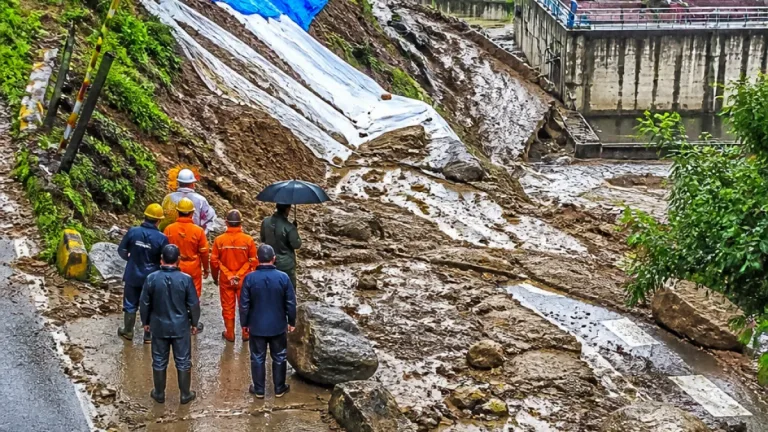
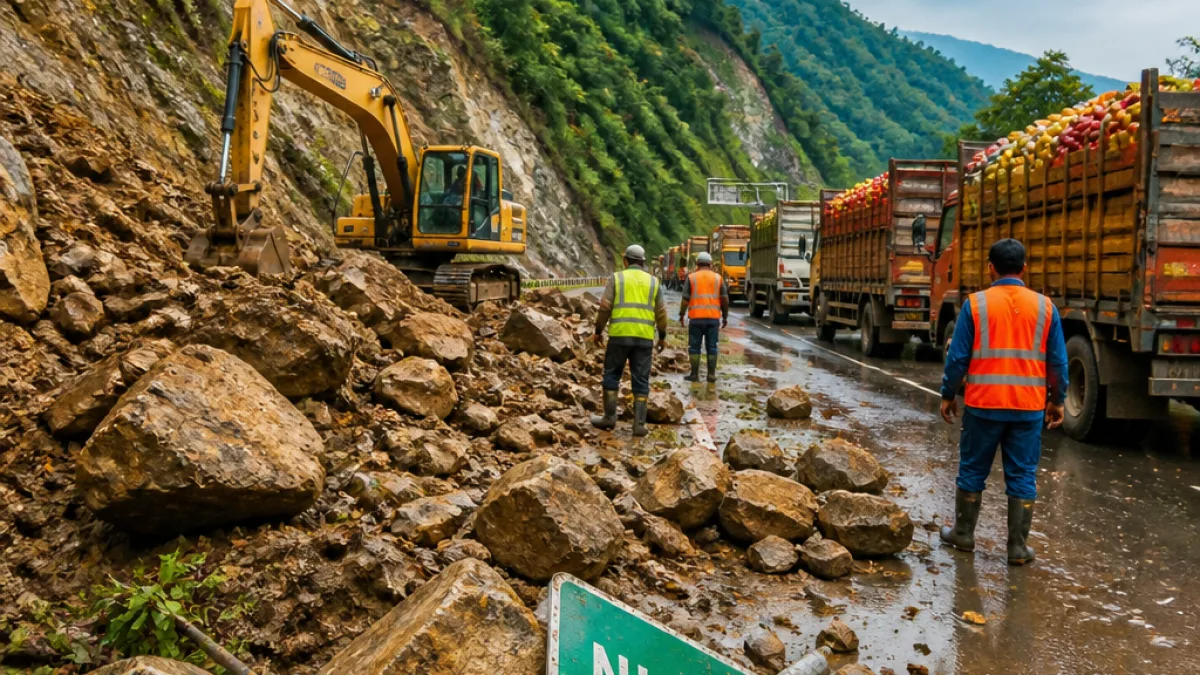
Srinagar — The Jammu-Srinagar National Highway (NH-44), described as an all-weather link to the Valley, continues to suffer recurrent closures during the monsoon as heavy rainfall triggers landslides and shooting stones, leaving commuters and freight operators vulnerable to prolonged delays and safety hazards, officials and recent studies say.
Transport disruption on NH-44 has become a regular monsoon phenomenon, with repeated incidents of rockfall and slope movement affecting key stretches between Udhampur, Ramban and Banihal. Despite deployment of men and machinery by the National Highways Authority of India (NHAI) and other agencies, the closures persist, affecting passenger traffic and the movement of agricultural produce destined for markets across the country.
"84 landslide-prone locations"
A research paper by the Geology Department of the University of Jammu — published in December last year — identified 84 landslide-prone locations on the Udhampur-Ramban stretch of NH-44. The study cited 15 major contributing factors to slope instability, including topographic, geological and hydrological variables such as slope, curvature, elevation, land use and land cover, proximity to streams and roads, faults and lineaments, and indices like topographic wetness and stream power.
Authorities say such scientific mapping underscores the vulnerability of the corridor and the need for sustained mitigation measures. However, the highway has repeatedly closed during spells of rain, imposing direct and indirect costs on the Valley's economy.
Recent incidents and human cost
On July 22, a commercial vehicle was struck by shooting stones near Ramsoo in Ramban district, killing two people and injuring several others, according to reporting on the incident. The episode followed a period of frequent rockfalls and landslides through much of mid-July, which kept traffic suspended at multiple locations and left hundreds of vehicles stranded at times.
Road-widening work in Ramban remains underway and is cited as a factor that increases vulnerability at some sites. Continuous rainfall over several days compounded the problem, and traffic movement was reportedly affected for three consecutive days until July 23 during one such spell.
| Date | Location | Impact |
|---|---|---|
| July 22 | Near Ramsoo (Ramban) | Two killed; several injured after shooting stones hit a commercial vehicle |
| Mid-July | Multiple points, Udhampur–Ramban stretch | Repeated landslides and rockfalls; traffic disrupted for several days |
| July 21–23 | Ramban | Traffic movement affected for three consecutive days amid continuous rainfall |
Economic and local consequences
The recurring closures carry significant economic consequences for Kashmir. Fruit growers and traders — particularly apple cultivators whose produce depends on timely transit to markets — face losses when the highway is blocked. Political figures and community stakeholders have repeatedly flagged that the inability to transport perishable goods during peak season undermines local incomes and farm returns.
While NHAI and traffic authorities routinely deploy clearing crews, heavy machinery and traffic police to reopen the corridor, experts cited in the study argue for integrated, long-term solutions addressing geomorphological and hydrological drivers of slope instability rather than ad hoc clearances alone.
- Scientific mapping: The University of Jammu study provides a hazard inventory for planners by highlighting 84 vulnerable locations and the factors behind slope failures.
- Ongoing works: Road-widening activities in Ramban leave some slopes exposed, increasing the likelihood of incidents during intense rainfall.
- Operational response: NHAI and traffic police continue to clear debris and restore movement, but closures remain frequent in rainy spells.
Officials advise commuters to check the latest road status before travelling and to heed traffic advisories. For Srinagar residents and businesses, the recurrent disruption of NH-44 during the monsoon remains a pressing challenge that combines immediate safety risks with longer-term economic costs, underscoring the need for coordinated mitigation and resilient infrastructure planning.