
Community stewardship at centre as policy process gathers pace
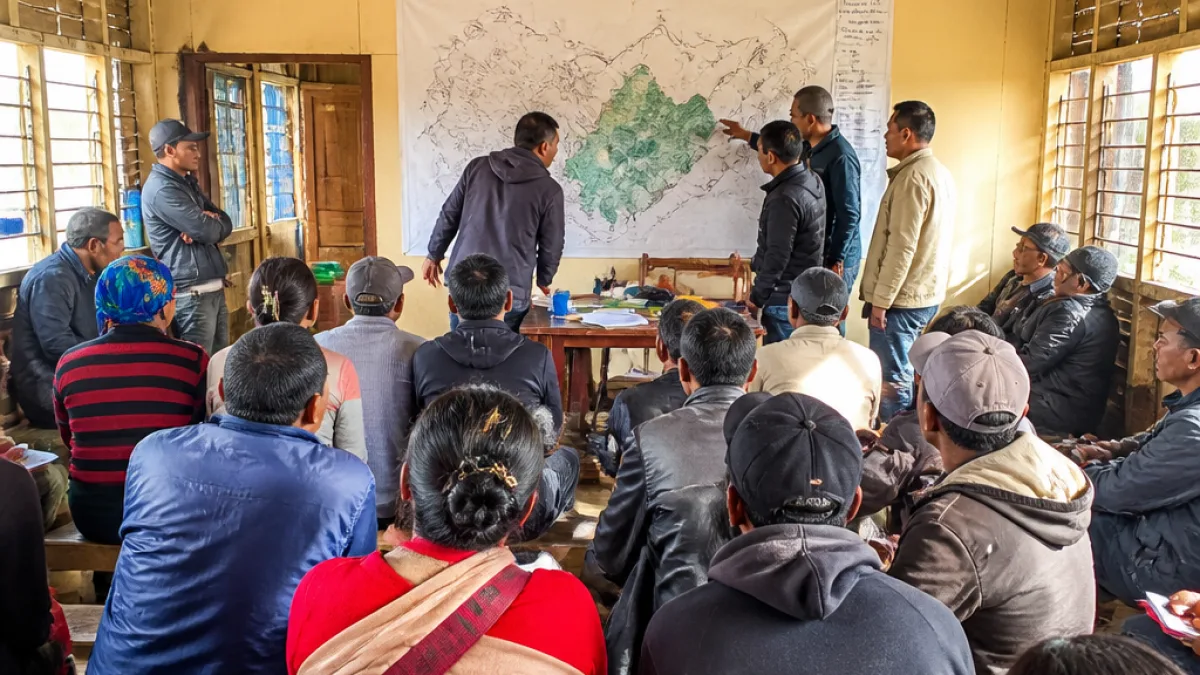
TUENSANG / MOKOKCHUNG — A two-day series of zonal stakeholder consultations has advanced the process of drafting Nagaland’s first statewide policy on Community Conserved Areas (CCA), organisers said on Friday. Workshops held on 28 and 29 July engaged village councils, CCA management committees, conservation groups and Forest Department representatives from several districts to shape a policy that aims to formalise community-led conservation while protecting customary rights.
The meetings were organised by the Foundation for Ecological Security (FES) in collaboration with the Nagaland State Biodiversity Board (NSBB), the Nagaland Community Conserved Areas Forum (NCCAF) and the International Centre for Integrated Mountain Development (ICIMOD). The consultation in Tuensang took place at the Chang Baptist Lashong Thangyen (CBLT), while the Mokokchung event was held at Sangtemla Union Hall.
Participants at Tuensang included representatives from Community Conserved Areas across Tuensang, Shamator, Noklak, Kiphire and Mon districts together with Village Council members, CCA management committees and Forest Department officials. The Mokokchung workshop drew delegates from CCAs in Mokokchung and Zunheboto along with state forest functionaries.
Speakers underlined that the proposed state-level policy seeks to reconcile formal recognition of CCAs with protection of customary ownership and traditional governance structures. Heirang Lungalang, Chairman of the Nagaland Community Conserved Areas Forum, delivered the welcome address at Tuensang. Sanjay Sharma, Regional Head of FES, provided an overview of the objectives and the policy formulation process. At Mokokchung, Imliyanger Jamir, Chairman of the Tzula (Dikhu) Green Zone CCA, opened proceedings with introductory remarks.
Key objectives and issues raised
Organisers said the consultations are part of a statewide, participatory effort to ensure the policy responds to local needs and customary systems. The main aims discussed included:
- Recognition of Community Conserved Areas within a legal and administrative framework;
- Safeguarding customary ownership and traditional governance by strengthening local institutions;
- Long-term biodiversity conservation through community stewardship and locally tailored management plans;
- Clarity on benefits and responsibilities for communities conserving critical habitats.
Attendees considered how any policy would interact with existing forest and biodiversity statutes, and discussed mechanisms for conflict resolution, benefit-sharing and capacity-building for CCA management committees. Several participants flagged the need for the policy to be sensitive to local customary law and not to erode village authority over land and resources.
Statewide process and next steps
Officials and conservation partners described the zonal consultations as an early but critical step in a multi-stage process. The inputs gathered at Tuensang and Mokokchung will be synthesised as part of drafting a policy document to be further refined through additional consultations and technical reviews, organisers said. No timeline for final approval was disclosed at the workshops.
Representatives emphasised capacity-building and institutional support as necessary complements to formal recognition. Suggestions at the workshops included training for CCA management committees, development of locally appropriate monitoring systems and integration of traditional ecological knowledge into management plans.
| Workshop | Date | Venue | Districts represented |
|---|---|---|---|
| Tuensang zonal consultation | 28 July | Chang Baptist Lashong Thangyen (CBLT) | Tuensang, Shamator, Noklak, Kiphire, Mon |
| Mokokchung zonal consultation | 29 July | Sangtemla Union Hall | Mokokchung, Zunheboto |
Organisers said they will continue engaging communities across other zones to build a representative evidence base and ensure the draft policy reflects the diversity of customary arrangements in Nagaland. The process is being pursued collaboratively with state agencies and international partners to align conservation outcomes with community rights.
Advocates for CCAs argued that formal recognition could unlock technical and financial support for community-led conservation while providing a framework to address threats such as unsustainable resource extraction and habitat loss. Several participants urged that any policy avoid prescriptive, one-size-fits-all measures and instead offer flexibility for village-level governance.
The consultations represent a significant move towards formalising an approach in which communities retain the principal role in managing and protecting their lands, while accessing support and safeguards from state and partner institutions.
Kevileno Angami
Correspondent