Community effort targets persistent waste-management challenges
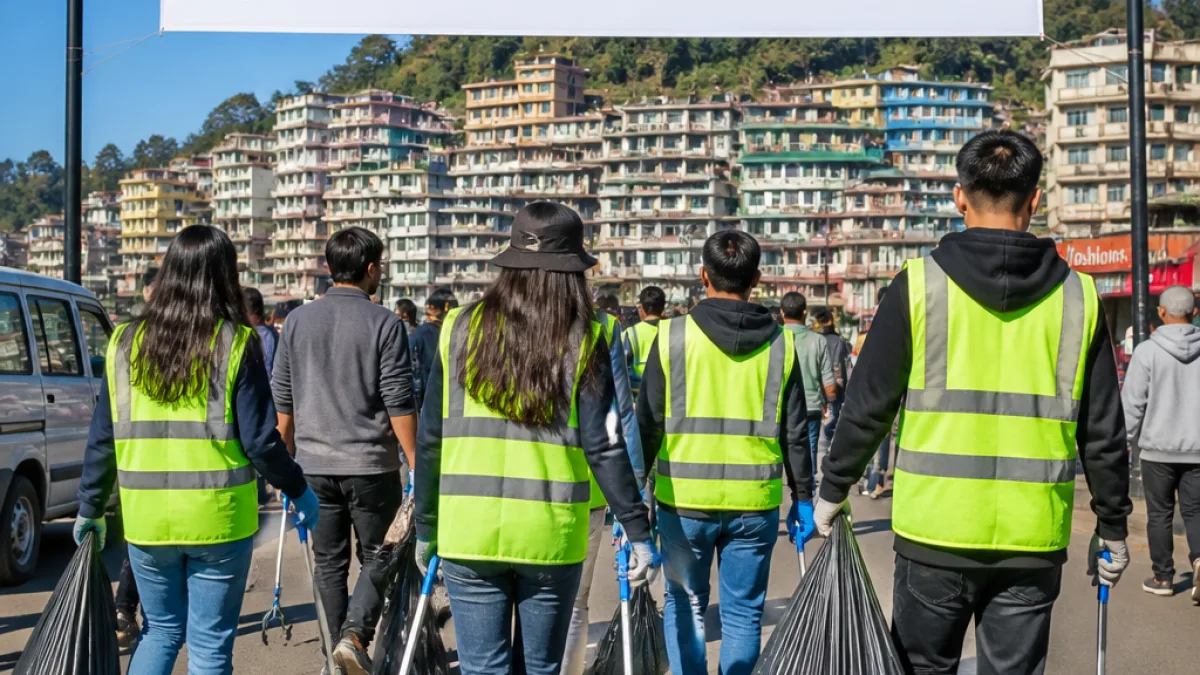
KOHIMA: Kohima Town MLA Dr Tseilhoutuo Rhutso took part in a public cleanliness drive on Saturday, teaming up with digital content creators and community volunteers to clear litter and solid waste from several busy locations across the city. The initiative formed part of activities under the Nagaland Influencers Summit 2026 and sought to convert social-media clout into visible community service.
The drive covered stretches from Razhü Point and the Deputy Commissioner’s (DC) Office junction to the Old MLA Hostel junction, organisers reported. The organisers said the exercise aimed to encourage citizens—particularly younger residents engaging through digital platforms—to take responsibility for cleanliness alongside municipal authorities.
“Cleanliness should not be left alone for the government to do, but communities, especially the younger generation, should also take responsibility,”
The message from the MLA comes against longstanding civic concerns in Kohima, where waste collection and disposal have posed challenges. The Kohima Municipal Council has previously contended with ageing waste-collection vehicles and difficulties in managing waste on the city’s distinctive hilly terrain, factors that have complicated regular collection and disposal.
Officials and councillor join the effort
The drive received support from the Kohima Deputy Commissioner B. Henok Buchem, NCS, and Ward 19 Councillor Medoviu Martin Suohu, who joined and encouraged volunteers, the organisers said. Participants included political representatives, local creators and residents from various walks of life.
Organisers described the activity as one of several community interventions planned under the summit, with the broader objective of bringing young digital influencers, civil-society actors and communities together to generate wider social impact beyond online engagement.
- Areas covered: Razhü Point, DC Office junction, Old MLA Hostel junction.
- Key participants: Kohima Town MLA Dr Tseilhoutuo Rhutso, DC B. Henok Buchem, Ward 19 Councillor Medoviu Martin Suohu, digital content creators and community volunteers.
- Context: Part of the Nagaland Influencers Summit 2026; local waste-management challenges noted.
Local context and implications
The initiative underlines a growing trend in Kohima where civic action is increasingly being promoted through partnerships between elected representatives and youth-led digital networks. Organisers argued that converting online influence into on-ground civic work can complement municipal efforts and raise awareness about routine practices that affect public health and the urban environment.
Observers in the city have repeatedly highlighted the need for systemic upgrades—such as modernising collection fleets, improving segregation at source and establishing reliable transfer and disposal systems—to address waste problems sustainably. While single-day clean-ups provide immediate visual benefits and encourage community participation, municipal officials and community leaders say long-term solutions will require continued coordination between local government, civil society and citizen groups.
| Activity | Lead/Support |
|---|---|
| Street clean-up | Dr Tseilhoutuo Rhutso; content creators; volunteers |
| Administrative support | Deputy Commissioner B. Henok Buchem, NCS |
| Ward-level participation | Councillor Medoviu Martin Suohu (Ward 19) |
Organisers noted that the crown of the exercise was to demonstrate how influence can be harnessed for the public good: translating followers and engagement into tangible action that improves neighbourhoods and public spaces.
The drive also forms part of a continuing pattern of civic initiatives by elected representatives; the MLA has previously taken part in cleanliness and beautification activities in his constituency in 2024, organisers said. For Kohima residents, the recurring efforts highlight both the willingness of some leaders to participate directly in civic work and the persistent need for systemic enhancements to the city’s waste-management infrastructure.
Participants urged residents to maintain the cleanliness efforts beyond the event, stressing that sustained local participation—alongside targeted government intervention—will be essential to improve sanitation standards across Kohima.