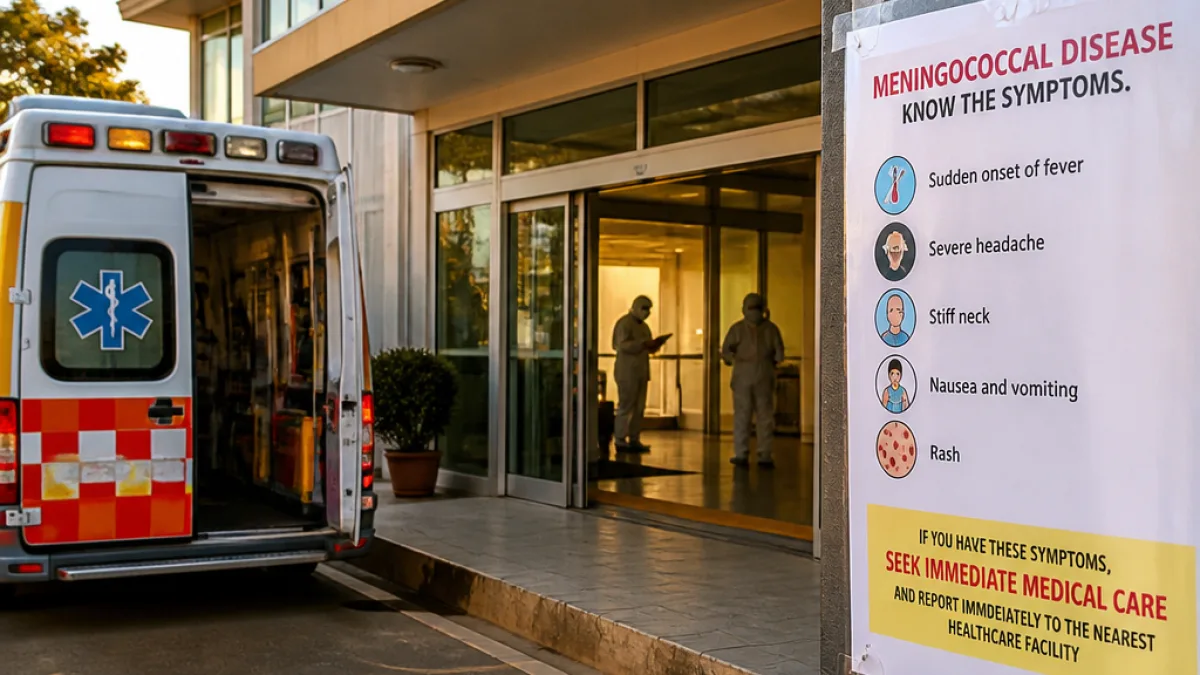
Kohima, Aug 5: Nagaland's Directorate of Health & Family Welfare has issued a statewide advisory to educational institutions and healthcare providers after a suspected case of invasive meningococcal disease was detected in Kohima, prompting intensified surveillance to avert any cluster of infections.
Patient hospitalised in critical condition
A 14-year-old boy was admitted to the Paediatric Intensive Care Unit (PICU) at the Children’s Intensive Health Services & Research (CIHSR) Hospital on August 2 with a rapid-onset febrile illness, doctors reported. Clinical features at presentation included high fever, vomiting, low blood pressure, altered sensorium and rapidly spreading petechial and purpuric skin lesions.
Clinicians said the adolescent is critically ill and receiving invasive mechanical ventilation and intensive care support. Based on the clinical picture, he is being managed for septic shock with purpura fulminans and a strong clinical suspicion of invasive meningococcal disease. Laboratory confirmation is pending, the Health Directorate said.
State advisory and public-health measures
The Health & Family Welfare Department has warned that though meningococcal disease is relatively uncommon, it can spread quickly in crowded environments such as hostels, dormitories and other residential settings. The advisory urges immediate action on early detection, prompt reporting and rapid public-health interventions to prevent transmission.
- Recipients of the advisory: school authorities, hostel wardens, teachers, students and healthcare providers across Nagaland.
- Key instructions: heightened surveillance, immediate referral of suspected cases to the nearest health facility, strict monitoring for close-contact exposures.
- Transmission route: spread occurs through respiratory droplets and prolonged close contact — coughing, sneezing, kissing, or sharing utensils and water bottles.
Warning signs to watch for
The Department listed symptoms that require urgent medical evaluation. Authorities have directed that any individual displaying these signs should be taken to a health facility without delay.
| Common warning signs | Severe features prompting urgent care |
|---|---|
| Sudden high fever, severe headache, neck stiffness | Altered sensorium, seizures, drowsiness, confusion |
| Vomiting, photophobia (sensitivity to light) | Reddish‑purple rash that does not fade on pressure, cold extremities, signs of shock |
What clinicians and institutions are advised to do
Health officials have instructed educational institutions and residential facilities to maintain vigilance for early symptoms among students and staff, implement prompt isolation of suspected cases, and ensure rapid communication with district health authorities. The advisory also emphasises steps to limit spread in congregate settings, including avoiding sharing of eating utensils, water bottles and cigarettes.
Local primary-care units and hospitals have been asked to be alert for patients presenting with signs of meningitis or septicaemia and to initiate empirical treatment where clinically indicated while samples are sent for laboratory confirmation.
About meningococcal disease
Meningococcal disease is caused by the bacterium Neisseria meningitidis and can result in meningitis (infection of the lining of the brain) or bloodstream infection (septicaemia). Both conditions can progress rapidly and become life-threatening within hours if left untreated, health authorities noted.
The Department reiterated that early antibiotic therapy and supportive care are critical to improving outcomes. Vaccination against certain meningococcal strains is available, but public-health responders said decisions on targeted immunisation will depend on laboratory confirmation and epidemiological assessment.
District health officials are coordinating with state surveillance teams to track contacts and monitor for additional cases. So far, authorities have not reported any other suspected infections linked to the Kohima patient.
Residents and institutional heads have been urged to follow the Department’s advisory and to report any cluster of febrile illness or unusual skin rashes to the nearest health facility or district surveillance unit without delay.