Every fish sampled contained microplastics, with Delhi sites recording the highest burden
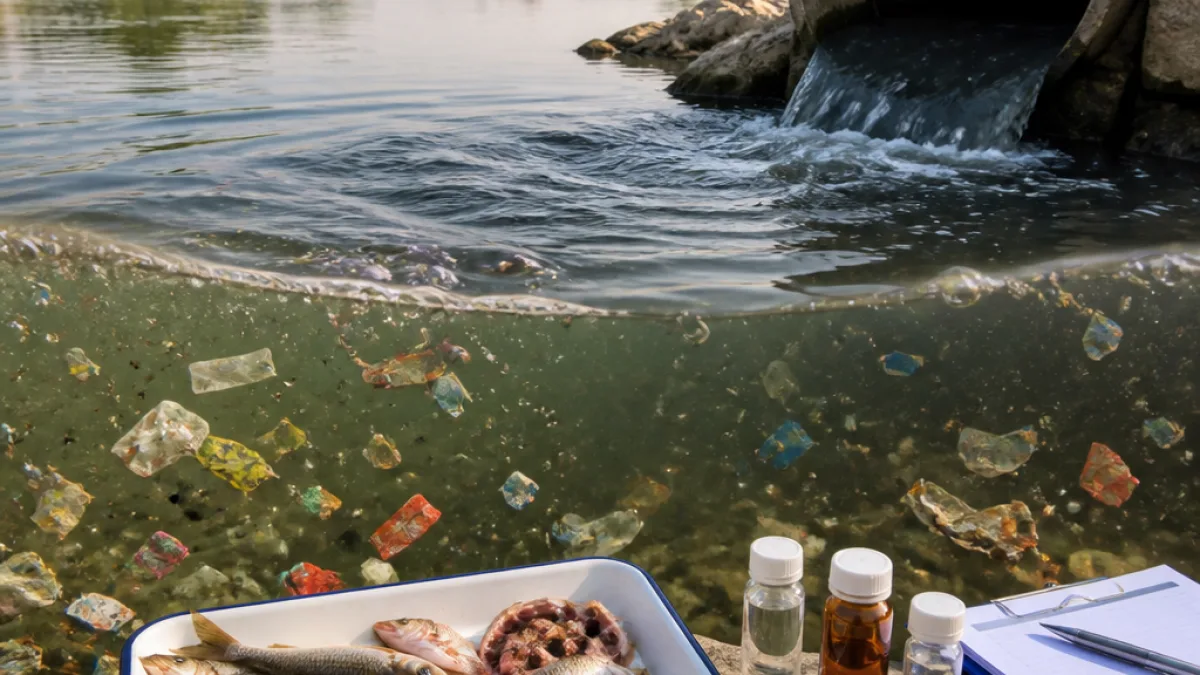
A University of Delhi research team has reported that every one of 220 freshwater fish examined from stretches of the Yamuna carried microplastic particles, and that specimens from the Delhi section of the river had significantly greater contamination than those collected upstream in Haryana.
The study analysed fish collected from four locations: Yamuna Nagar and Karnal in Haryana, and Sur Ghat and Sonia Vihar in Delhi. Researchers recovered a total of 1,678 microplastic particles from the fish, an average of about 7.6 particles per fish. No specimen was found free of microplastic contamination.
"The findings identify the Delhi stretch of the Yamuna as a high microplastic contamination zone and highlight the combined influence of urban pollution and fish ecology on microplastic bioaccumulation," the researchers said.
According to the study, fish collected at Sonia Vihar and Sur Ghat contained significantly higher numbers of microplastics than those sampled at the two upstream Haryana sites; the difference was reported to be statistically significant. The researchers attributed the heavier contamination in the Delhi stretch to multiple urban sources entering the river, including untreated sewage, municipal wastewater, textile effluents, stormwater runoff and unmanaged plastic waste.
Species and tissue distribution of microplastics
Among the species examined, tilapia (Oreochromis niloticus) from Sonia Vihar showed the highest contamination: 436 microplastic particles were recovered from 20 fish, averaging 21.8 particles per fish. Tilapia from Sur Ghat contained 264 particles. Rohu (Labeo rohita) sampled at Sonia Vihar carried 205 particles, averaging 10.25 particles per fish. At the other extreme, needle fish (Xenentodon cancila) from Karnal recorded the lowest contamination with 37 particles recovered from 10 fish.
Particle distribution across fish tissues showed that the highest number of microplastics was in the gastrointestinal tract, where 751 particles were detected. Researchers also found 605 particles in gill tissue and 322 particles in muscle tissue, indicating that microplastics can translocate beyond the digestive system into tissues that are typically consumed.
Data snapshot
| Location | Notable species | Particles (example) | Average per fish (example) |
|---|---|---|---|
| Yamuna Nagar (Haryana) | Various (mixed sample) | -- | -- |
| Karnal (Haryana) | Needle fish (X. cancila) | 37 | 3.7 (10 fish) |
| Sur Ghat (Delhi) | Tilapia | 264 | -- |
| Sonia Vihar (Delhi) | Tilapia, Rohu | 436 (tilapia) / 205 (rohu) | 21.8 (tilapia) / 10.25 (rohu) |
Implications for consumers and river management
Detection of microplastics in muscle tissue is particularly notable because muscle is the primary edible portion of many fish species. The study's finding that particles occur beyond the gastrointestinal tract underscores concerns about potential human exposure through consumption, though the research as presented does not quantify direct health risk to consumers.
Researchers point to urban pollution pathways as the main contributors to higher contamination in Delhi. Specifically, untreated sewage, municipal wastewater, textile effluents, stormwater runoff and unmanaged plastic waste were cited as likely sources introducing microplastics into the river system.
What the results mean locally
- Freshwater fisheries in and downstream of urban stretches may carry higher microplastic burdens compared with upstream rural reaches.
- Monitoring of effluent discharges and solid-waste management is critical to reduce microplastic inputs into the Yamuna.
- Further studies are required to assess the health implications for people who regularly consume river fish and to track long-term ecological impacts.
The study adds to mounting evidence of plastic pollution in Indian rivers and highlights the role of urban centres in elevating contamination levels. While the current research documents the presence and distribution of microplastics in fish tissues across selected sites, it does not extend to a human health risk assessment or propose specific remediation steps beyond identifying probable pollution sources.
Given the river's importance to communities in Haryana and Delhi—for livelihood, food and domestic use—the authors' identification of the Delhi stretch as a high-contamination zone may inform targeted monitoring and pollution-control measures by local authorities and pollution boards.
This report is based on the study findings as described publicly by the University of Delhi research team; the published work provided the data and interpretations quoted here.