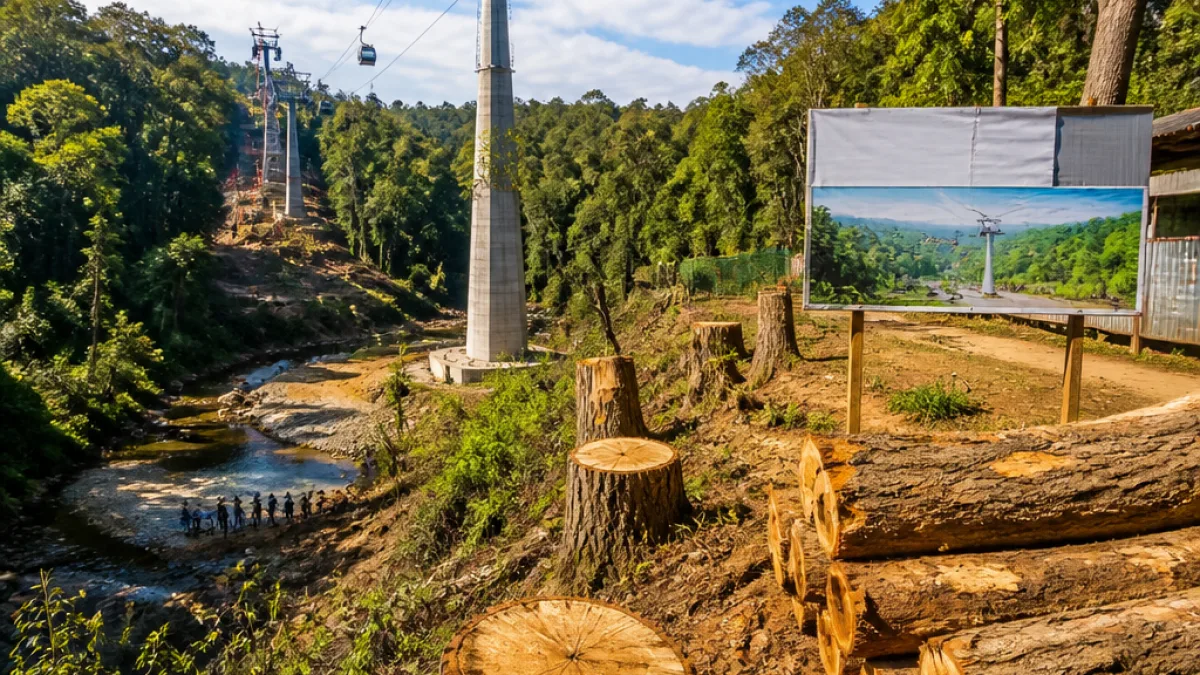
Shillong, July 30: The Meghalaya Government has offered to hold consultations to allay public concerns about the proposed Shillong Ropeway, Tourism Minister Timothy D. Shira said on Thursday, while reiterating that the project has secured necessary statutory permissions before work began.
Minister stresses approvals already in place
Responding to questions about allegations of tree felling and possible environmental harm, Mr Shira said the ropeway proposal received the requisite clearances from both forest and environment authorities prior to commencement of work. He noted the project was initiated under a previous tourism minister and that departmental officers had carried out the procedural requirements.
"That was not done during my time. I have been informed that everything has been done properly and all required permissions have been obtained from the concerned authorities," the minister said.
Mr Shira said the government is willing to engage with stakeholders to clear misconceptions and bridge what he described as an "information gap". He added that consultations will be organised if there are outstanding issues that need addressing.
Public concern focuses on trees and water
Environmental activists, resident groups and some political voices have flagged the ropeway on grounds including alleged felling of trees within the project corridor and possible implications for local water sources. The debate has intensified as work progressed on certain stretches, prompting calls for wider public hearings and transparency.
While the government insists that the statutory process was followed, critics have argued for more detailed disclosure of the project’s impact assessments and for wider stakeholder participation in decision-making.
What the government says it has obtained
Mr Shira informed reporters that officials had secured the following clearances before construction activity commenced:
- Forest clearance
- Environmental certificate
- Other statutory permissions from concerned departments
| Approval | Stated status |
|---|---|
| Forest clearance | Obtained |
| Environment certificate | Issued |
Calls for consultation and transparency
The minister acknowledged that some people remain apprehensive about the project and said consultations could help dispel misunderstandings. "Consultation will take place if there is anything. It is necessary to dispel apprehensions and the information gap. A bridge should be built with those who are criticising that the government has not done things properly," he said.
Activists who have protested parts of the development urge publication of environmental impact assessment (EIA) documents, tree-felling inventories, and detailed routes of the ropeway to verify that clearances were granted with full knowledge of consequences to local ecology and water catchments.
Local impact and practical points for residents
For communities in Shillong and adjoining areas, the central issues include loss of canopy cover, potential soil disturbance and possible effects on springs and streams that feed local water supplies. Experts often recommend that infrastructure projects in hill areas publish mitigation plans and undertake compensatory afforestation where tree removal is unavoidable.
If formal consultations are scheduled, residents should look for information on:
- Dates and venues of public hearings or stakeholder meetings
- Availability of EIA and forest clearance documents for public scrutiny
- Details of mitigation measures and compensatory planting, if any
Way forward
The state administration's willingness to meet stakeholders could provide a forum to resolve outstanding disputes only if the meetings include independent technical experts, clear access to documents and a fixed timeline for responses. How swiftly the government moves from a statement of intent to a structured consultation process will determine whether tensions over the ropeway are defused or persist.
Meanwhile, the ropeway proposal — billed by proponents as a means to boost tourism and ease movement across Shillong’s hilly terrain — remains under scrutiny by citizens and civil society groups demanding greater transparency and assurances on environmental safeguards.
Reporting from Shillong.