Shillong: The Special Intensive Revision (SIR) of Meghalaya’s electoral rolls has flagged 1,80,404 electors as absent, shifted, deceased or duplicate (ASDD), the Chief Electoral Officer (CEO) said on Thursday, as the state completed house-to-house enumeration for all registered voters.
House-to-house outreach completed
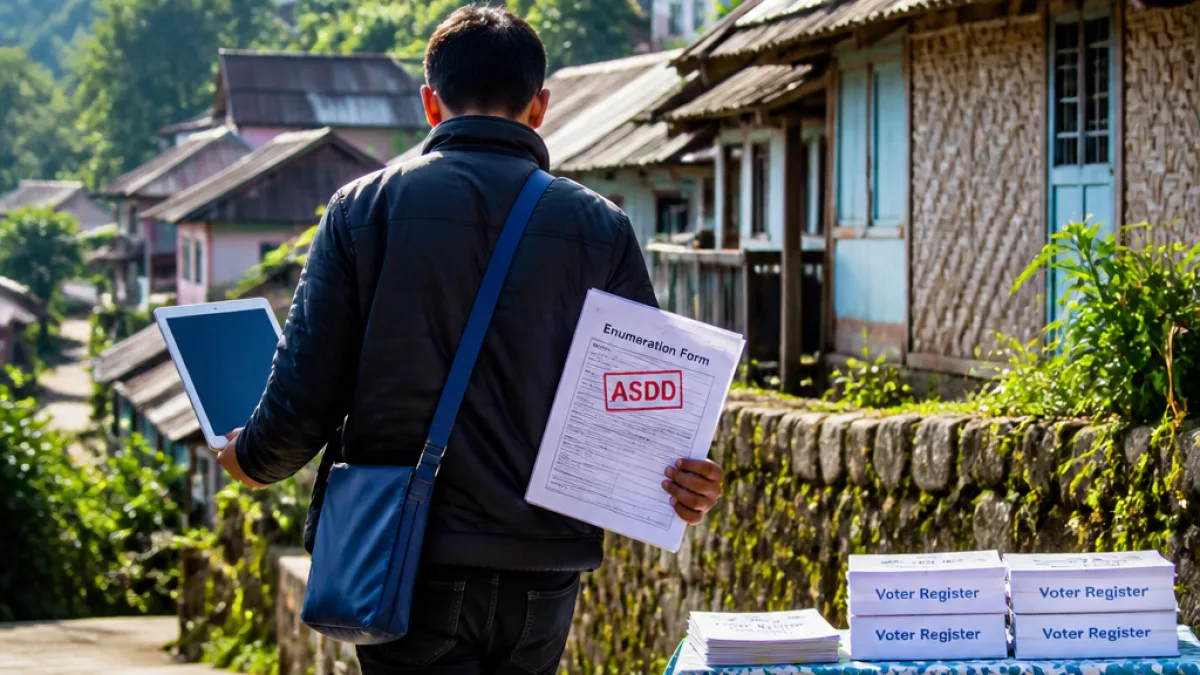
Booth Level Officers (BLOs) carried out a door-to-door verification that began on June 30 and concluded on July 29. According to the CEO’s office, the exercise ensured that all eligible electors in the state submitted Enumeration Forms either physically or through digital means. The office said the state achieved full coverage under the SIR with 23,49,645 electors covered.
Breakdown of ASDD findings
The CEO, BDR Tiwari, provided a detailed categorisation of the 1,80,404 entries flagged during the verification process. The largest single component is electors found to be deceased.
| Category | Number of electors | Percentage of total electors |
|---|---|---|
| Deceased | 81,490 | — |
| Did not return enumeration forms | 45,013 | — |
| Permanently shifted | 42,532 | — |
| Declined to submit forms | 4,668 | — |
| Duplicate enrolments | 6,701 | — |
Mapping status against 2005 database
The CEO’s office also reported the matching status of current electors with the Special Intensive Revision 2005 database. A substantial portion of records were linked directly or via progeny mapping to older entries, while a smaller share remains unlinked and will be subject to further verification.
- 7,75,337 electors (about 33%) were directly mapped to the SIR 2005 database.
- 11,69,670 electors (about 49.78%) were mapped as progeny by linking them with parent or guardian records from 2005.
- 2,24,234 electors (about 9.54%) could not be linked and were placed in the "No Mapping" category.
Next steps: notice phase and claims and objections
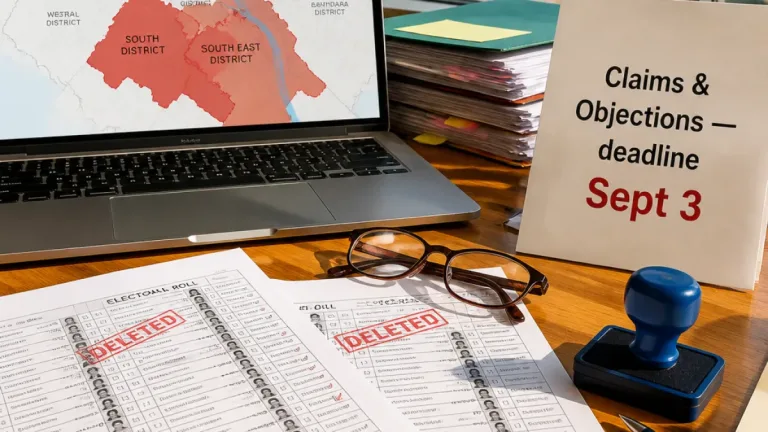
Electors in the "No Mapping" category and other contentious cases will be examined during the notice phase. The CEO's office stated that the period for claims and objections runs from August 5 to September 3, during which time affected voters can seek correction, deletion or inclusion as per the statutory process before any final decision on their electoral status is taken.
"These cases will be verified during the notice phase, including the claims and objections period from August 5 to September 3 before any decision is taken regarding their electoral status," the CEO's office said in a statement.
Role of political parties and local stakeholders
The CEO expressed appreciation for the support extended by political parties and other local stakeholders. Booth Level Agents (BLAs) appointed by political parties participated in the process and were credited with enhancing transparency and public participation, according to the election office. Village authorities, Nokmas, community leaders, civil society organisations and the media also assisted in facilitating enumeration in remote and urban areas.
Implications for voters
The SIR results mean a sizeable number of entries will be scrutinised and potentially removed or corrected ahead of future polls. Voters whose names have been challenged or who find discrepancies are advised to monitor public notices issued by their local electoral offices and to utilise the claims and objections window to submit necessary documents or representations.
The completion of the house-to-house exercise marks a significant administrative effort to update the rolls across Meghalaya's three hill regions and urban centres, aiming to improve the accuracy and credibility of the voter list.