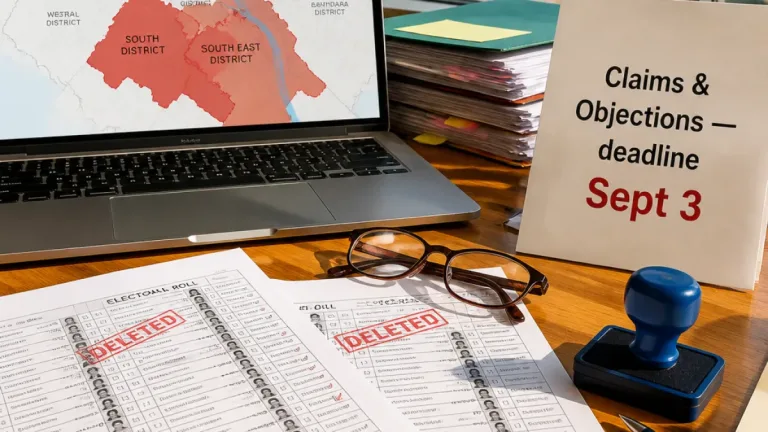
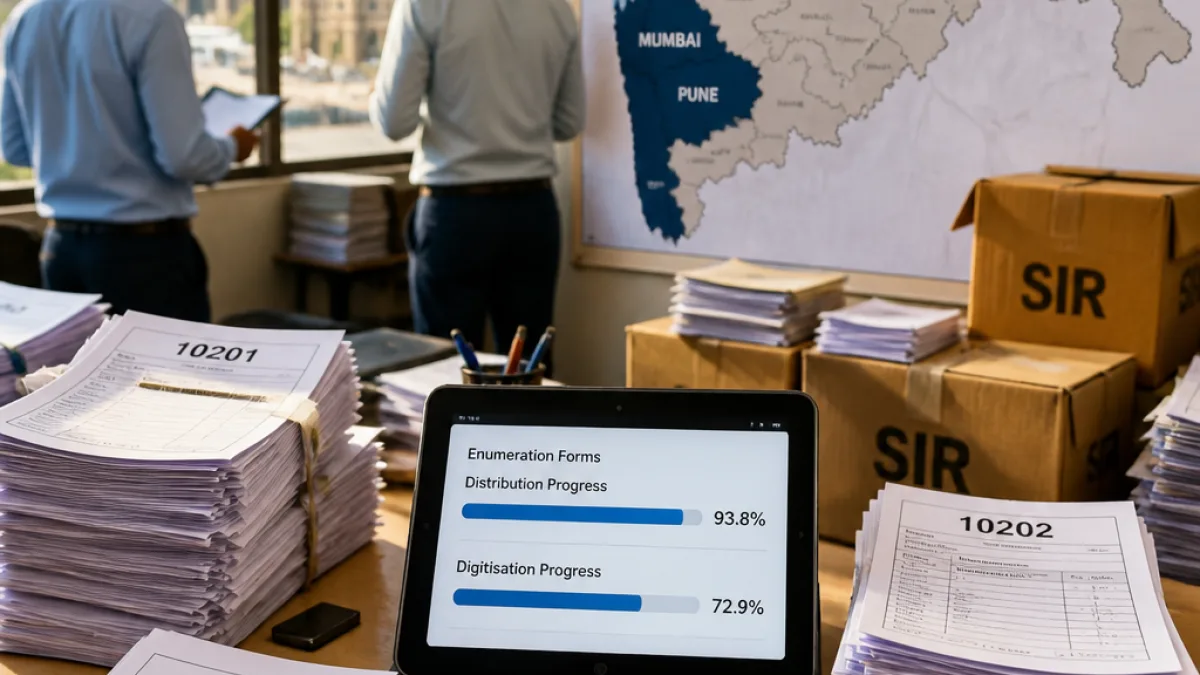
Mumbai: Maharashtra has completed distribution of more than 93% of enumeration forms under the Special Intensive Revision (SIR) of electoral rolls, while nearly 72.89% of the forms have been digitised so far, the State Chief Electoral Officer (CEO) reported on Monday.
Statewide progress and timeline
The SIR exercise, aimed at updating the electoral roll, began on June 30 and is scheduled to conclude on August 8. The state has a total electorate of 9.79 crore voters. To date, officials say 9.18 crore enumeration forms have been handed out, while digital records have been created for over 7.13 crore forms.
Authorities have deployed 1,00,253 booth-level officers (BLOs) across Maharashtra to carry out enumeration, verification and digitisation work after electoral registration officers (EROs) appointed BLOs with approval from district election officers (DEOs), the bulletin stated.
Rural gains, urban shortfalls
The progress is uneven. Several Marathwada districts, notably Wardha and Hingoli, recorded full coverage for distribution of forms. By contrast, large urban districts are behind schedule on both distribution and scanning of forms into the system.
- Pune: 80.72% distribution; 59.67% digitisation
- Thane: 82.33% distribution; 46.55% digitisation (lowest among districts cited)
- Mumbai Suburban: 85.12% distribution; 53.21% digitisation
- Mumbai City: 90.42% distribution; 54.67% digitisation
- Nagpur: 87.62% distribution; 59.77% digitisation
- Palghar: 91.76% distribution
Top-performing districts
Digitisation rates are highest in several rural and coastal districts. Hingoli leads with a digitisation rate of 90.47%, followed by Ratnagiri at 89.86%, Buldhana at 89.19% and Yavatmal at 87.93%. These districts have managed both distribution and electronic capture efficiently compared with many urban centres.
| District | Distribution (%) | Digitisation (%) |
|---|---|---|
| Wardha | 100 | — |
| Hingoli | 100 | 90.47 |
| Pune | 80.72 | 59.67 |
| Thane | 82.33 | 46.55 |
| Mumbai Suburban | 85.12 | 53.21 |
| Ratnagiri | — | 89.86 |
Implications and likely focus ahead of the deadline
The gap between distribution and digitisation suggests many households have received paper enumeration forms but BLOs or EROs have yet to complete data entry. Digitisation is essential to incorporate additions, deletions and corrections into the official electoral database and to ensure voters are included on the final roll.
Urban districts face particular challenges: higher population density, greater migratory populations, and more complex housing structures can slow door-to-door enumeration and later conversion of paper forms into digital records. Authorities will need targeted drives in municipal pockets and slum areas to bridge the shortfall.
What voters should note
Voters who have not received forms or who wish to check their registration status are advised to contact their local BLO or the ERO of the assembly constituency before the SIR deadline. The CEO's bulletin confirms that BLOs have been officially appointed by EROs with DEO approval for each constituency.
Finalisation of the roll after August 8 will determine the electoral list for forthcoming elections; omissions or errors beyond the cut-off could affect an individual’s ability to vote unless addressed through the authorised processes.
The CEO's update underlines substantial progress but also flags work remaining in major urban centres if the state is to complete both enumeration distribution and digitisation effectively by the SIR closing date.