Zoo to perform tree surgery and conserve germplasm after expert assessment
Thiruvananthapuram: The city zoo has initiated conservation and safety measures for a rare Arara nut-tree (Joannesia princeps) on its compound following an inspection by experts from the Rubber Board and the Kerala Forest Research Institute (KFRI), The Hindu reported on Friday. The tree, native to Brazil and belonging to the Euphorbiaceae family, is believed to be the only specimen of its kind in Kerala.
Zoo officials and botanical staff said there are no archival records in the Thiruvananthapuram zoo and museum that clearly document the origin or planting of the tree, and it had been commonly mistaken for a rubber tree until specialist intervention.
"The tree was identified as Arara nut-tree, a species generally found in botanical gardens and research institutions outside Brazil," said P. Sujanapal, senior principal scientist and head of the department of Silviculture at KFRI, according to the reporting.
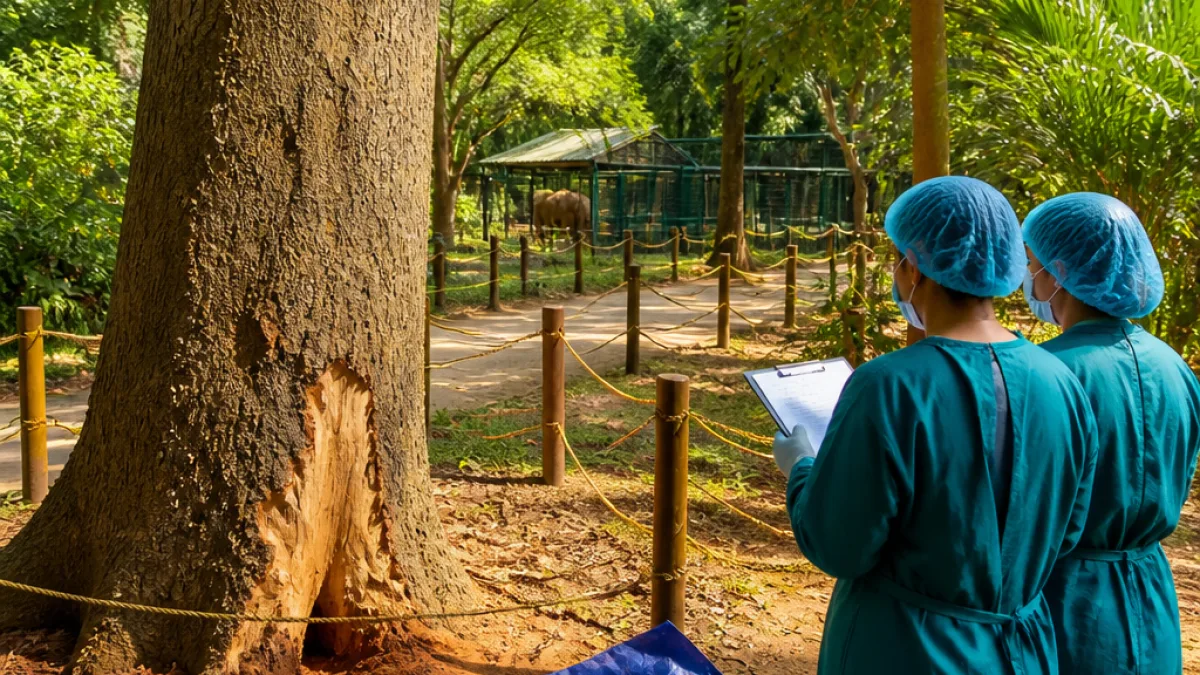
Dr. Sujanapal's inspection flagged damage to the tree's bark, including cracks and sections of dead or decayed tissue, predominantly at the base near the soil line. He observed that the tree's location — on the edge of the hog deer enclosure — may have exposed it to high nutrient load in the soil, a factor that can affect the health of a softwood species.
Recommended interventions and public-safety implications
Given the condition of the trunk and the tree's softwood nature, experts warned that without prompt remedial work the specimen could become unstable and pose a risk to both visitors and animals. The KFRI team recommended a package of conservation and safety measures, which zoo authorities are preparing to implement.
- Tree surgery — removal of damaged bark and application of medications to control decay and promote tissue recovery.
- Pruning for weight management — selective thinning to reduce canopy load and lower the risk of toppling.
- Germplasm conservation — collection and preservation of seeds or propagules to maintain the species in botanical gardens or other institutions.
Zoo and botanical personnel said these steps are being planned with both the long-term conservation of the species and immediate safety in view. The location inside the hog deer enclosure complicates operations and warrants coordination between animal-keeping staff and the horticultural team.
| Issue | Observation | Recommended action |
|---|---|---|
| Bark cracks and dead tissue | Damage concentrated near soil level | Remove damaged bark; apply medicines to check decay |
| High soil nutrients | Possible cause of stress | Soil management and monitoring |
| Risk of toppling | Softwood species with heavy canopy | Pruning for weight reduction; structural support if required |
Conservation context and local significance
The Arara nut-tree is native to South America and is seldom cultivated outside Brazil, surviving in a limited number of botanical gardens and research institutions worldwide after being introduced from its natural range. Its presence in Thiruvananthapuram's zoo thus represents a botanical rarity for the state.
Zoo superintendent and botanical staff have said that conserving the specimen's germplasm is a priority. Maintaining living collections and seed banks helps ensure that unusual or non-native species remain available for research, education and ex-situ conservation if wild or cultivated populations elsewhere decline.
Zoo management will need to balance conservation aims with the day-to-day operational needs of a public facility that also houses free-ranging and enclosed animals. Officials indicated that any remedial work will be scheduled to minimise disturbance to the hog deer and to ensure visitor safety.
Experts from the Rubber Board who initially visited to inspect rubber trees in the museum complex first prompted closer study of the specimen. That preliminary assessment was followed by the KFRI inspection that established the botanical identity and outlined remedial measures.
Zoo authorities are expected to formalise a treatment plan in consultation with KFRI and may also seek technical guidance for long-term monitoring. The steps taken in Thiruvananthapuram reflect wider practice in botanical management where rare specimens within public spaces are prioritised for both public safety and biodiversity conservation.
The zoo did not provide a planting date or provenance for the tree in public records, underscoring the importance of botanical surveys and record-keeping for urban green spaces.