PANAJI: A third leopard attack on livestock in the Avedem-Cottombi Village Panchayat has intensified anxiety among residents, who told reporters they have repeatedly sought help from the Forest Department, the District Administration and their local legislator without sustained action.
Livelihoods hit as cattle losses mount
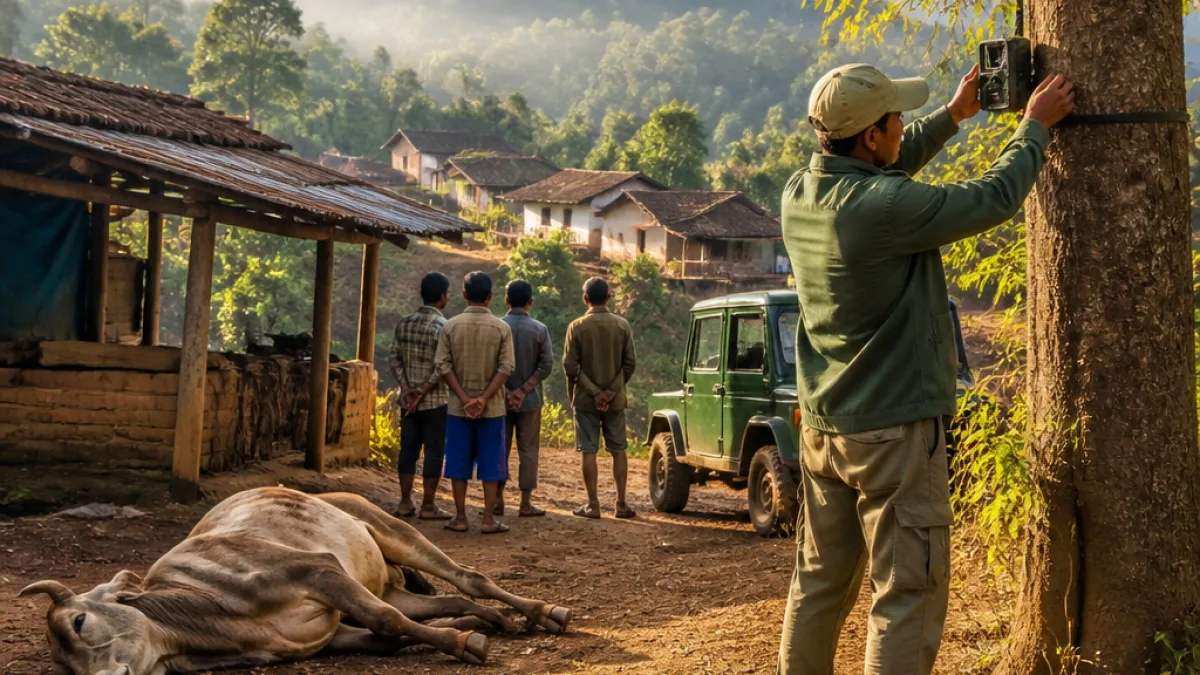
On Wednesday, villagers said, a leopard killed a cow belonging to local farmer Benju Clement. The carcass was found beside the animal shed early in the morning, according to accounts cited in the original report.
“I woke up in the morning to check on my cow. I couldn't find it in the shed. After searching, I found it dead beside the shed,” the farmer said, as reported by The Goan Network.
Residents said this was the third such incident in recent weeks in the panchayat. Farmers, many of whom depend on cattle for dairy and haulage, have expressed distress over repeated losses and the economic strain they impose.
Villagers demand preventive and humane measures
The Village Panchayat has again appealed to forest officials and district authorities to act, the report said. A ward councillor told reporters the Forest Department had inspected the site and assured villagers of strict action, but that promises from earlier complaints had not translated into long-term mitigation.
Locals are pressing for a package of measures they say would reduce risk to livestock and people while ensuring compliance with wildlife laws. Their demands include:
- Increased patrolling and surveillance around the panchayat, especially at night
- Installation of camera traps at known leopard movement corridors
- Continuous monitoring and mapping of leopard sightings
- Deployment of rapid-response teams to intervene after sightings or attacks
- Community awareness programmes on livestock protection and emergency contacts
Authorities’ response and enforcement challenges
The Goan Network report indicated forest officers inspected the latest scene and offered assurances, but did not specify immediate measures to be implemented. Villagers warned they would escalate the matter to the MLA and higher authorities if no effective action followed.
Human-wildlife conflict in Goa has presented recurring challenges to both conservation objectives and rural livelihoods. Dense vegetation, fragmented habitats and expanding human settlements can increase encounters between people, livestock and large carnivores. Effective mitigation usually requires a combination of swift-field measures, scientific monitoring and community involvement.
| Issue | Current status (as reported) |
|---|---|
| Recent attacks | Three livestock attacks in Avedem-Cottombi; latest involved a cow |
| Official action | Forest officers inspected site and assured action; villagers report prior inaction |
| Villagers’ demands | Camera traps, increased surveillance, rapid-response teams, monitoring |
Practical precautions advised for residents
While formal measures are awaited, residents and farmers can adopt several precautionary steps that wildlife and forest departments commonly recommend during such episodes: secure animal shelters with stronger gates and fencing, avoid leaving livestock unattended at night, install solar lights around sheds, and maintain a watch rota where feasible. Community reporting channels should be kept ready to notify forest staff promptly after sightings.
Villagers said the threat of further livestock loss—and the possibility of danger to human life—cannot be ignored, particularly at night. They urged the authorities to balance animal welfare and human safety through humane, law-compliant interventions.
The incident adds to growing concerns in rural pockets where wildlife and human activities intersect. As the panchayat awaits a decisive response, locals say they will press for rapid, visible action to prevent further attacks and to protect both livelihoods and wildlife.
Reporting in this article is based on accounts published by The Goan Network.