LEH: Ladakh Lieutenant Governor Vinai Kumar Saxena on Friday ordered a detailed safety audit of landslide- and rockfall-prone stretches on key national highways, directing agencies to move from reactive clearance to proactive hazard mitigation and resilience building, officials said.
High-risk locations identified for audit
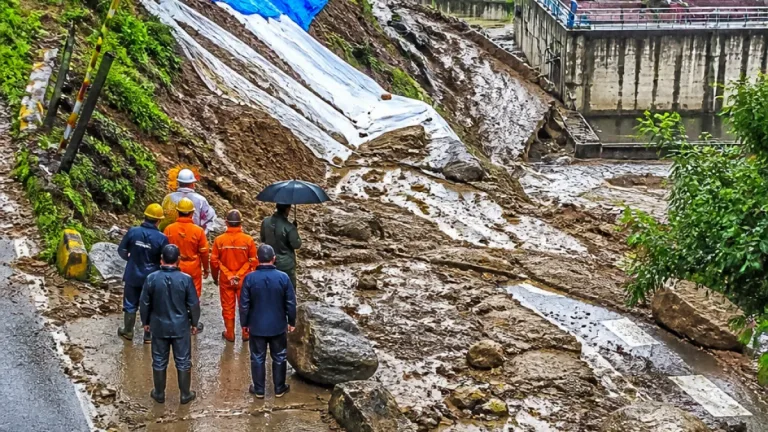
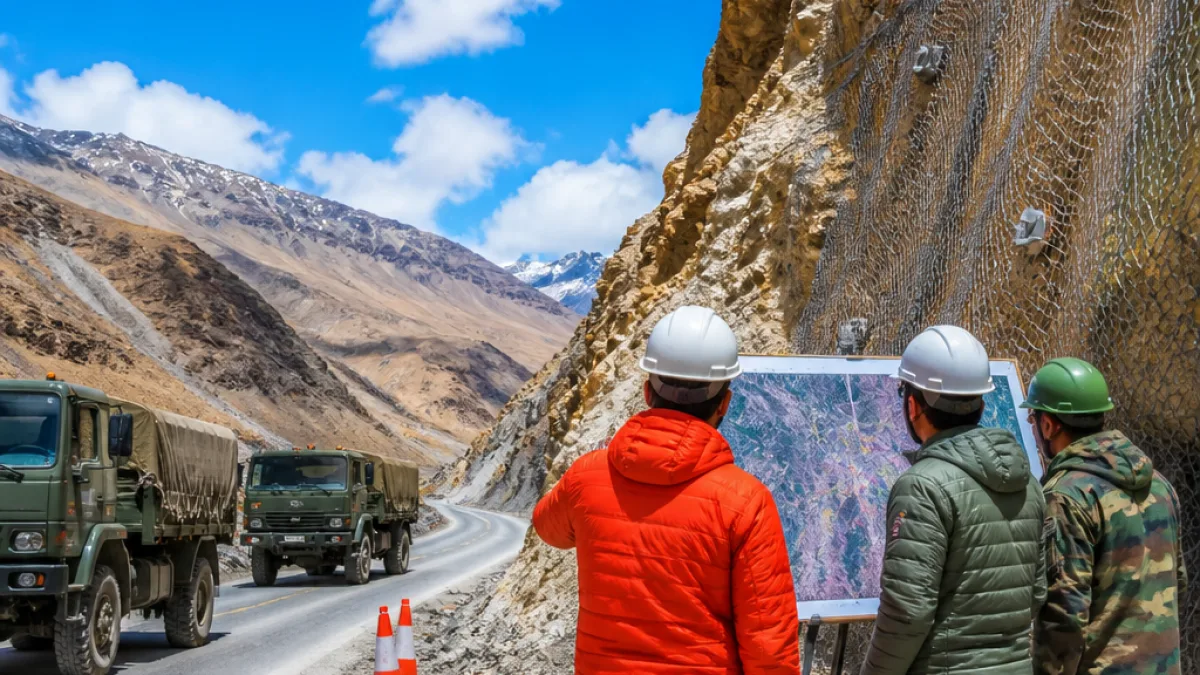
In a high-level review meeting attended by representatives of the Army, Border Roads Organisation (BRO) and the Union Territory administration, Saxena emphasised the need for urgent assessment and engineering interventions at vulnerable sites to prevent recurrence of disruptions caused by recent flashfloods, landslides and rockfalls, a spokesman reported.
The Lieutenant Governor asked concerned agencies to undertake a thorough safety audit of vulnerable stretches, with particular attention to:
- 15 identified high-risk locations on the Leh‑Kargil National Highway, and
- four to five vulnerable points along the Khardung La section of the Leh‑Nubra road.
“The recent flashfloods, landslides and rockfalls have once again underlined the need to strengthen our preparedness and move beyond reactive response to proactive prevention. Our priority is to ensure the safety of people, protect critical infrastructure and maintain uninterrupted connectivity across Ladakh,”
The meeting reviewed causes of slope failures including unprecedented rainfall, geological weakness, weathering, slope instability, impacts of developmental activity and increased water pressure, according to the briefing by BRO chief engineers.
Engineering and technology measures proposed
Officials outlined a suite of mitigation options to be considered as part of the audits and subsequent works. These included:
- Construction of retaining walls and rockfall embankments
- Soil nailing, rock bolting and flexible ring nets
- Rock sheds and high-energy barrier systems
- Deployment of smart rockfall detection technologies and geosynthetics
- Removal of loose material from unstable slopes where feasible
The Lieutenant Governor appreciated prompt relief and road‑clearance efforts by the Army and the BRO during recent incidents, and asked for a coordinated approach that blends field engineering with remote sensing and early-warning solutions, the spokesman said.
Operational priorities and expected outcomes
Saxena instructed agencies to prioritise measures that prevent blockages and protect commuters and goods movement, rather than relying primarily on post-event clearance. The audits are expected to define site-specific interventions, timelines and cost estimates to strengthen vulnerable corridors.
| Road | Identified vulnerable points |
|---|---|
| Leh–Kargil National Highway | 15 |
| Leh–Nubra (Khardung La) | 4–5 |
Officials also flagged the interplay of climatic extremes and geology in destabilising slopes, calling for designs that account for higher intensity rainfall events and thaw‑freeze cycles at altitude.
Local impact and continuity of connectivity
National highways through Ladakh provide lifeline connectivity for civilian traffic, logistics and strategic movement. Disruptions caused by landslides and flashfloods have previously led to prolonged closures in the region, affecting supply chains and travel during the short summer window when many routes are open.
By ordering a comprehensive safety audit and specifying vulnerable locations, the administration aims to reduce the frequency and duration of closures, protect lives and safeguard infrastructure, officials said. The BRO and the Army will co-ordinate on immediate stabilisation works while the administration computes medium- and long-term engineering solutions.
Further details on timelines, budgets and the scope of the audits were not released in the initial briefing. The UT administration is expected to follow up with technical orders and a schedule for site inspections in the coming days.
Reporting from Leh.