
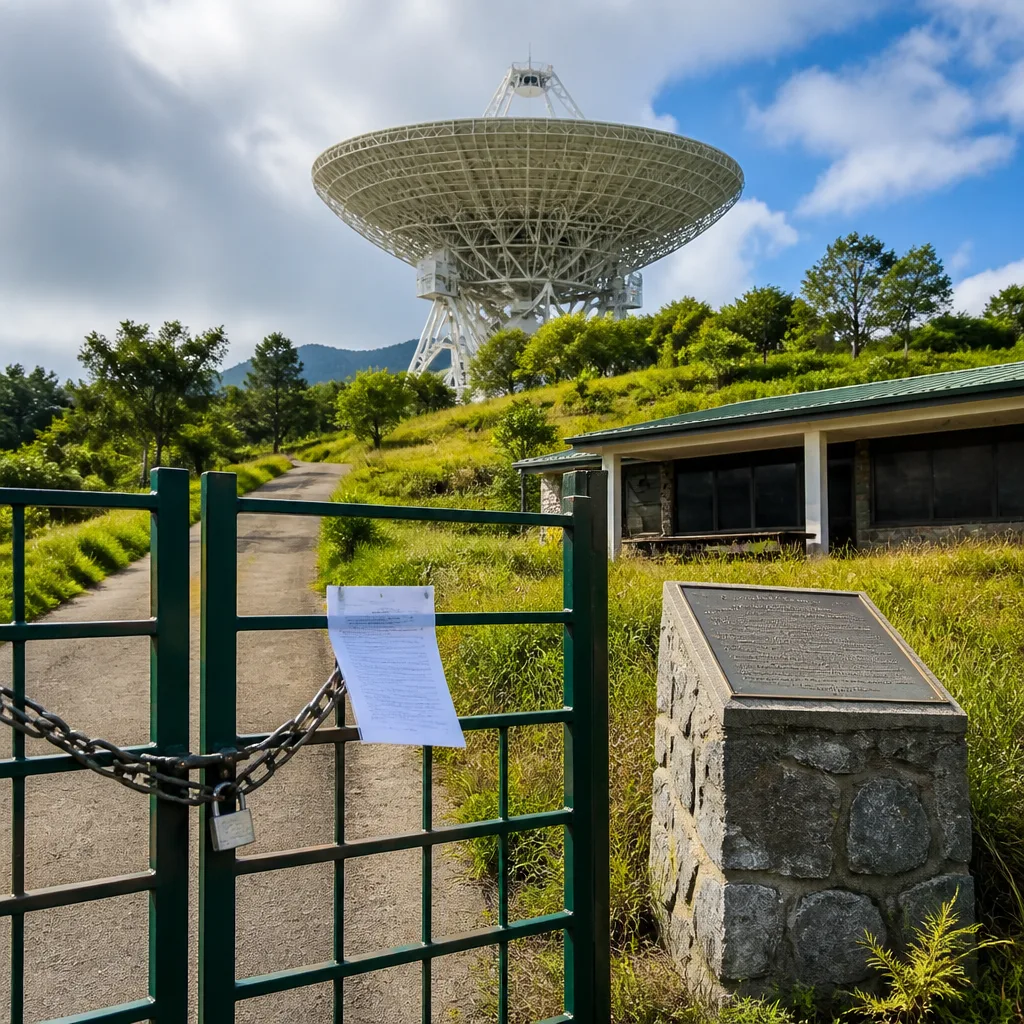
The Jodrell Bank Observatory, which houses the UK's largest telescope, is at risk of closure after its principal funder decided to withdraw support, the BBC has reported. All scientific observations at the site are expected to stop from 1 April 2028 unless alternative finance is found.
Heritage and scientific loss feared
Established in 1945, Jodrell Bank has been central to British radio astronomy and played roles in both scientific discovery and Cold War-era monitoring. The site was awarded UNESCO World Heritage status in 2019 in recognition of its contribution to the study of distant galaxies and the training of astronomers.
Scientists described the funding decision as profoundly damaging. Professor Brian Cox of the University of Manchester, which hosts the observatory, said the move was "hasty and ill-considered", warning of serious consequences for the UK's research base.
"The damage to the UK's science base has already been substantial. I am astonished that UKRI are still ploughing ahead and not working with the Burnham government to find a solution,"
UK Research and Innovation (UKRI), the funding body, said it must focus investment on projects expected to deliver "the greatest long-term impact". The decision forms part of wider cuts affecting astronomy, nuclear and particle physics research over the next four years, the BBC report said.
Official response and political context
Jonathan Reynolds, the Secretary of State in the expanded business department now responsible for science, emphasised the government's commitment to world-class research. He told BBC News that maintaining the UK's research capabilities and investing in future scientific infrastructure remained a priority.
However, voices within the scientific community warned that the withdrawal of funding from such an established facility would hamper training for the next generation of astronomers and undermine long-standing international collaborations.
- Established: 1945
- UNESCO World Heritage: 2019
- Planned cessation of observations: 1 April 2028 (unless alternative funding found)
| Year | Event |
|---|---|
| 1945 | Jodrell Bank site established |
| 2019 | Received UNESCO World Heritage status |
| 2028 | All scientific observations expected to cease (1 April) |
Observers say the observatory's contributions extend beyond national borders, noting its pivotal role in international efforts to map the cosmos and advance radio astronomy. The Lovell telescope, in particular, has been one of the country's flagship scientific instruments for nearly seven decades.
With UKRI signalling a reprioritisation of funds, the future of other long-standing research facilities in related fields has also been thrown into question. The scale of the announced reductions includes cuts to astronomy, nuclear and particle physics programmes across the coming four years.
University and scientific leaders have urged urgent dialogue between UKRI and the government to identify options that could preserve operations at Jodrell Bank. Possible avenues discussed in scientific and political circles include finding alternative public funding, philanthropic support, or partnerships that could sustain the observatory's core research and heritage functions.
For now, Jodrell Bank's long-term fate hinges on prompt action by funders and policymakers. The observatory's closure would not only remove an iconic element of British scientific heritage but also reduce capacity for observational astronomy at a time when international projects are expanding across radio and multi-messenger astronomy.
The BBC report underlining these developments has prompted renewed debate about how the UK balances short-term fiscal constraints with sustaining large-scale scientific infrastructure that underpins future discovery and training.