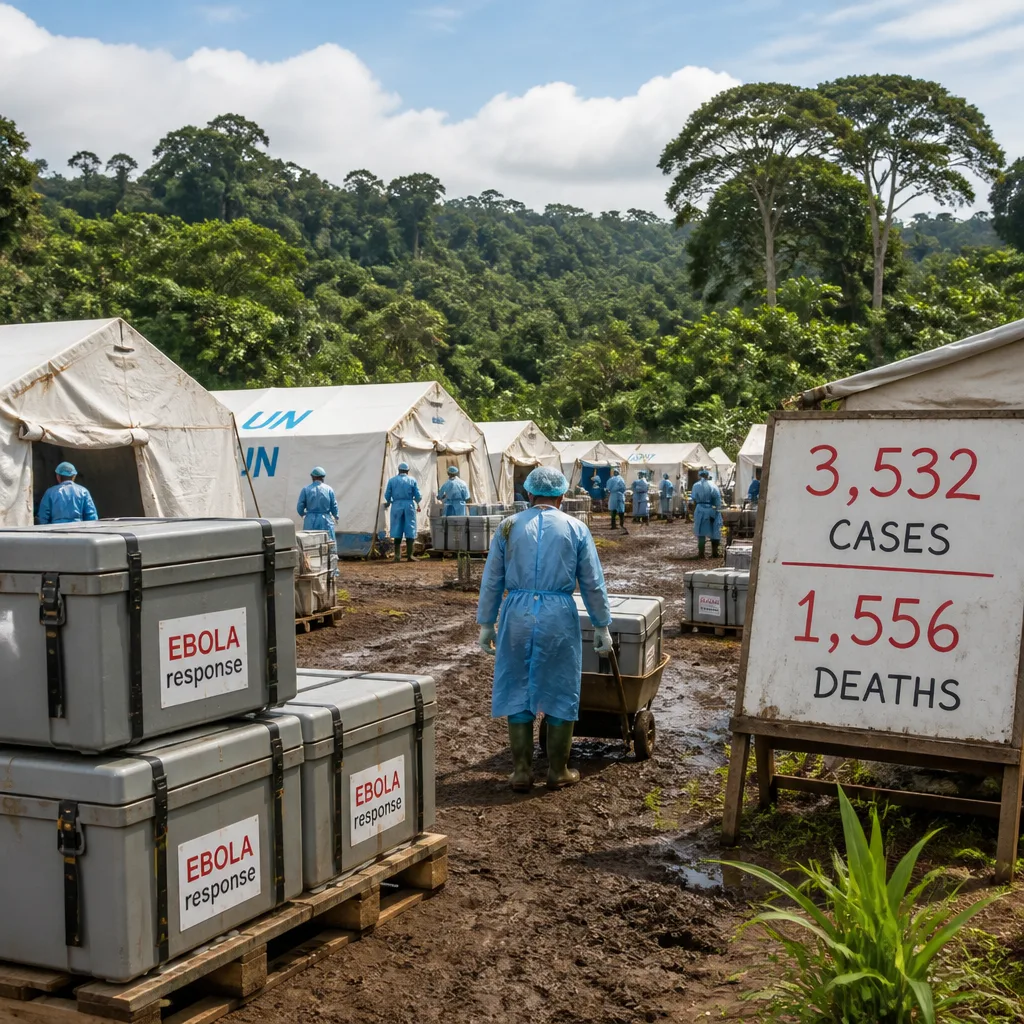
The Democratic Republic of Congo (DRC) is confronting an accelerating Ebola epidemic that has now become the second-largest on record, officials said, with the government reporting 3,532 cases and 1,556 deaths across the country.
Unusually rapid spread strains response
The outbreak, which has surged in under three months, centres on eastern DRC’s Ituri province and is being driven by the Bundibugyo strain of the virus. Health agencies note this strain presently lacks an approved vaccine or treatment, complicating containment efforts.
United Nations agencies and humanitarian organisations have raised alarm about the speed at which the epidemic is expanding and the challenge of mounting an effective response amid persistent logistical and security constraints. The current toll has already exceeded the total caseload recorded in DRC’s 2018–2020 Ebola epidemic, officials said, leaving only the 2014–2016 West Africa outbreak as larger in scale.
“It’s the fastest-spreading Ebola epidemic that we have ever seen. The world needs to pay much more attention.”
The comment was made by Carl Skau, acting head of the UN World Food Programme, who characterised the situation as requiring heightened international focus and resources. International agencies warn that conflict, access problems and funding shortfalls are complicating efforts to trace chains of transmission, isolate cases and provide critical care.
Operational challenges and international implications
Health authorities and aid groups face multiple hurdles in eastern DRC, where security incidents and difficult terrain impede outreach and the delivery of medical supplies. The absence of authorised vaccines or antiviral treatments for the Bundibugyo variant increases reliance on classical infection-prevention measures, surveillance and community engagement.
- Current caseload: 3,532 reported cases nationwide
- Deaths: 1,556 reported fatalities
- Dominant strain: Bundibugyo, for which no approved vaccine or treatment exists
- Epicentre: Ituri province in eastern DRC
International health authorities have previously relied on ring vaccination strategies and experimental therapeutics in DRC’s past Ebola emergencies. However, those tools are not currently available for the Bundibugyo strain, increasing pressure on surveillance, case isolation and supportive clinical care to reduce mortality and transmission.
| Metric | Value |
|---|---|
| Reported cases | 3,532 |
| Reported deaths | 1,556 |
Officials warned that the rapid pace of the outbreak could overwhelm local health systems and spill across borders if not checked. Aid agencies have sought more funds and logistical support to scale up surveillance, laboratory testing and community-level interventions, but the scale-up has been slowed by funding gaps and the operational difficulties of working in conflict-affected areas.
For New Delhi and other national capitals, the evolving situation underscores the continuing global threat posed by haemorrhagic fevers and the need for preparedness measures, especially for countries with travel and trade links to affected regions. International co-ordination, sustained funding and rapid deployment of technical expertise were highlighted as essential steps to prevent further escalation.
As the situation develops, health authorities and humanitarian organisations have called for immediate attention to close resource shortfalls, improve access to affected communities and accelerate epidemiological investigations to clarify transmission dynamics and guide control measures.
With the outbreak already surpassing the scale of DRC’s previous deadliest epidemic and the Bundibugyo strain presenting unique challenges, global health actors say a more forceful international response is needed to prevent an even larger catastrophe.