Scaled pilot aims to align feeder timings with metro to reduce transfer waits
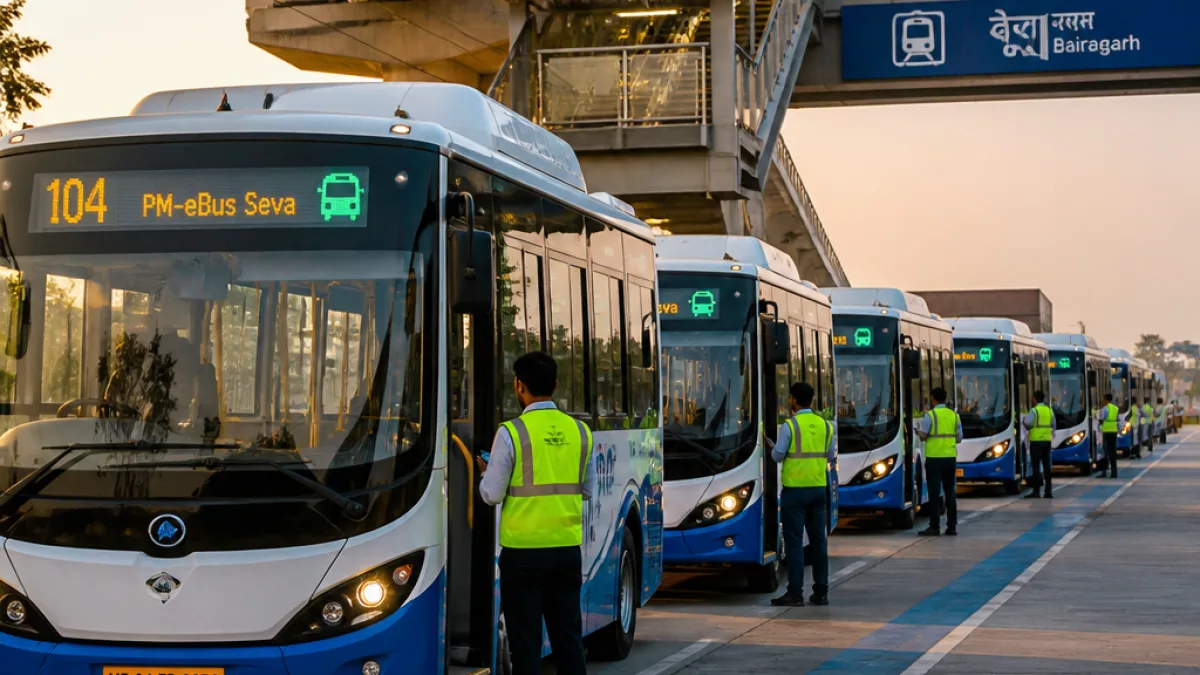
BHOPAL: A pilot deployment of electric feeder buses has begun in the city as officials test schedules and vehicle systems to improve last-mile connectivity with the Bhopal Metro, authorities said on Monday. The exercise, described by operators as a trial run, is being carried out ahead of a wider launch under the PM-eBus Seva scheme expected on August 15.
The Bhopal City Link Limited (BCLL) operated a reduced test on Monday, running five e-buses on two routes originating from Bairagarh. The trial was pared back from original plans for 10 buses and coverage of three stations, and on the first day the vehicles ran without boarding passengers as a dry run, officials said.
- Purpose: synchronise feeder-bus timetables with metro services and check vehicle systems and route operations.
- Routes tested: services timed to match metro stops at Board Office, Habibganj and MP Nagar, with one fleet running toward Kolar and another toward Bhopal Railway Station.
- Trial distance: combined route length about 40 km.
"This is a trial run to synchronise timetables and check vehicle systems and route operations. Buses will not carry passengers until ticketing software integration and other adjustments are complete," a BCLL representative said.
Metro timetable and integration goals
Officials said the e-bus exercise seeks to reduce waiting times for commuters transferring to and from the metro, which moved to regular two-track operations from July 25. Metropolitan services between Subhash Nagar and AIIMS Bhopal are currently operating on a schedule with 15-minute frequencies at peak hours and 30-minute frequencies off-peak. Transport planners are attempting to align feeder departures with those metro timings.
BCLL emphasised the pilot remains a test rather than a formal launch. Operators cited pending integration of ticketing software and operational adjustments as reasons why buses did not yet pick up passengers during the run.
Planned PM-eBus Seva rollout and vehicle capabilities
Sources said that the state is preparing to begin deployment of e-buses across selected cities under the central government's PM-eBus Seva scheme on August 15. In the initial phase, the planned allocation is 60 e-buses for Indore, 30 for Bhopal and 10 for Jabalpur, along with associated charging and support infrastructure.
| City | Planned e-buses (phase 1) |
|---|---|
| Indore | 60 |
| Bhopal | 30 |
| Jabalpur | 10 |
On technical performance, BCLL noted that a full battery charge provides a bus with an approximate range of 180 km, enabling multiple trips before recharging. Officials said this range allows flexibility in scheduling and reduces the immediate need for frequent charging stops during daily operations.
Implications for commuters and next steps
Commuters can expect further adjustments as officials complete software integration and finalise timetables to reduce transfer waiting times. The initial trial will inform route coverage, frequency matching and operational issues such as charging logistics and driver training.
Authorities have kept the pilot limited in scope so that technical and scheduling problems can be addressed without service disruption. A successful integration would mean feeder services operate in close coordination with metro trains, improving the efficiency of multimodal journeys across the city.
Officials reiterated that the current movements are part of testing and not a commencement of regular passenger operations. Full public services will begin only after ticketing systems, timetable alignment and other operational frameworks are finalised.