New Delhi/Bhopal: The Centre’s Department of Telecommunications (DoT) and the Madhya Pradesh government on Thursday signed a Memorandum of Understanding (MoU) to set up the country’s first Telecom Manufacturing Zone (TMZ) in Gwalior district, officials said.
Structure, funding and land allocation
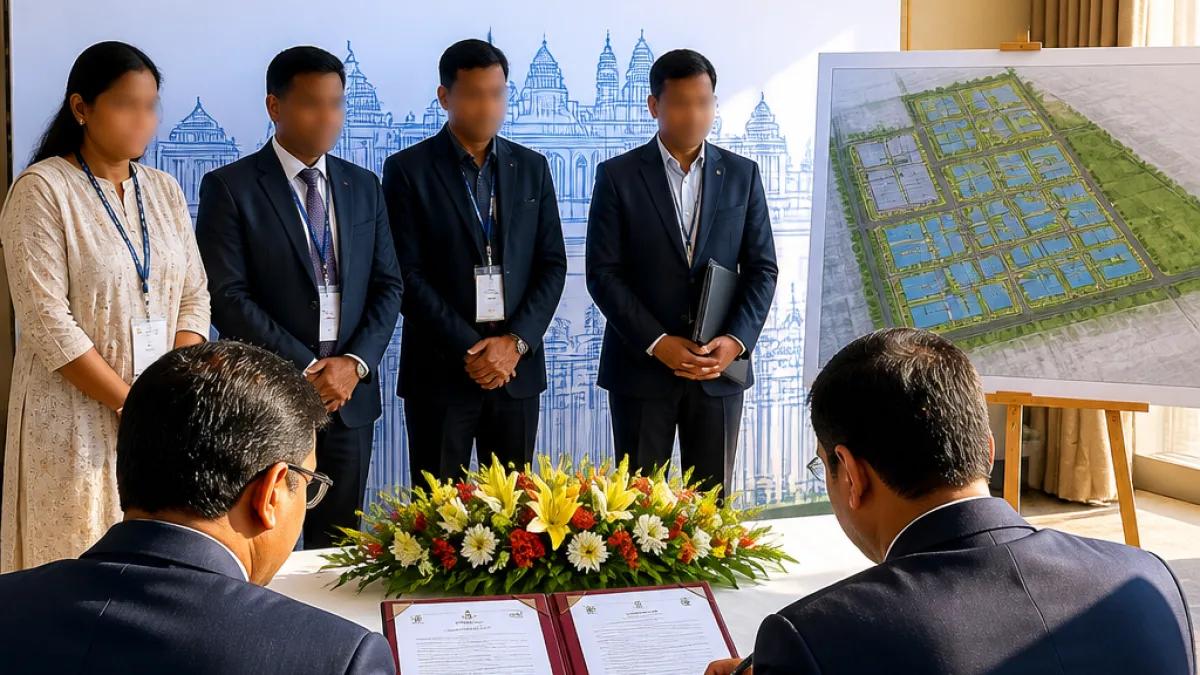
The TMZ is planned as an integrated, 350‑acre plug‑and‑play industrial cluster that will provide infrastructure for telecom and electronics manufacturing, research and development, testing, and allied innovation activities. The MoU — signed in the presence of Union Communications Minister Jyotiraditya Scindia and Madhya Pradesh Chief Minister Dr Mohan Yadav — envisages creation of a Special Purpose Vehicle (SPV) to implement the project.
The SPV will have 51 per cent equity held by the Madhya Pradesh government and 49 per cent by the Department of Telecommunications, according to the MoU signed in New Delhi. The Centre has committed to provide 100 per cent funding support for Phase‑I, with an allocation of ₹493 crore for core infrastructure development.
As part of the package, the Madhya Pradesh government has offered roughly 170 acres free of cost — comprising 100 acres in the SADA region and 70 acres in the Gwalior IT Park. The combined value of the free land allocation is estimated at about ₹596 crore, the state said. Additional land will be available at a nominal premium of ₹1 and a fixed lease rent of ₹1 per sq metre per annum for 30 years.
Investor incentives and expected outcomes
The state has extended a special policy package for units in the TMZ that includes reimbursement of stamp duty and registration charges, power tariff rebates and other fiscal incentives to encourage manufacturing and investment in the cluster.
“The country’s first Telecom Manufacturing Zone in Gwalior is a historic achievement for both Madhya Pradesh and India. It will provide new momentum to the vision of Atmanirbhar Bharat, Make in India, Digital India and Viksit Bharat 2047,”
Union Communications Minister Jyotiraditya Scindia described the project as a major step towards strengthening domestic telecom manufacturing and said it would help position Madhya Pradesh as a key telecom manufacturing hub, according to the statements released after the signing. He added that the zone is intended to develop capabilities across mobile devices, network equipment, fibre optics and next‑generation technologies including 5G and 6G.
Officials said the TMZ is expected to attract investment of up to ₹9,000 crore and create more than 10,000 direct and indirect jobs. Companies including Dixon Technologies, HFCL and Tejas Networks have reportedly committed around ₹2,000 crore of investment in the first phase, which is projected to generate over 4,500 jobs in initial operations.
Local and regional impact
Gwalior, which is the home district of Union Minister Scindia, is being positioned as a central India technology and industrial hub through the TMZ. The project is likely to stimulate ancillary industries, logistics and service sectors in the region and provide an industrial alternative to the largely agrarian economy in surrounding districts.
State and central officials said the plug‑and‑play design is intended to reduce time‑to‑market for manufacturers and lower the initial capital outlay required to set up production lines. The combination of land allotment, fiscal concessions and central infrastructure funding is meant to make the TMZ competitive with other domestic industrial clusters.
Next steps and implementation timeline
With the MoU signed, authorities will proceed to form the SPV to oversee planning and implementation. The Centre’s initial funding for Phase‑I is expected to be deployed for core infrastructure such as roads, power, water supply, testing facilities and common‑user R&D and testing laboratories. Further phasing, land parceling and detailed project reports will follow as the SPV formalises management and investors sign definitive agreements.
- Area: 350 acres (plug‑and‑play cluster)
- Centre funding (Phase‑I): ₹493 crore
- State land contribution: ~170 acres free of cost; additional land at ₹1 premium
- Estimated investment: Up to ₹9,000 crore (projected)
- Job creation: More than 10,000 projected; initial phase >4,500 jobs
| Component | Details |
|---|---|
| SPV equity split | MP government 51% | DoT 49% |
| Land offered | 100 acres (SADA) + 70 acres (IT Park) free; additional land nominally priced |
| Phase‑I central allocation | ₹493 crore |
| Projected investment (overall) | Up to ₹9,000 crore |
Officials and industry observers will now watch the SPV formation and land‑transfer processes closely. Timely implementation, transparent allotment of plots and effective utilisation of central and state incentives will be critical for translating the project’s projected investments and employment gains into reality.
Correspondence from state industry and DoT officials issued alongside the MoU stressed the objective of building a resilient domestic manufacturing ecosystem for telecommunications equipment and devices, reducing import dependence and supporting national programmes such as Atmanirbhar Bharat and Make in India.