The Supreme Court has asked the Union Government and the National Board for Wildlife (NBWL) to determine whether any Wetland Conservation Reserve lies within the Himachal Pradesh territories under consideration before applying a blanket 10‑kilometre restriction on mining, according to court directions reported on Tuesday.
Clarify geographic and statutory scope before imposing restriction
The direction responds to a petition by the Himachal Pradesh Government seeking clarification on whether the Court’s earlier orders concerning a 10‑kilometre buffer around ecologically sensitive wetlands must be mechanically extended to mining operations located in Himachal when the notified wetland itself lies in an adjoining State.
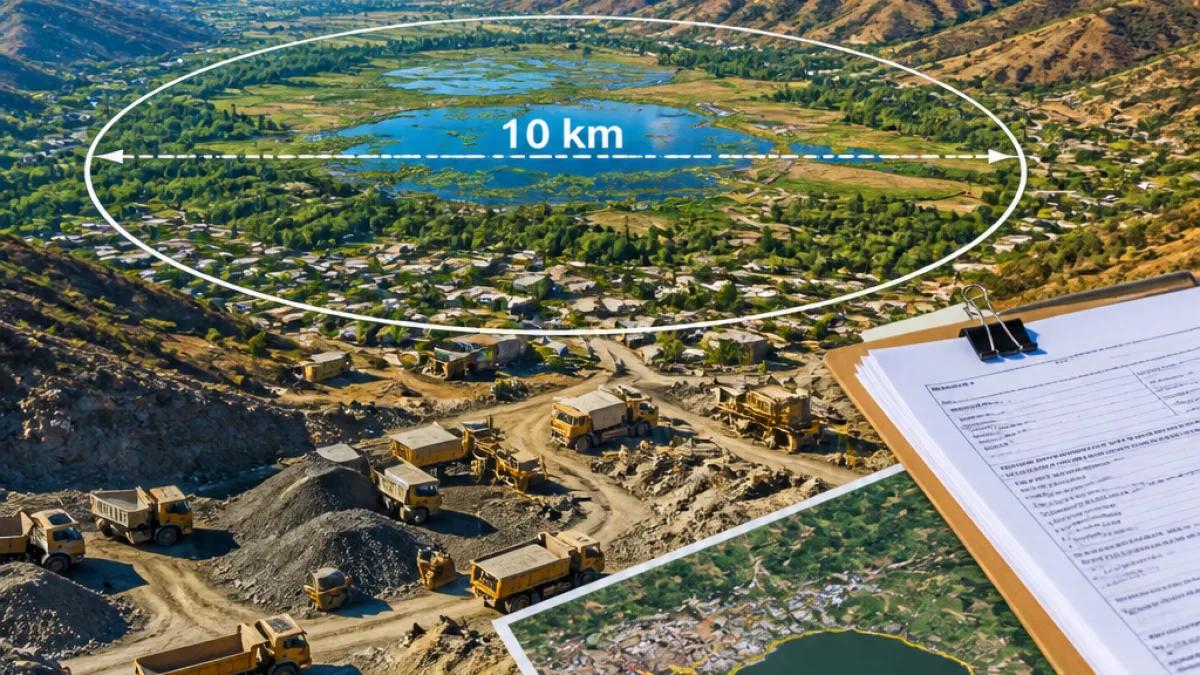
The issue centres on the Asan Wetland Conservation Reserve, which is in neighbouring Uttarakhand, and whether the protective radius around that reserve can reach into mining belts in Himachal. The Court asked the Centre and NBWL to make a factual and statutory determination before any regulatory restraint is applied to operations outside a notified wetland or conservation reserve.
Local mining and livelihoods at stake
The material before the Court indicates that several mining leaseholders and stone‑crushing units operate in the belt falling within the disputed radius. The Himachal Government argued that a blanket application of the restriction could have "substantial ramifications" for mining activities that were already underway under statutory permissions and environmental clearances issued by competent authorities.
Earlier proceedings in the Himachal Pradesh High Court also highlighted the inter‑State nature of the dispute and the practical consequences for leaseholders in the affected area.
- Who will verify: The Union Government and NBWL have been directed to ascertain if any Wetland Conservation Reserve falls within the relevant Himachal areas.
- Core question: Whether environmental safeguards applicable to a wetland can operate beyond its territorial limits and affect mining in a neighbouring State.
- Practical stakes: Mining leaseholders and stone‑crushing units operating within the 10‑km belt may face regulatory uncertainty if the buffer is applied without a statutory basis.
Legal context and implications
The Court’s intervention follows its earlier orders that introduced restrictions on mining within specified radii of ecologically sensitive areas. Those orders raised the question whether mining activity within 10 kilometres of a Wetland Conservation Reserve could proceed without clearances from wildlife authorities. The present matter requires the Court to reconcile those principles with the territorial limits of notified reserves.
If authorities conclude that a Wetland Conservation Reserve’s protective radius legitimately extends into Himachal territory, affected operators would likely need to seek additional clearances from wildlife bodies. Conversely, a finding that the restriction does not extend beyond the notified wetland would leave existing statutory permissions and environmental clearances in place for operators in Himachal.
| Party/Authority | Position / Role |
|---|---|
| Supreme Court | Directed factual and statutory verification before applying 10‑km restriction |
| Union Government | Asked to ascertain whether any Wetland Conservation Reserve falls within relevant Himachal areas |
| National Board for Wildlife (NBWL) | Directed to assist in determining applicability of protective radius |
| Himachal Pradesh Government | Sought clarification, warning of substantial ramifications for mining leaseholders |
What this means on the ground
For operators and residents in the affected belt, the Supreme Court’s direction injects a pause into regulatory certainty. Until the Centre and NBWL report back with mapped facts and statutory interpretation, authorities in Himachal and Uttarakhand will face ambiguity on enforcement of the 10‑kilometre safeguard.
Stakeholders likely to monitor the outcome include municipal and district administrations where mines and stone‑crushers operate, environmental regulators who issued earlier clearances, and leaseholders who may need to reassess compliance obligations depending on the final legal finding.
The Court’s approach underscores the need for precise geographic and legal analysis when environmental protections cross administrative boundaries. Its direction aims to avoid indiscriminate application of restrictions that could impinge on activities lawfully authorised under existing state and central permissions.
Further proceedings will depend on the factual matrix and legal submissions from the Centre, NBWL and the affected States, after which the Court will decide the appropriate scope and application of the 10‑kilometre restriction.
— Vikas Thakur, Correspondent