Shilma, Himachal Pradesh — The Himachal Pradesh government is set to introduce a new health insurance policy that will offer coverage of up to ₹10 lakh to economically weaker families, Chief Minister Sukhvinder Singh Sukhu said on Tuesday after chairing a high-level meeting of the Health Department.
Scope and beneficiaries
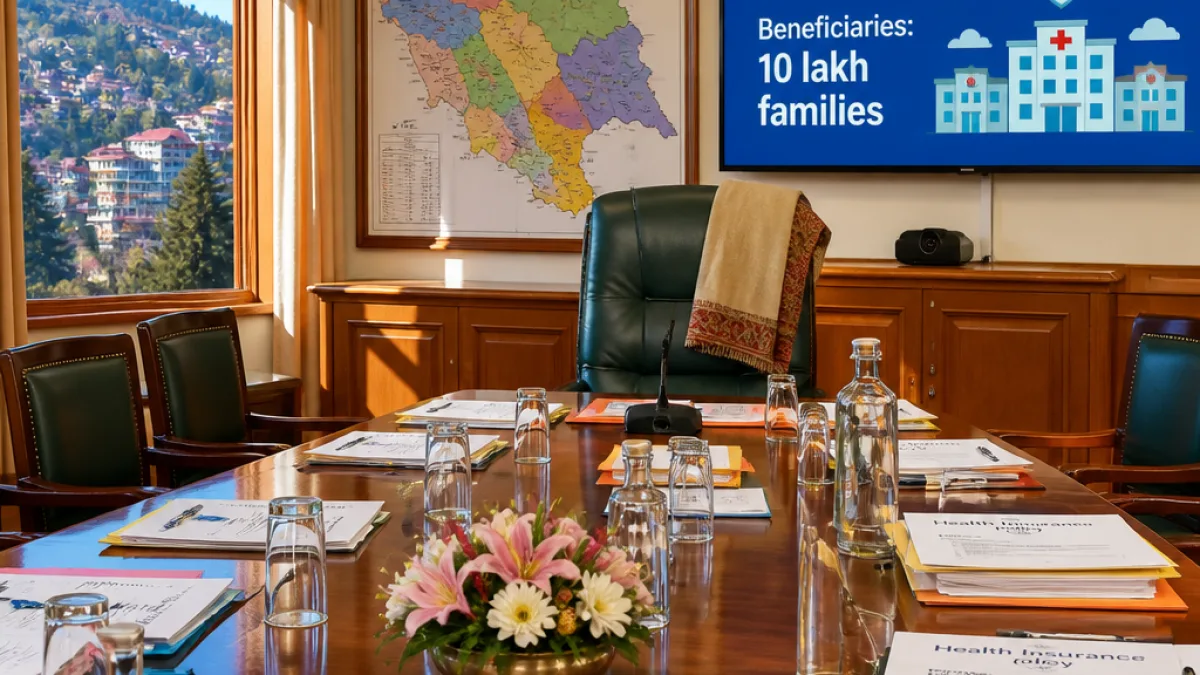
The proposed policy aims to bring roughly 10 lakh families from various sections of the state under a single insurance umbrella, the Chief Minister said. The scheme, Sukhu added, is being designed to ensure that poor families can access advanced treatment at multi‑speciality and tertiary care hospitals empanelled under the programme.
- Coverage: Up to ₹10 lakh per family.
- Target beneficiaries: Approximately 10 lakh families across the state.
- Premium: Described by the government as a very low or nominal amount (specific premium rates are yet to be finalised).
- Hospital network: Leading multi‑speciality and tertiary care hospitals to be empanelled.
First-of-its-kind claim and implementation intent
Sukhu said the policy would make Himachal Pradesh the first state in the country to offer such a comprehensive health insurance scheme at a nominal premium. The draft of the policy has been prepared and the government has begun consultations on finalising details, he added.
"accessible, quality treatment to poor families"
The Chief Minister used social media to summarise the meeting and underline the scheme's objective of widening access to quality healthcare for eligible citizens.
Hospitals, diagnostics and medical education
Officials said the scheme will include empanelment of multi‑speciality and tertiary care centres so that beneficiaries are not denied advanced medical treatment on economic grounds. Sukhu also highlighted parallel efforts to modernise hospitals and medical education institutions across the state.
Automation and upgradation of diagnostic services have been targeted to enable patients to avail timely, efficient and hassle‑free diagnostic tests, the Chief Minister said. Those measures are intended to reduce waiting times and improve convenience for patients needing investigations prior to or during treatment.
Fiscal and operational considerations
The announcement raises questions about financing, premium subsidy levels and the administrative mechanisms for enrolling nearly 10 lakh families. The government has not yet released details on the premium amount, criteria for beneficiary selection, enrolment timelines, or the list of empanelled hospitals. Officials will need to clarify whether the scheme will be state‑funded, co‑financed with a central scheme, or operated through an insurer on a defined‑benefit basis.
| Parameter | Detail (so far) |
|---|---|
| Maximum cover | ₹10 lakh per family |
| Estimated beneficiaries | ~10 lakh families |
| Premium | Described as very low / nominal; exact figure pending |
| Hospital empanelment | Multi‑speciality and tertiary care hospitals to be included |
Local impact and next steps
Health observers say wider insurance cover could ease out‑of‑pocket expenses for serious illnesses, particularly for rural and low‑income households that now defer or avoid treatment because of cost. The proposed empanelment of tertiary hospitals seeks to reduce the need for patients to travel out of state for specialised care.
State health department functionaries are expected to release the detailed policy document, beneficiary eligibility criteria and operational guidelines in the coming weeks. The government will also need to finalise the network of hospitals and the enrolment mechanism — both critical to realising the stated objective of providing equitable access to quality healthcare.
For now, the announcement signals the state administration's priority to expand financial protection in health and modernise medical services, while the finer points of implementation remain to be published.
Vikas Thakur
Correspondent, Himachal Pradesh