NHRC review highlights mechanisation, protective gear and worker empowerment in Bhubaneswar
Bhubaneswar, Jul 27 — The National Human Rights Commission's Special Monitor, Devendra Singh Dhapola, on Monday conducted a detailed review of the Bhubaneswar Municipal Corporation's (BMC) initiatives aimed at eradicating manual scavenging and improving safety and dignity for sanitation workers.
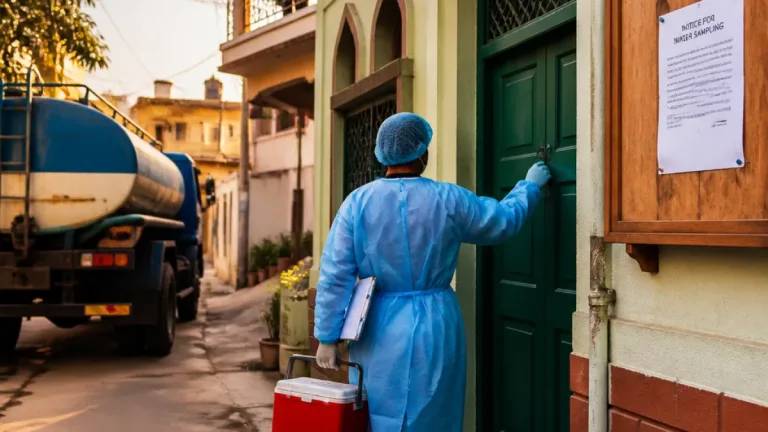
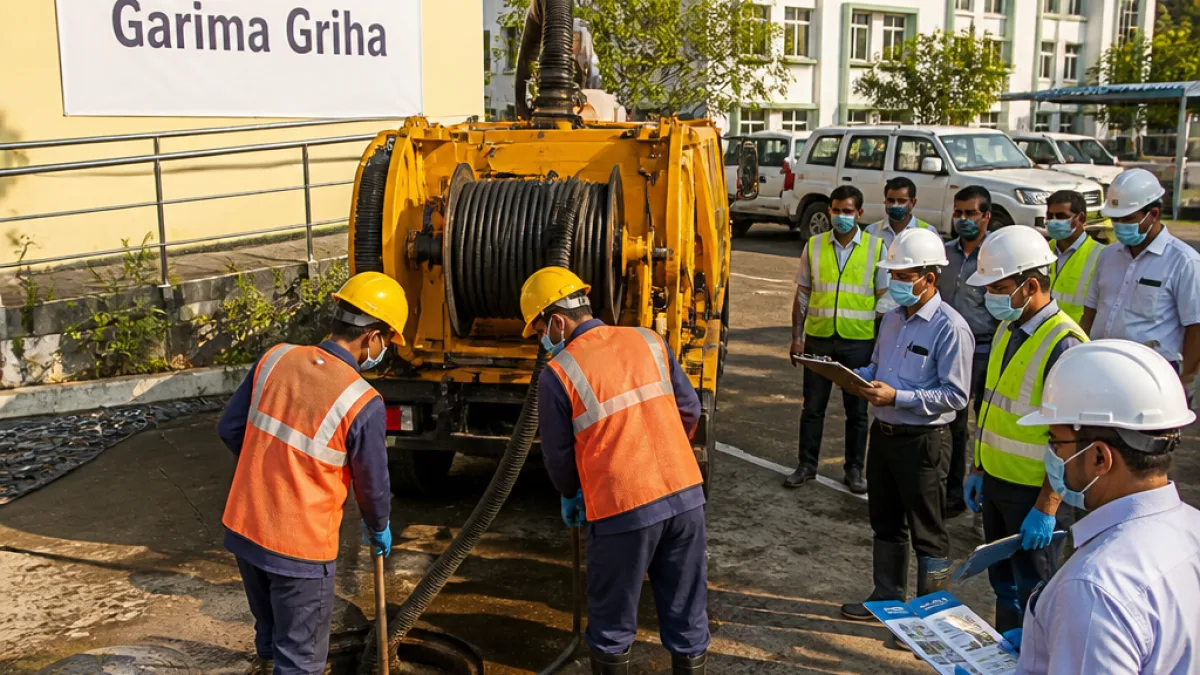
The visit focused on implementation of the NHRC Advisory on protection of rights of persons engaged in manual scavenging or hazardous cleaning. The monitor observed operations at the Garima Griha near the High Level Tank close to Rajeev Bhawan, where sanitary workers involved in sewer and septic tank cleaning demonstrated mechanical cleaning methods and use of personal protective equipment (PPE).
Senior BMC officials briefed the NHRC team on a range of measures adopted to prevent hazardous manual work and to ensure compliance by hiring agencies. These measures include mandatory provision of protective equipment, deployment of modern machinery for cleaning operations, regular orientation programmes for workers and continuous field monitoring by urban local body officials.
- Mechanisation: Live demonstration of mechanical cleaning equipment at Garima Griha to replace manual entry into sewers and septic tanks.
- PPE and training: Compulsory protective gear and regular orientation sessions to ensure correct and consistent usage.
- Monitoring and accountability: Strengthened supervision by BMC to ensure hiring agencies comply with the law.
- Financial inclusion: Bank linkages facilitated to enable access to credit for purchase of mechanised equipment, encouraging entrepreneurship among sanitation workers.
“To eradicate this dehumanising practice, the Act mandates proper protective safety equipment, worker-friendly machinery, and clear accountability of hiring agencies,”
The monitor specifically appreciated the involvement of a Transgender Self-Help Group (TG SHG) managing cesspool operations, noting the importance of inclusive practices in sanitation services. The NHRC team also reviewed the State's implementation of central schemes such as NAMASTE and Garima, which are aimed at protecting sanitation workers and providing alternative livelihoods.
Officials present during the review included Suvendu Kumar Sahu, Additional Commissioner, BMC; Mamata Rani Nayak, Joint Secretary to Government; N. Ganesh Babu, Deputy Commissioner (Sanitation), BMC; and Rasmita Patel, Team Lead – Garima. They outlined steps taken to operationalise the law and to extend institutional support for mechanisation and worker welfare.
| Measure | Action reported |
|---|---|
| Protective equipment | Mandatory supply and training on use |
| Mechanised cleaning | Live demonstrations and procurement encouraged |
| Financial support | Bank linkages for machinery loans and entrepreneurship |
| Monitoring | Regular oversight by Urban Local Body officials |
The NHRC team expressed satisfaction with the Garima Griha facility and the steps taken by the State Government and BMC. The review underscored that eradicating manual scavenging requires coordinated action by Union and State Governments, local authorities and strict enforcement against non-compliant agencies.
Local human-rights observers said the NHRC visit is likely to prompt more visible monitoring on the ground and encourage replication of successful measures in other wards of the city. They noted that while mechanisation and PPE reduce immediate health risks, sustained change will depend on effective grievance redressal, monitoring of contractors and continued access to finance for worker-led enterprises.
For Bhubaneswar residents, the review signals increased institutional attention to sanitation safety and dignity. The emphasis on bank linkages and entrepreneurship aims to move beyond risk mitigation to economic empowerment, allowing sanitation workers to acquire and operate mechanised equipment and manage services more sustainably.
Officials said follow-up inspections and compliance reports to the NHRC are expected, and BMC will continue orientation drives and live demonstrations across the city to broaden adoption of mechanical cleaning methods.
The monitor's visit comes amid national efforts to eliminate hazardous manual practices and to implement the Garima scheme comprehensively. Continued oversight by the NHRC and local authorities will determine whether the measures translate into lasting reduction of hazardous manual cleaning in Bhubaneswar.