Chandigarh’s pan-city Public Bike Sharing (PBS) scheme, launched in 2020 under the Smart City Mission in a public–private partnership (PPP), is facing severe operational and upkeep challenges that have eroded its utility for residents and commuters.
Mounting penalties, faltering operations
Since the closure of Chandigarh Smart City Limited (CSCL) in March 2025, the Municipal Corporation (MC) took charge of the PBS project’s operations and has repeatedly penalised the private operator, Smart Bike Tech Private Limited, for non-compliance with contractual service levels.
In a notice dated July 13, the MC imposed a penalty of ₹15.86 lakh on the company for failing to maintain the required number of smart bicycles. The MC said similar penalties amounting to about ₹2.75 crore had been levied on the operator over the past two years.
On-ground condition discourages users
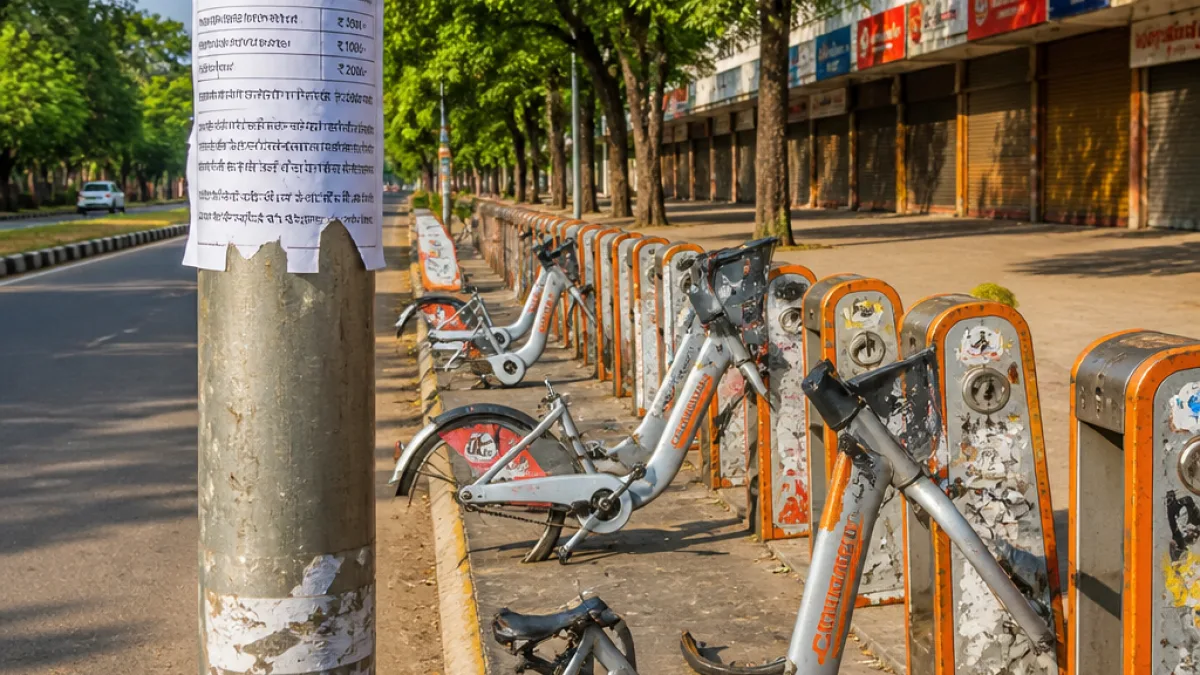
Field visits to multiple docking stations across the city showed a range of problems: missing bicycles, broken seats, damaged components, vandalised docking stations, uneven surrounding flooring and overgrown grass at several locations. Theft of cycles and equipment and poor routine maintenance were cited as major operational weaknesses undermining the scheme’s appeal.
The system, which allows users to hire bicycles through a mobile application and unlock a cycle by scanning a QR code at a docking station, charges ₹10 per hour. Under the original concession, the company was allotted the project in 2020 for a 10-year term and pays about ₹1 lakh per month as licence fee to the MC. The operator is permitted to generate revenue from advertising panels installed at docking stations.
Problems identified
- Vandalism and theft: Cycles and docking infrastructure have been repeatedly damaged or stolen.
- Poor maintenance: Broken seats, damaged components and unserviced bicycles are widespread.
- Low availability: MC penalties were based on bicycle availability shortfalls.
- Neglected docking sites: Overgrown grass, uneven flooring and damaged docks discourage use.
- Ridership decline: Visible deterioration has reduced public confidence and regular use.
Contractual and financial snapshot
| Item | Detail |
|---|---|
| Project launch | 2020 (PPP under Smart City Mission) |
| Operator | Smart Bike Tech Private Limited |
| Contract duration | 10 years |
| Licence fee to MC | About ₹1 lakh per month |
| Ride cost | ₹10 per hour |
| Penalties (latest notice) | ₹15.86 lakh (July 13); total ~₹2.75 crore in past two years |
Impact on commuters and city goals
The PBS scheme was intended to provide a sustainable, last-mile mobility option and complement Chandigarh’s urban transport and Smart City objectives. Its current state undermines those aims and reduces affordable mobility options for short intra-city trips.
Users who previously relied on the service now face uncertainty about availability and safety of the cycles. The visible neglect of docking stations and surrounding public spaces also detracts from broader civic upkeep and could discourage further public use.
Way forward
The MC’s repeated imposition of penalties underscores the municipality’s reliance on contractual levers to enforce service standards, but the persistent problems point to broader challenges in PPP delivery and vendor management. Restoring the scheme’s functionality will require coordinated action on equipment repair, site maintenance, security against theft and vandalism, and stronger monitoring of service-level commitments.
For now, residents seeking to use the service should check the operator’s mobile application for real-time availability and verify docking-site conditions before planning travel. The MC’s notices indicate it is monitoring compliance, but the success of remediation will depend on on-ground corrective measures by the operator and continued municipal oversight.
“Service level data received from the agency for June 2026, accordingly penalty is calculated for bicycle availability,” the notice issued by the Municipal Corporation stated.
The scale of penalties already imposed highlights the financial consequences for the operator, but the primary concern for commuters remains reliable, safe access to last-mile transport. Restoring public confidence will hinge on visible, sustained improvements at docking stations and in fleet availability.
Manpreet Kaur, Correspondent, Chandigarh