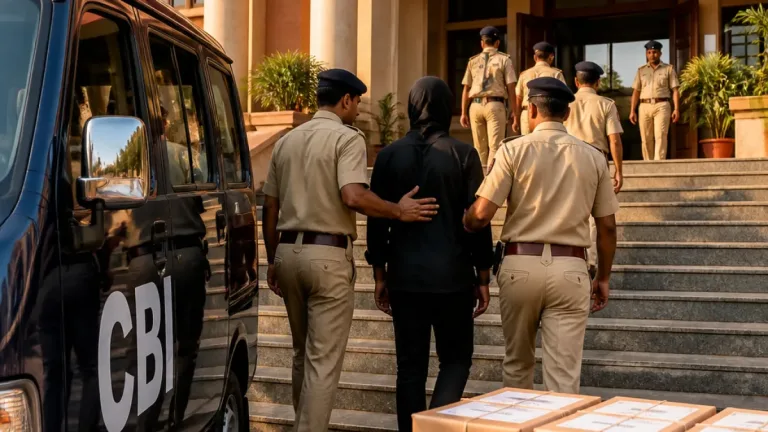
Delhi Police on Friday arrested seven people in connection with an alleged interstate cheating racket that facilitated unfair means during government recruitment examinations, naming a 31-year-old Chandigarh fireman as the alleged kingpin, officials said.
Devices seized; probe began after complaint
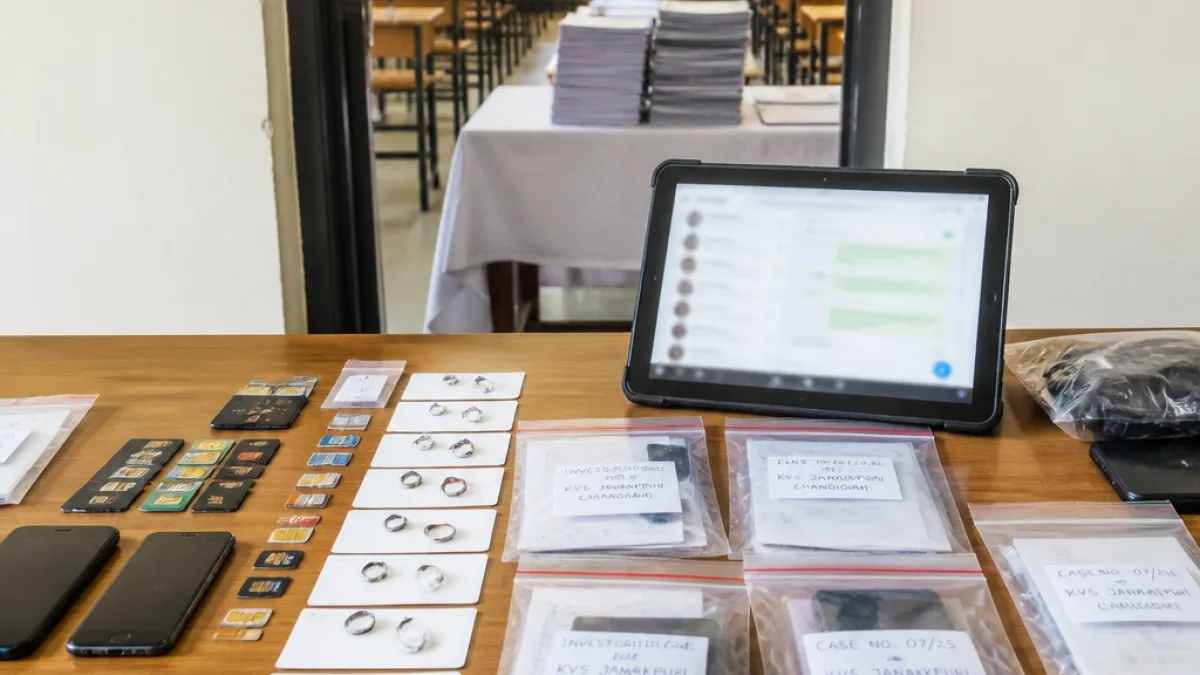
The investigation was launched after Central Sanskrit University filed a complaint on July 26 alleging malpractice in a lower division clerk (LDC) recruitment test held at KVS, C-2, Janakpuri. Police said checks at the examination centre led to recovery of specialised electronic equipment and subsequent arrests.
Authorities recovered a range of items they allege were used to enable communication between candidates inside exam halls and operators outside. Seized material included customised mobile phones, Bluetooth devices fitted with SIM cards, nano earpieces, a tablet linked to a foreign WhatsApp account and other electronic gadgets as well as documents described by police as incriminating.
"Hemant’s interrogation revealed that his 30-year-old brother, Rinku, had arranged the Bluetooth device and SIM card through a man identified as Virender for ₹12 lakh to enable him to receive answers from outside the examination hall," Deputy Commissioner of Police (West) Hareshwar V Swami said.
Sequence of arrests and alleged roles
Police said two candidates found with devices at the centre were initially detained and later arrested. Their questioning, according to the police, exposed links to a wider network that arranged devices and transmission of question papers.
| Name/Identifier | Age | Alleged role |
|---|---|---|
| Sonu Kumar (alias Sonu Maan) | 31 | Identified as alleged kingpin (Chandigarh fireman) |
| Hemant | 23 | Candidate found with Bluetooth device |
| Unnamed woman candidate | 24 | Candidate found with customised mobile phone |
| Rinku | 30 | Arranged device and SIM card |
| Virender | 38 | Supplier of device/SIM, arrested |
| Sanni | 30 | Lab attendant at Lady Irwin College; intermediary |
During interrogation, police said the detained woman identified a friend, named Sanni, who had provided her with devices to transmit the question paper and receive answers. Officers allege Sanni acted as an intermediary, connecting candidates to the racket's central operator in return for a commission.
Legal provisions invoked
Police registered a case at Janakpuri police station under Section 318 (cheating) of the Bharatiya Nyaya Sanhita and Sections 3, 4, 10 and 11 of the Public Examinations (Prevention of Unfair Means) Act. Both candidates from the examination centre were arrested at the outset of the probe and electronic equipment seized.
Investigators said the probe revealed financial transactions for facilitating cheating: one deal for arranging a Bluetooth device and SIM to receive answers was pegged at ₹12 lakh, while police said another candidate's arrangement to transmit questions and get responses had been fixed at ₹10 lakh.
Scope and implications
Police described the operation as interstate, with individuals in multiple roles — operators, suppliers and intermediaries — allegedly collaborating to enable cheating in competitive government examinations. The involvement of a government employee from Chandigarh and a staff member of a central university college highlights the cross-jurisdictional nature of the case.
Authorities said the investigation is ongoing and further arrests may follow as forensic analysis of the electronic devices and account links continues. Officials did not provide details on court proceedings or remand applications at the time of reporting.
What to expect next
- Forensic examination of seized gadgets and communications to trace operators and external handlers.
- Possible scrutiny of other candidates and examination centres where similar devices may have been used.
- Coordination between multiple police units given the interstate elements and links to educational institutions.
Delhi Police said they would continue questioning the arrested persons to map the full extent of the alleged racket and identify any additional accomplices. The case underscores continuing challenges faced by authorities in preventing electronic-enabled malpractice in high-stakes recruitment tests.
(Manpreet Kaur is a correspondent in Chandigarh.)