The Union government is preparing a support scheme to incentivise domestic polysilicon manufacturing as it seeks to deepen the solar photovoltaic (PV) manufacturing value chain and reduce reliance on imports, officials said on Thursday.
Policy push targets upstream capacity
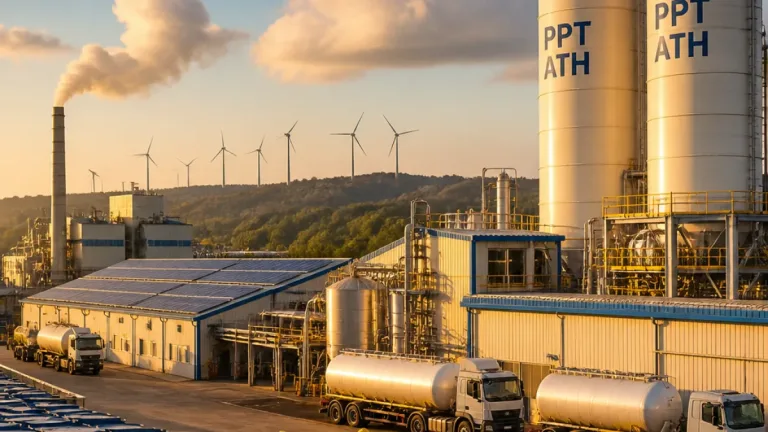
Polysilicon is the primary raw material used to make ingots that are sliced into wafers and then converted into solar cells and modules. India currently relies entirely on imported polysilicon, and the proposed scheme is intended to spur home‑grown capacity for this upstream chemical and refining activity.
The new support plan comes amid tighter domestic sourcing requirements for solar cells, which increase the urgency to develop an indigenous supply chain. The government already covers multiple segments under its production‑linked incentive (PLI) scheme for solar PV modules, but progress has been slower in upstream areas such as polysilicon refining and ingot and wafer production.
| Segment | Position in value chain |
|---|---|
| Polysilicon | Upstream (refining/chemical) |
| Ingot & wafer | Midstream (crystallisation and slicing) |
| Solar cell & module | Downstream (assembly) |
Rationale and wider uses
Officials at the Ministry of New and Renewable Energy (MNRE) view polysilicon as a distinct industrial activity rather than merely a link in the solar chain, given its chemical and refining nature. Greater domestic refining of polysilicon could also have applications beyond solar PV, including potential use in the semiconductor sector.
“If you look at the profile of this RE‑RTC bid, it almost matches the...”
Speaking at the seventh Confederation of Indian Industry (CII) International Energy Conference and Exhibition, Santosh Kumar Sarangi, Secretary at MNRE, reiterated the government’s intention to treat polysilicon manufacturing as an independent industry and to design incentives accordingly.
PLI coverage and implementation challenge
The existing PLI scheme for solar PV modules includes both upstream components — ingot, wafer and polysilicon — and downstream elements — solar cell and module manufacturing. However, the scheme has seen comparatively faster movement in downstream production, while upstream segments have lagged.
- Objective: Reduce import dependence and build a complete domestic solar value chain.
- Focus: Incentivise polysilicon refining as a standalone industry.
- Spillover: Potential to supply other high‑tech segments, including semiconductors.
Industry participants and policymakers have highlighted several barriers to quick development of upstream capacity, such as high capital intensity, the need for specialised chemical processing expertise, and consistent, low‑cost power and feedstock availability. The government’s scheme aims to address some of these constraints through fiscal and non‑fiscal measures, although detailed modalities are yet to be announced.
Context: cost of renewable power and procurement signals
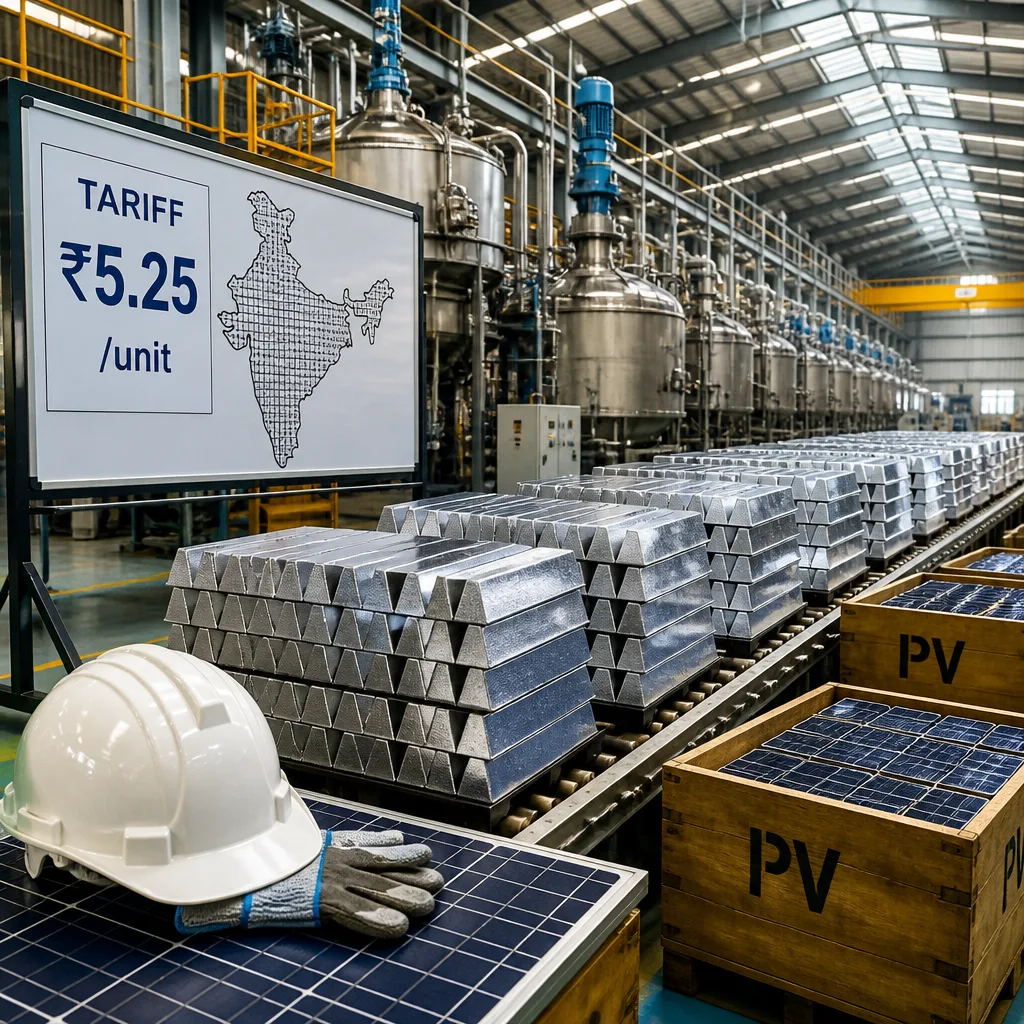
MNRE officials also said that round‑the‑clock renewable energy (RE‑RTC) tariffs are becoming progressively competitive. Reference was made to a recent tender by Solar Energy Corporation of India Limited (SECI) where the tariff discovered for an RE‑RTC bid that assured 90% power availability in each time block — and about 50% solar during daytime — was quoted at ₹5.25 per unit, indicating improving economics for renewables.
The move to bolster upstream manufacturing dovetails with those competitive power costs and the government’s broader strategy to increase domestic manufacturing, secure supply chains and position India as a competitive producer of clean‑energy equipment.
Further details on the proposed polysilicon support scheme, including incentive rates, eligibility criteria and timelines, are expected to be shared by MNRE and related departments in due course.