
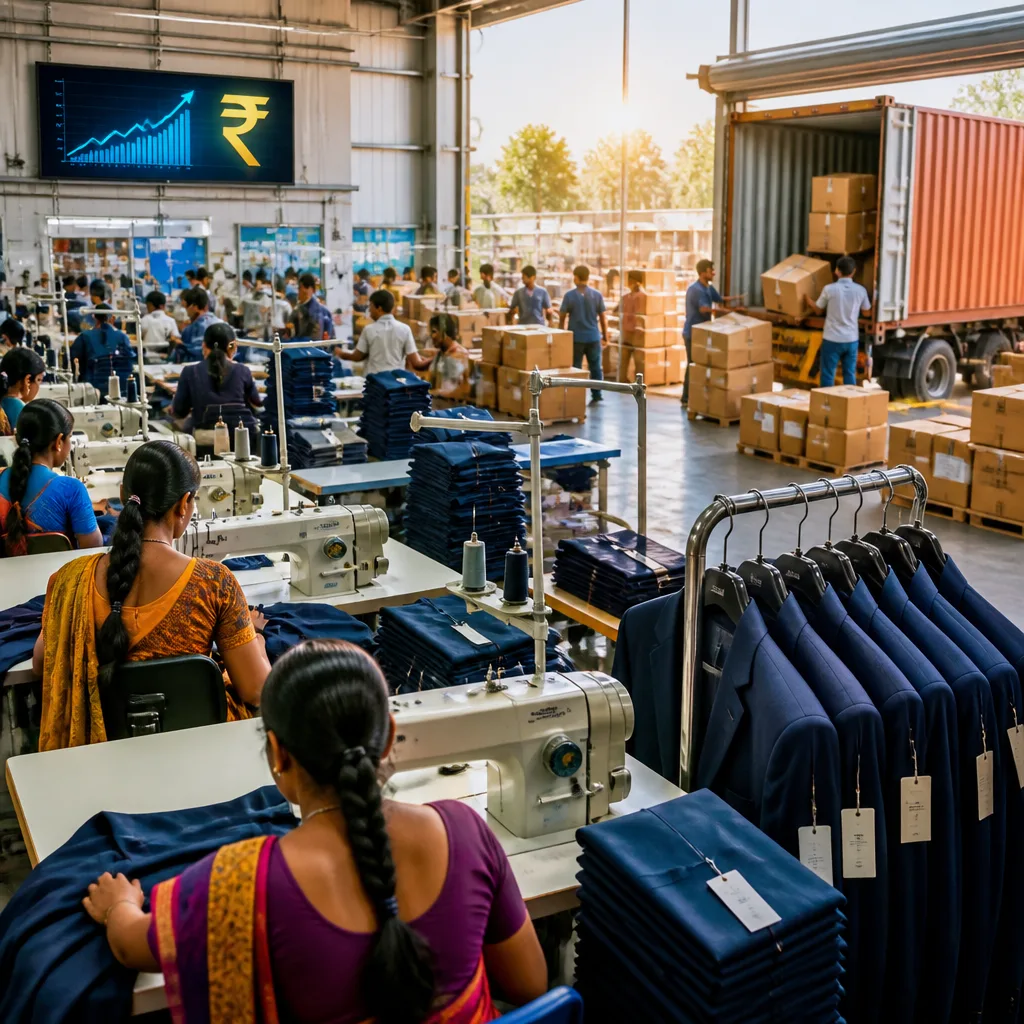
Raymond Lifestyle Limited on Monday reported a steady first-quarter performance for fiscal 2027, with consolidated income rising 6 per cent year-on-year to ₹1,560 crore and EBITDA improving 11 per cent to ₹135 crore. The company's garmenting arm delivered a sharp recovery, while the textile and branded apparel segments showed mixed results.
Key financials and segment trends
The company said EBITDA margin expanded to 8.6% from 8.2% a year earlier, supported by premiumisation in domestic business and a rebound in export demand for garments. Despite the EBITDA improvement, Raymond recorded a pre-tax loss (before exceptional items) of ₹38 crore, larger than the ₹25 crore pre-tax loss in the year-ago quarter.
Management highlighted the following segment outcomes for Q1 FY27:
- Garmenting: Revenue rose by 50% to ₹296 crore (from ₹197 crore). The division returned to profitability with EBITDA of ₹22 crore, compared with a loss of ₹8 crore a year earlier.
- Branded textiles: Revenue dipped slightly to ₹684 crore (from ₹699 crore), while EBITDA fell to ₹95 crore from ₹107 crore, pressured by higher raw material costs and lower operating leverage.
- Branded apparel: Revenue rose 4% to ₹349 crore, powered by double-digit growth in casual wear and strong sales through large-format stores and online channels; EBITDA declined to ₹18 crore from ₹26 crore due to an unfavourable channel mix.
| Segment | Q1 FY27 Revenue | Q1 FY27 EBITDA |
|---|---|---|
| Garmenting | ₹296 crore | ₹22 crore |
| Branded textiles | ₹684 crore | ₹95 crore |
| Branded apparel | ₹349 crore | ₹18 crore |
Drivers and headwinds
The company attributed the strong garmenting performance to execution of a robust order book after recent tariff rationalisation between the US and India, onboarding of new global customers and benefits from the India–UK Free Trade Agreement. These trade developments, coupled with revived global demand for Indian-made apparel, helped the segment recover to profitability.
Conversely, the branded textile business faced margin pressure from inflationary raw material costs and reduced operating leverage, which compressed EBITDA despite near-steady revenues. Branded apparel managed top-line growth led by casual wear and digital and large-format retail channels, but profitability was affected by an unfavourable channel mix.
Raymond also ended the quarter with a net cash position, reflecting a strengthened balance sheet, the company said.
Implications for the sector
The quarter underscores two contrasting dynamics in the domestic apparel value chain: export-led recovery in garment manufacturing and margin strain in upstream textile processing where input cost inflation remains a concern. For a conglomerate like Raymond, which spans fabrics, garments and branded retail, a rebound in exports can offset softness in other verticals and bolster overall cashflows.
Analysts following the sector will watch forthcoming quarters for whether the positive swing in garmenting sustains and whether raw material inflation eases for textiles. Continued traction in casual wear and omnichannel retail will be critical for restoring branded apparel margins.
From a policy perspective, the company’s commentary links recent trade liberalisation moves and free-trade agreements to concrete gains in orders and profitability for manufacturers — an angle likely to interest stakeholders across the apparel export ecosystem.
Overall, Raymond’s Q1 results present a mixed but resilient picture: improving operational earnings and stronger cash position on one hand, and ongoing pre-tax losses and margin pressures in parts of the business on the other.