Reconstruction and livelihoods return to parts of Bhagirathi Valley
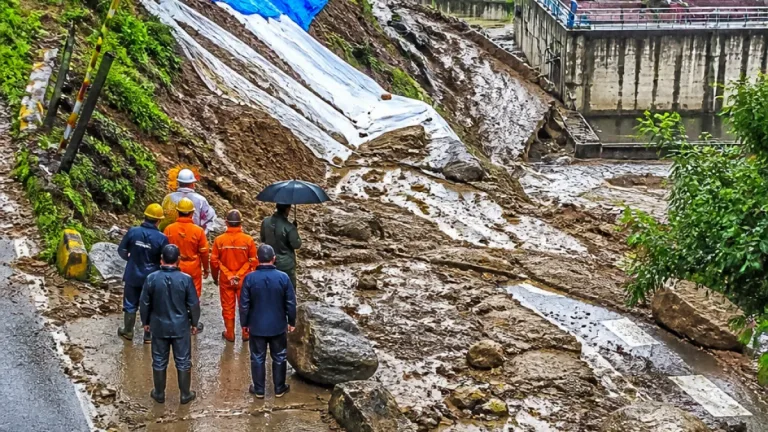
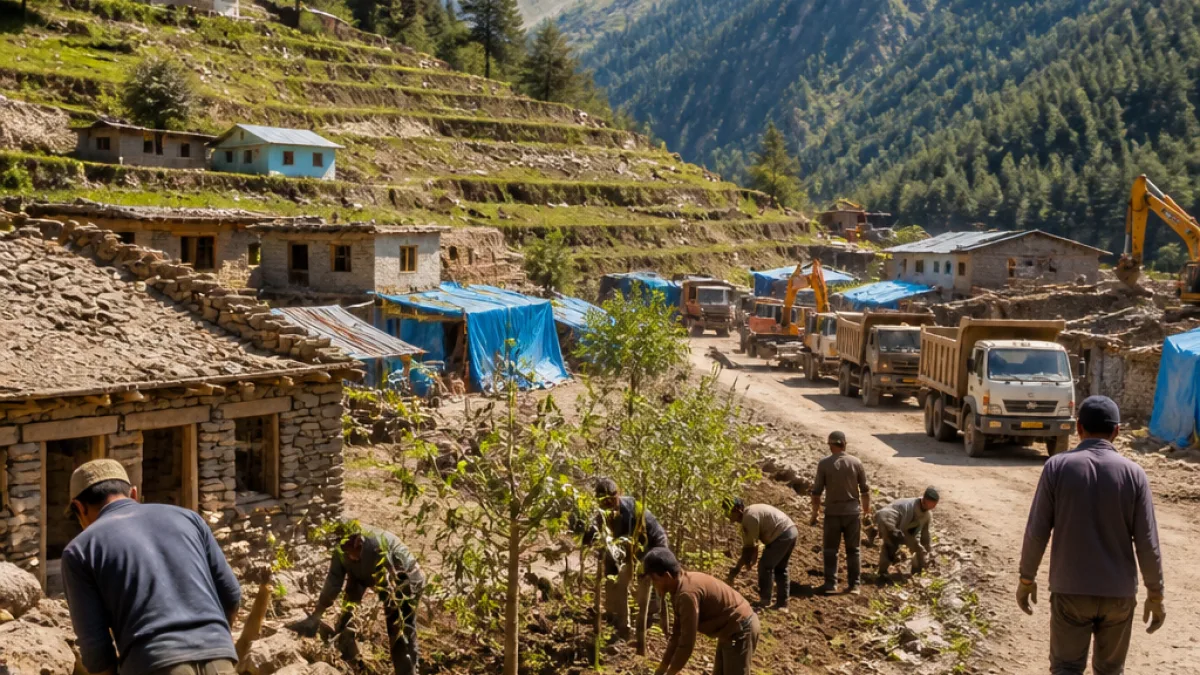
Nearly one year after the catastrophic event of 5 August 2025 that devastated large parts of the Dharali and Bhagirathi Valley, the Uttarakhand government says reconstruction efforts have begun to restore normalcy in affected hamlets. Roads have been reopened, cultivated fields are recovering, orchards are being replanted and local trade is slowly reviving, according to a release from the Chief Minister’s Office.
The government credited a planned transition from immediate relief and rescue to longer-term rehabilitation and redevelopment for the progress. The CMO said Chief Minister Pushkar Singh Dhami personally monitored relief operations, visited affected areas and directed officials to accelerate recovery work without delay.
Authorities report that reconstruction and direct financial assistance across several departments amount to more than ₹16 crore, while relief paid to affected families exceeds ₹17 crore. In total, spending on development, rehabilitation and direct relief has crossed ₹33 crore, the statement added.
Sectoral focus and scope of aid
The expenditure spans multiple government departments involved in restoring livelihoods and infrastructure. The release named the key departments as Animal Husbandry, Irrigation, Horticulture, Agriculture, Rural Development, Energy, Tourism, Public Works and Food & Civil Supplies.
- Agriculture and Horticulture: Efforts to revive orchards and winter crops through inputs and field repair.
- Infrastructure: Road reopening and repair to reconnect remote villages.
- Livestock and livelihoods: Support for displaced or affected households dependent on animal husbandry.
- Social support: Direct cash assistance and relief schemes for families who lost homes, shops or income sources.
Officials said the recovery pattern varied across localities. While some villages reported substantial restoration of services and agricultural activity, others continued to face obstacles due to terrain, accessibility and the scale of damage.
Ground situation in Dharali, Harsil and Bhatwari
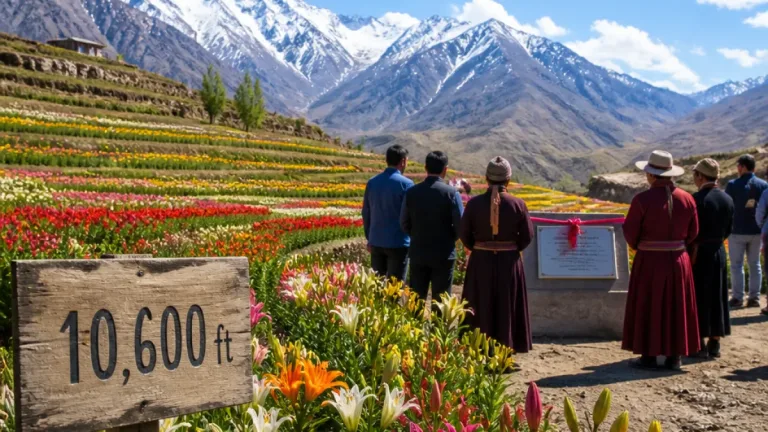
The CMO release noted that Dharali, Harsil and Bhatwari had seen steady improvement over the year. Where roads and irrigation works were prioritised, fields have begun to show green cover again and horticulture plots are being replanted. Shops and market activity, which had been disrupted, are gradually resuming.
Local residents reported a mixture of relief and ongoing concern: relief that visible work has resumed, and concern that full restoration of incomes and housing remains incomplete. The government has emphasised both physical rebuilding and livelihood revival as twin priorities.
Funds and assistance — a brief summary
| Purpose | Amount (₹) |
|---|---|
| Development & rehabilitation across departments | ₹16 crore+ |
| Direct financial assistance to affected families | ₹17 crore+ |
| Total reported spending | ₹33 crore+ |
The release did not provide a detailed breakdown by district or household count for each scheme, nor specific timelines for remaining works. Officials have been asked to continue monitoring implementation and to speed up pending activities.
Officials stress continued oversight
State authorities have framed the work as part of a phased response: initial rescue and relief, followed by rehabilitation of basic services, and then redevelopment aimed at long-term resilience. The Chief Minister’s continued engagement was cited as instrumental in ensuring co-ordination among departments.
Stakeholders in the valley said that while the restoration of infrastructure is crucial, many families remain focused on rebuilding steady incomes through agriculture, horticulture and local tourism. The government’s multi-departmental allocations are intended to address these varied needs.
As recovery moves from emergency response to sustained redevelopment, local administrators and department heads face the challenge of converting committed funds into timely, visible outcomes for residents still grappling with the aftermath of the disaster.