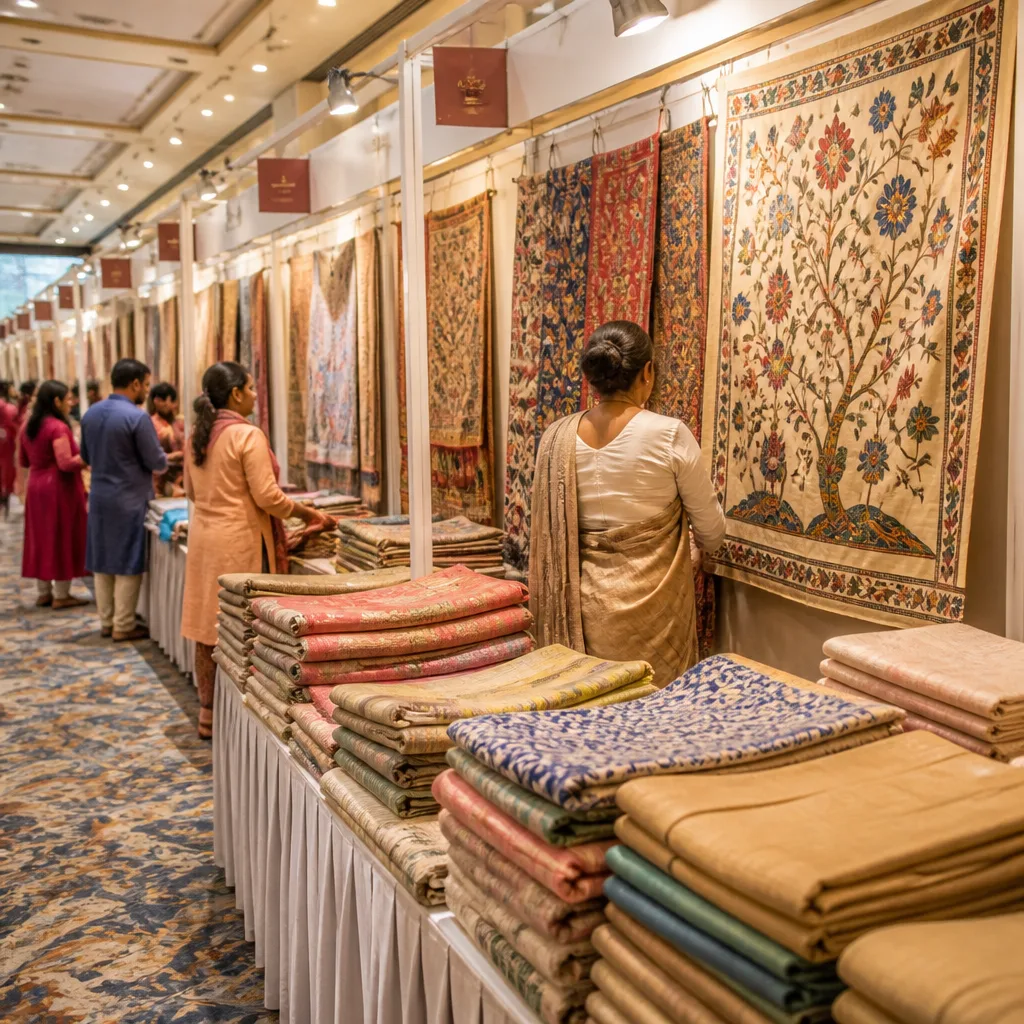
Bharat Tex 2026 brought into sharp relief a recurring argument about India’s textile and craft sectors: the country does not lack skilled hands, but it needs systems to value, scale and sustain those skills. Artisans from several states used the platform to urge a shift in focus from creating new technical programmes to integrating existing heritage craftsmanship into mainstream markets.
Local skills, national potential
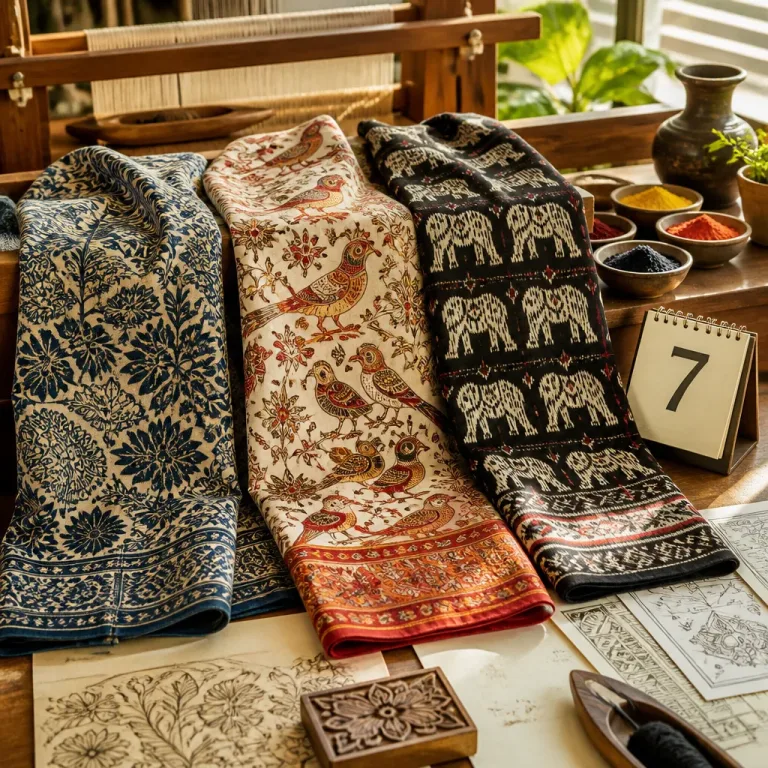
Delegates at the trade event underscored that traditional crafts already underpin livelihoods in many rural and semi-urban pockets. Speakers from Assam, Odisha and Andhra Pradesh — representing Eri silk weaving, Tussar silk production and Kalamkari painting respectively — illustrated how techniques passed down generations continue to survive despite limited market access.
Organisers and participants framed the challenge clearly: while policy conversations increasingly prioritise technology, semiconductors and digital economies, an equally important national asset is the pool of artisanal skills embedded in families and communities. Those skills, they said, require business linkages, market intelligence and infrastructure rather than only training initiatives.
What artisans at the event highlighted
- Traditional crafts are economic assets that generate livelihoods and support rural economies.
- Artisans possess refined, inherited knowledge—examples cited included an Eri silk weaver, a Tussar silk artisan and a Kalamkari artist.
- Access to markets, design support and viable business models is more urgent than the simple provision of additional skill training.
Participants argued that ensuring sustainable incomes for craft communities will make preservation of techniques more durable than protectionist or purely cultural interventions. Without reliable market demand and value chains, even resilient traditions risk decline.
Examples and implications
The event featured individual stories that underscored the mix of continuity and vulnerability in living craft traditions. Artisans highlighted how decades-old practices survive through close mentorship within families, yet face challenges when trying to reach larger markets or adapt to changing consumer preferences.
| Craft | Representative State |
|---|---|
| Eri silk weaving | Assam |
| Tussar silk | Odisha |
| Kalamkari | Andhra Pradesh |
"Opportunity was the missing piece," presenters at the fair said, arguing that talent has never been the problem.
The framing at Bharat Tex 2026 suggests several practical steps for policy-makers, trade bodies and private firms. These include improving market linkages so that artisans can access national and global buyers, offering design and quality-control inputs to meet contemporary demand, and developing financial products suited to micro and cottage production units.
Policy and market pathways
Bringing heritage skills into the mainstream also implies rethinking how success is measured. Instead of counting trainees or short-term workshops, stakeholders recommended tracking sustainable incomes, repeat orders and channels that connect producers directly to consumers. Such metrics, proponents say, would give a clearer picture of whether traditional crafts can become dependable sources of employment and economic resilience.
At the same time, advocates cautioned against treating craft traditions solely as nostalgia or museum pieces. They argued for treating artisans as entrepreneurs who require market intelligence, access to credit, distribution platforms and the ability to collaborate with designers without losing the distinctiveness of their techniques.
The conversation at Bharat Tex 2026 reframed the national debate on skills: rather than seeking more programmes to teach new techniques, India may gain more by unearthing and elevating the skills that already exist beneath the label of "heritage". Doing so, participants said, could strengthen rural economies, preserve irreplaceable knowledge systems and expand the country’s textile footprint on global value chains.