The federal government regularly gathers extensive information about children’s learning, health and economic circumstances, but one potentially influential factor is often omitted from official public reporting: family structure, a new analysis says. The report focuses on education and urges that national reporting include family composition to give policymakers and educators a fuller picture of what shapes student outcomes.
Data collected but not shown on the Nation’s Report Card
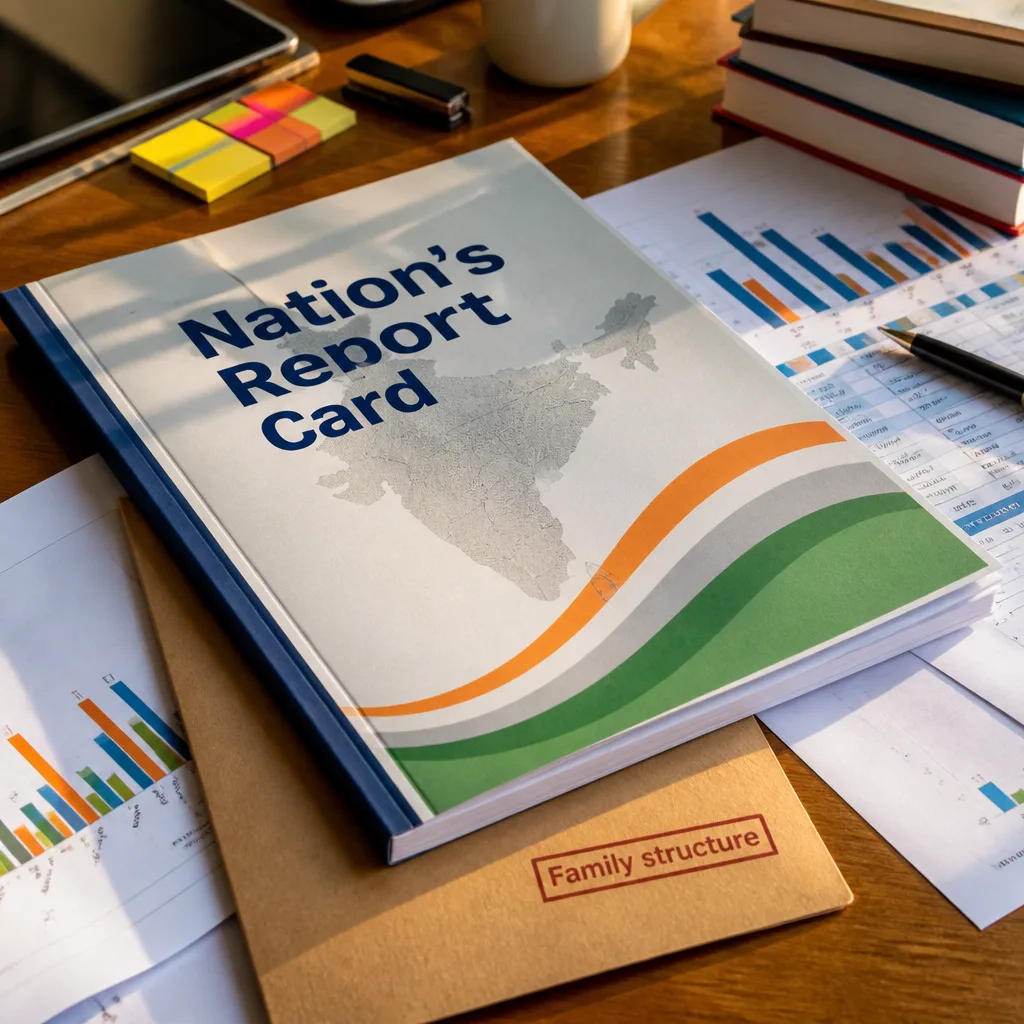
The analysis notes that the National Assessment of Educational Progress (NAEP), administered by the US Department of Education, disaggregates results by race and ethnicity, sex and poverty, among other categories. Yet, although NAEP has been collecting information on family structure since 2013, the results are not routinely reported on the official Nation’s Report Card, the report states.
According to the report’s examination of the National Survey of Children’s Health, differences in outcomes across family types are sizeable. Children raised in what the authors term "intact" families—where biological or adoptive parents are married and together—fare better on several measures than peers living in other household arrangements.
- Children in non-intact homes are about 13 percent less likely to receive A’s and B’s compared with those in intact, married-parent homes.
- They are roughly 47 percent more likely to have parents contacted by schools for behavioural or academic problems.
- They are reported to be more than twice as likely to experience depression.
Family structure compared with race and poverty
The report emphasises that, in the indicators examined, family structure often emerges as a stronger predictor of school problems, academic performance and depression than either race or poverty. The authors argue this gap matters because federal reporting, research and public discussion frequently centre on race and economic disadvantage while overlooking household composition.
| Outcome | Relative difference for children in non-intact homes |
|---|---|
| Likelihood of receiving A’s and B’s | 13% lower |
| Parents contacted for school problems | 47% higher |
| Reported depression | Over 2× as likely |
The authors caution that the findings from this particular analysis are not necessarily universally generalisable. Still, they maintain the results indicate that family structure merits systematic study and should be included among routinely reported demographic breakdowns to inform policy.
Policy and research implications
Including family structure in public reporting could change how stakeholders interpret achievement gaps and design interventions. The report suggests that omitting this variable may limit the ability of decision-makers—policymakers, school leaders, service providers and parents—to identify underlying influences on learning and wellbeing and to craft targeted supports.
Proponents of broader reporting contend that making such data visible would not supplant attention to race or poverty, but would add an additional layer of context that could refine prevention and support strategies in education, health and human services.
At the same time, any move to expand reporting would raise questions about definitions, measurement and appropriate use of family-structure data in policy. The report underscores the need for careful analysis and responsible presentation so that data inform policy without stigmatizing children or families.
As the federal government continues to refine national education reporting, the debate over whether and how to include family composition is likely to shape future conversations about the drivers of student success and the design of responsive interventions.