Kavaratti, Lakshadweep: A former senior central government official has urged the National Commission for Scheduled Tribes (NCST) to examine the implications of the Lakshadweep Town and Country Planning and Development Regulation, 2026, saying the Home Ministry should have sought the commission’s considered views before notifying rules that affect the lives of island residents.
Constitutional consultation invoked
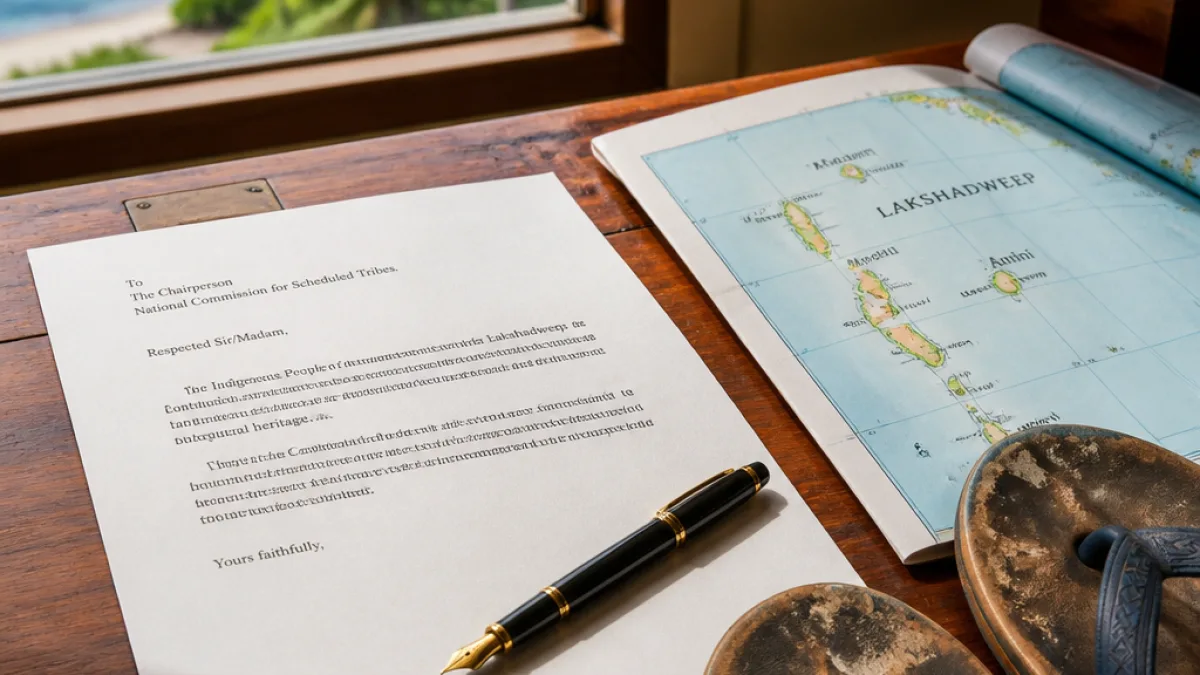
In a letter addressed to NCST Secretary Prashant Kumar Singh, E A S Sarma, former Commissioner (Tribal Welfare), Government of Andhra Pradesh and former Secretary to the Government of India, said consultation with the commission is mandatory under the Constitution where major policy matters affect Scheduled Tribes.
“the Union and every State Government shall consult the Commission on all major policy matters affecting Scheduled Tribes”
The phrase quoted by Sarma is from Article 338A(9) of the Constitution, which he cited to underline the legal expectation of consultation when policy changes concern tribal communities.
Concerns over Regulation 2026
Sarma drew attention to the content of the new Regulation, which he said empowers the local administration to regulate land use and to acquire land for urban development projects, including tourism-related schemes. He questioned whether the Home Ministry had obtained the NCST’s considered view before issuing the Presidential Regulation.
He further expressed concern that adequate consultations with island residents and local Panchayats may not have been held. Sarma argued that, given Lakshadweep is a Union Territory without a legislature, wider consultation with local communities, elected representatives from the UT and Scheduled Tribe legislators in Parliament was especially desirable before implementing major policy changes.
Appeal for NCST intervention
The former official requested NCST to evaluate the Regulation’s implications in consultation with local Panchayats and to take appropriate action where necessary. He highlighted the fact that a majority of Lakshadweep residents are recognised as belonging to Scheduled Tribes and stressed their strong ties to land and local ecology.
- Regulation: Lakshadweep Town and Country Planning and Development Regulation, 2026
- Main powers noted: regulate land use; acquire lands for urban development, including tourism projects
- Complaint: possible absence of prior consultation with the NCST and limited engagement with island residents and Panchayats
Local governance context
The appeal underscores the unique governance environment in Lakshadweep, where Presidential Regulations are used in the absence of a local legislature. Sarma’s note stresses that islanders and their elected village bodies may be the best judges of what constitutes development for their communities, given their cultural and ecological ties to the islands.
| Item | Details |
|---|---|
| Regulation cited | Lakshadweep Town and Country Planning and Development Regulation, 2026 |
| Legal provision referenced | Article 338A(9) — consultation with NCST on major policy matters affecting STs |
| Requested action | NCST evaluation in consultation with local Panchayats and appropriate follow-up |
Implications and next steps
The former official’s letter is a formal appeal for constitutional oversight in a situation where land-use rules and acquisition powers could affect tribal communities and the islands’ environment. If NCST accepts the request, it may seek representations from local bodies and examine whether statutory consultation obligations were observed before the Regulation was notified.
At this stage the letter does not specify particular development projects or sites; it focuses on the procedural requirement of consultation and the potential for significant social and ecological impact arising from regulatory change. Further developments will depend on whether NCST decides to take up the matter and on any responses from the Home Ministry or the Administrator of Lakshadweep.
For island residents and elected Panchayat members, the appeal draws attention to constitutional safeguards and the role of statutory bodies in protecting the interests of Scheduled Tribes when centrally enacted measures alter land and planning regimes.
Reporting from the Union Territory aims to track any official replies or follow-up action by the NCST, the Home Ministry, or local authorities.
Fathima Beevi is a correspondent reporting from Lakshadweep.