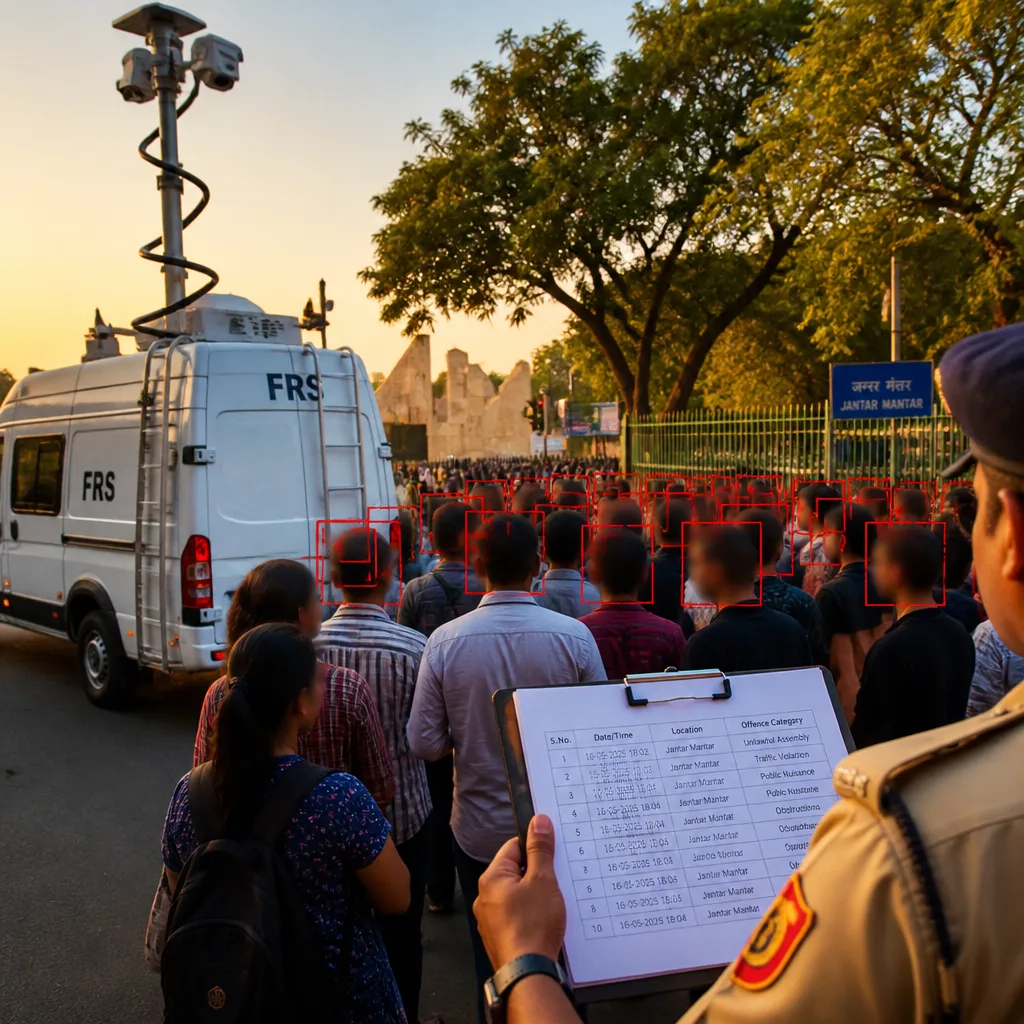
The Delhi Police told Parliament that its facial recognition system (FRS) deployed at the recent anti‑NEET protests at Jantar Mantar identified 2,873 people already listed in police records, a disclosure that raises fresh questions about the use of biometric surveillance at public gatherings and the distinction between criminal records and proven culpability.
What the parliamentary document says
According to a document tabled in Parliament, FRS vans operating between July 20 and July 25 during the demonstrations matched 2,402 individuals against the Crime‑Kundli database and a further 471 against Dossier records, totalling 2,873. The document categorised these matches by offences recorded against the individuals.
| Offence category | Number of individuals |
|---|---|
| Murder | 101 |
| Attempt to murder | 62 |
| Dacoity and robbery | 284 |
| Rape | 61 |
| Arms Act | 229 |
| Narcotics‑related | 67 |
| Various IPC, Bharatiya Nyaya Sanhita and special laws | 1,884 |
The document does not assert that those identified committed offences at the protest. It also does not make clear whether the facial matches resulted in arrests, preventive action or further enquiries.
Legal and procedural implications
Legal experts and civil‑liberties concerns centre on two issues: whether an automated facial match equates to contemporaneous unlawful activity, and what procedural safeguards apply when police deploy FRS at mass gatherings.
"A person is presumed innocent until proven guilty by a court," the document notes.
Police disclosures accompanying the document made no blanket claim that all matched individuals took part in disorder during the Jantar Mantar stir. Officials indicated that any allegation of involvement in protest‑related violence would require separate investigation, the record shows.
- Scope of identification: Matches were drawn from Crime‑Kundli and Dossier records.
- Nature of matches: The document lists historical offences recorded against individuals; it does not equate presence with contemporaneous criminal conduct.
- Next steps: The document does not specify whether matches were followed by arrests or further police action.
The deployment of facial recognition at protests brings procedural questions into focus — including data retention, accuracy thresholds for matches, and recourse for those wrongly identified. The disclosure also underlines a practical problem: criminal antecedents and pending charges are not the same as convictions, and the legal principle of presumption of innocence applies.
Public debate and accountability
The revelation is likely to feed an ongoing debate on the balance between law‑enforcement imperatives and civil liberties. Policymakers, civil‑rights groups and legal practitioners have in recent years questioned the opacity of automated identification tools, their error rates, and the safeguards surrounding sensitive biometric data.
Delhi Police have not publicly detailed the operational parameters of the FRS deployment at Jantar Mantar — such as false‑match rates, human verification steps, or retention periods for images and metadata. The parliamentary document provided the identification counts and offence breakdowns but did not clarify operational outcomes following matches.
Given the sensitivity of using automated identification at public assemblies, the disclosure may prompt demands for clearer rules on the use of facial recognition in policing, independent audits of system accuracy and transparency on follow‑up actions taken after matches are produced.
As the matter develops, any determination of wrongdoing by those identified will depend on separate investigations and, where applicable, criminal proceedings adjudicated by courts.