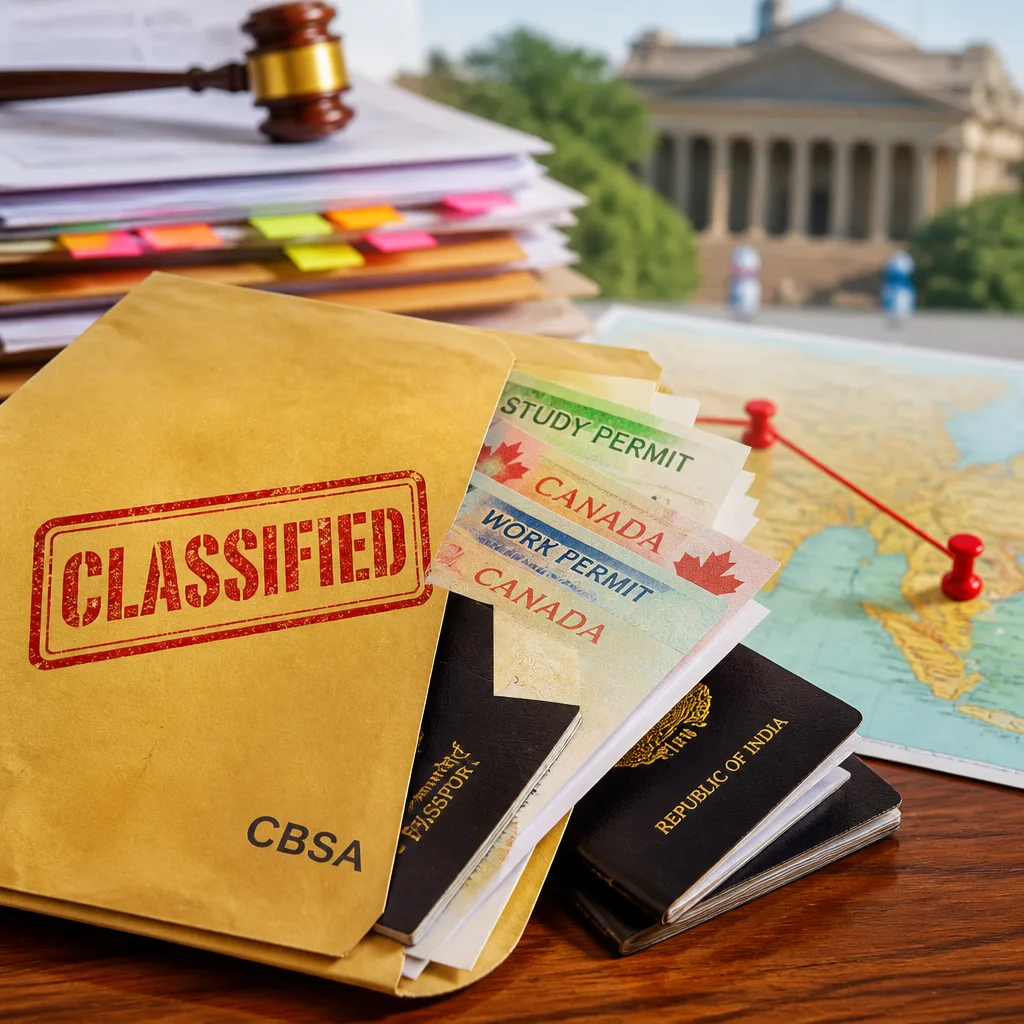
A classified intelligence document produced by the Canada Border Services Agency (CBSA) says the transnational Bishnoi criminal group has leveraged Canada’s immigration programmes — in particular student and work permits — to establish a foothold and expand criminal operations in the country.
Key findings from the CBSA tactical guide
The document, circulated in December 2025 and disclosed in court, was described in reporting by Global News. It identifies a notable operational presence of Bishnoi-linked actors in Canada and highlights a pattern in which individuals who arrived on study or work permits were later implicated in organised crime activities, including extortion and violent offences.
The report flags two worrying trends observed by investigators: the repeated mention of the name Goldy Brar in extortion and organised-crime inquiries, and the involvement of persons present in Canada under study and work authorisations. Brar, identified as a senior lieutenant of Lawrence Bishnoi, is said to have arrived in Canada in 2017 purportedly to study at Thompson Rivers University in Kamloops, British Columbia.
“The sustained expansion of Bishnoi-linked extortions and the involvement of student permit and work permit holders raises significant concerns for CBSA operations.”
The CBSA Intelligence and Investigations Directorate wrote that investigations have increasingly identified Indian foreign nationals on study permits and work permits as participants in organised criminal activities.
Statistical context
The tactical guide contrasts a modest overall national decline in reported extortions with a sharp rise among Indian nationals. According to figures cited in the document:
- Overall extortion reports fell by 10 per cent in 2024.
- By contrast, the number of Indian citizens charged with extortion rose by 47 per cent in the same year.
CBSA analysts linked this spike to a pattern of calls received by South Asian communities in Canada demanding money, which in several cases were traced to suspects with study or work permit status.
| Indicator | Change (2024) |
|---|---|
| Overall extortion reports | -10% |
| Indian citizens charged with extortion | +47% |
Allegations and investigative focus
Global News reported that the CBSA tactical guide states members of the Bishnoi organisation allegedly instigated high-profile murders, a political assassination and an extortion campaign targeting South Asian communities. The report was intended as practical guidance for immigration officers confronting what CBSA described as an "emerging threat".
The document is classified, the reporting said, but a copy filed in court made the assessment public. CBSA warnings centre on the risk that Canada’s foreign student programme, along with work permits, can be misused by organised criminal groups to transportation personnel, establish networks and facilitate criminal operations overseas and within Canada.
Implications and policy questions
If the trends outlined in the tactical guide are borne out by policing outcomes, they raise policy and enforcement questions about screening and oversight of international students and temporary workers, and the resources available to immigration and law-enforcement agencies to detect and disrupt organised-crime infiltration.
The report’s findings also underscore the potential for criminal groups to exploit diaspora communities and migrant pathways, complicating relations between public safety objectives and the legitimate movement of students and workers. The CBSA document urges heightened vigilance by officers dealing with study and work permit applications and enforcement matters.
At the time of publication there was no public response from Canadian federal authorities quoted in the reporting that disclosed the tactical guide. The disclosure has already prompted renewed debate in Canada about the oversight of international study and work-authorisation programmes and their vulnerability to exploitation by organised-crime networks.
Further investigations and prosecutions, as well as policymaking, will determine whether the patterns identified by CBSA amount to isolated incidents or a systemic problem requiring change to immigration screening and community-protection strategies.