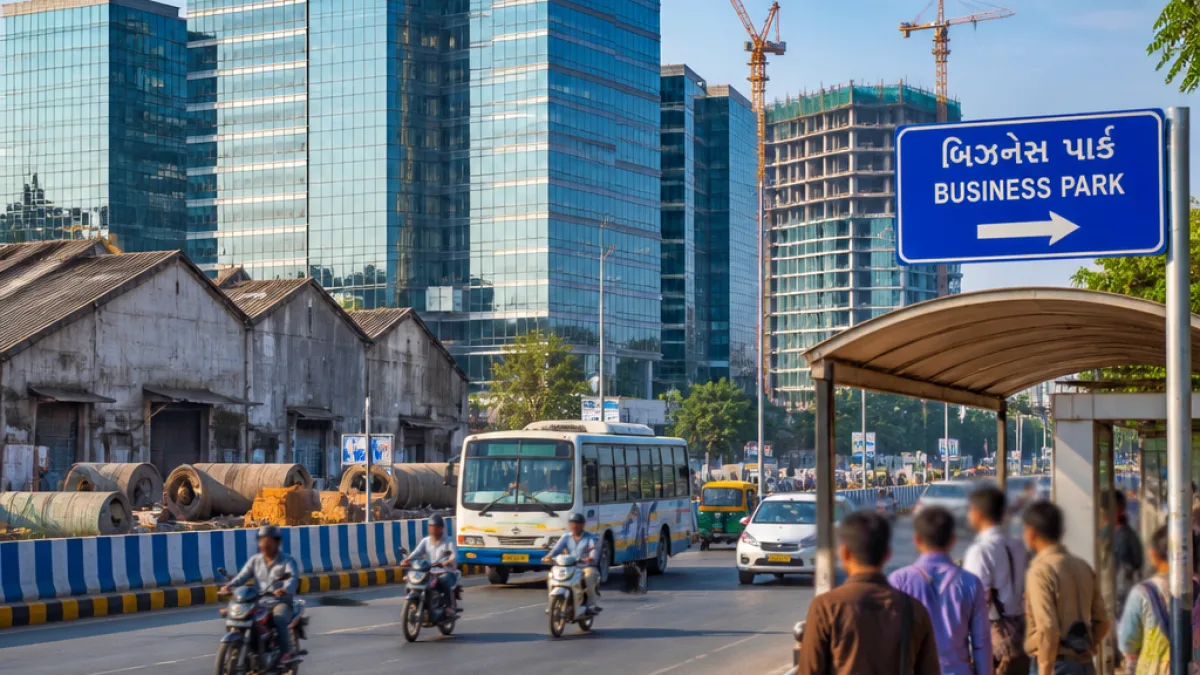
Vadodara has emerged as one of Gujarat’s fast‑growing non‑metro employment centres, according to recent industry indices, reflecting a broader decentralisation of formal white‑collar jobs away from India’s traditional metropolitan strongholds. The shift, tracked by LinkedIn’s Cities on the Rise index and workforce data compiled by Quess Corp, positions Vadodara alongside Surat and Rajkot as key contributors to the state’s recruitment momentum.
Gujarat’s non‑metro surge
LinkedIn’s index, which measures hiring velocity and professional migration across emerging urban markets, lists three Gujarat cities among the top ten non‑metro job markets nationally: Surat at national rank three, Vadodara at four and Rajkot among the state’s top performers. These rankings highlight the diversification of local economic bases — with Vadodara leveraging its engineering, chemical and machinery manufacturing corridors to attract technology consulting and Global Capability Centre (GCC) investments.
Complementing LinkedIn’s findings, analysis by Quess Corp — based on a study of over 4.8 lakh formal workers — indicates a structural realignment of India’s payroll‑linked workforce. As the study puts it:
"nearly 70 per cent of India’s payroll‑linked workforce is now based outside tier‑1 metropolitan cities."
The Quess data also point to significant penetration of tier‑3 cities, which currently command roughly 40 per cent of the payroll‑linked workforce sampled, underscoring the depth of demand for formal jobs beyond the metros.
Why Vadodara is attractive to employers
- Industrial base: Established heavy engineering, chemical and machinery clusters provide a talent pool and supplier ecosystem attractive to GCCs and professional services.
- Cost and logistics: Lower real estate and operational costs compared with tier‑1 cities, combined with improving connectivity, make Vadodara a cost‑effective location for companies expanding operations.
- Skill availability: A steady supply of technically trained graduates and mid‑level engineering talent supports roles in consulting, IT‑enabled services and operations.
Local consequences and opportunities
For Vadodara residents and policymakers, the reframing of corporate geography offers both opportunities and governance challenges. Increased hiring in non‑metro centres can raise household incomes, broaden the tax base and accelerate demand for high‑quality urban services — from public transport to affordable housing and digital infrastructure. However, the pace of private investment often outstrips municipal capacity to provide civic amenities and skilled workforce development at scale.
Municipal planners and industry stakeholders in Vadodara will need to coordinate on vocational training, land use and transport planning to ensure that recruitment gains translate into sustained local prosperity. For employers, the city’s existing industrial clusters lower onboarding friction for manufacturing‑linked services and GCCs, but competition for mid‑management talent may intensify as more firms target the same labour pool.
| City | National rank (LinkedIn) | Key strengths |
|---|---|---|
| Surat | #3 | Diversified from diamonds and textiles into tech, logistics and real estate |
| Vadodara | #4 | Heavy engineering, chemicals, machinery; rising GCC and consulting interest |
| Rajkot | Top non‑metro | Supply‑chain node boosted by infrastructure upgrades |
Statewide, Ahmedabad continues to court cost‑sensitive GCCs and IT operations by offering sizeable talent pools at lower operating overheads than legacy tech hubs. The combined effect for Gujarat is heightened competitiveness for inward investment, especially from firms seeking to optimise costs without sacrificing access to skilled personnel.
For Vadodara's workforce, the immediate implications are clearer: expanded career options in professional services, consulting and corporate operations, alongside continued demand in traditional manufacturing. The challenge for city authorities will be to match this demand with adequate urban services and targeted skill development so that employment growth is both inclusive and sustainable.
Reporting from Vadodara.