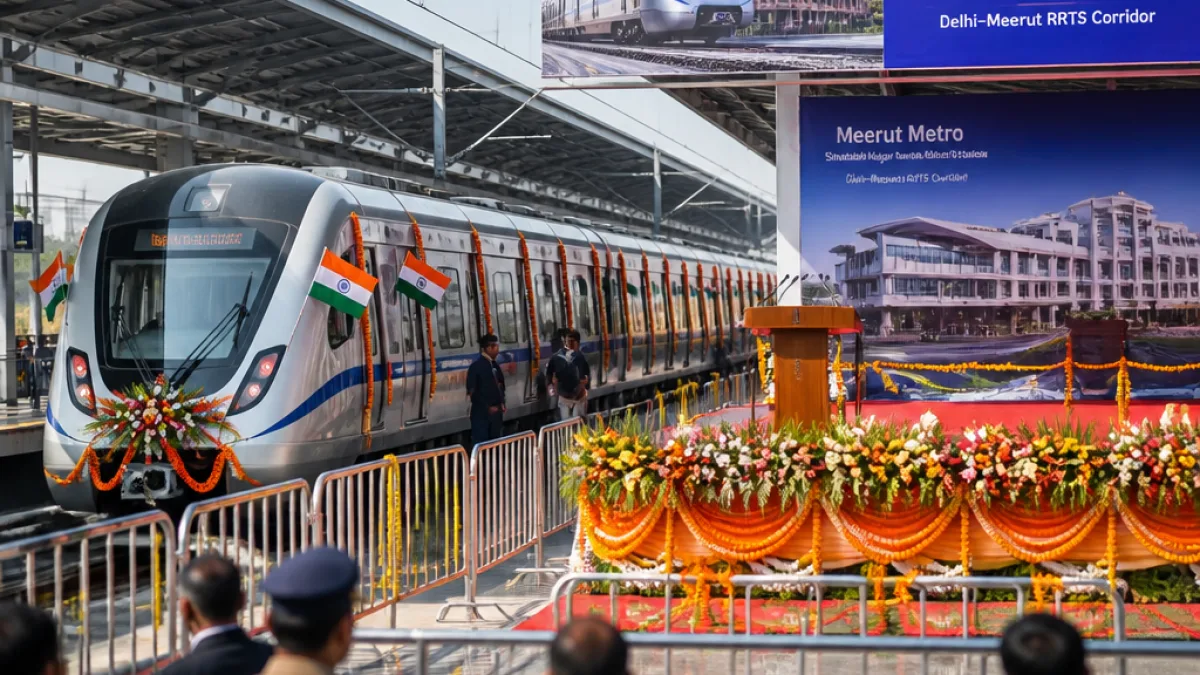
Meerut, Uttar Pradesh — Prime Minister Narendra Modi is scheduled to flag off the Meerut Metro and the Namo Bharat Regional Rapid Transit System (RRTS) at Shatabdi Nagar Namo Bharat Station in Meerut today afternoon, officials said.
What is being inaugurated
The ceremony will include the commissioning of the remaining sections of the Delhi–Meerut Namo Bharat corridor and the launch of Metro services on the same infrastructure between Meerut South and Modipuram. After the formal inauguration, the Prime Minister will undertake a ride to Meerut South Station. Authorities say the event will also include the dedication to the nation of various development projects in Meerut valued at about ₹12,930 crore.
- Entire Delhi–Meerut Namo Bharat corridor (82 km) to be dedicated to the nation.
- New sections being inaugurated: 5 km (Sarai Kale Khan–New Ashok Nagar, Delhi) and 21 km (Meerut South–Modipuram, Uttar Pradesh).
- Meerut Metro services to run between Meerut South and Modipuram using the same track and stations as Namo Bharat.
Speeds, travel time and integration
Officials described Namo Bharat as a high‑speed regional system with a design speed of 180 km/h. Meerut Metro will be operated as an intra‑city service on the shared infrastructure with a maximum operational speed of around 120 km/h, and is expected to cover the full stretch in about 30 minutes including scheduled stops.
| System | Length/Section | Max Speed | Key Role |
|---|---|---|---|
| Namo Bharat (Delhi–Meerut) | 82 km (total) | 180 km/h (design) | High‑speed regional link |
| New inaugurated sections | 5 km (Delhi), 21 km (UP) | — | Completes corridor |
| Meerut Metro (shared) | Meerut South–Modipuram | ~120 km/h (operational) | Intra‑city rapid service |
Local significance and expected impact
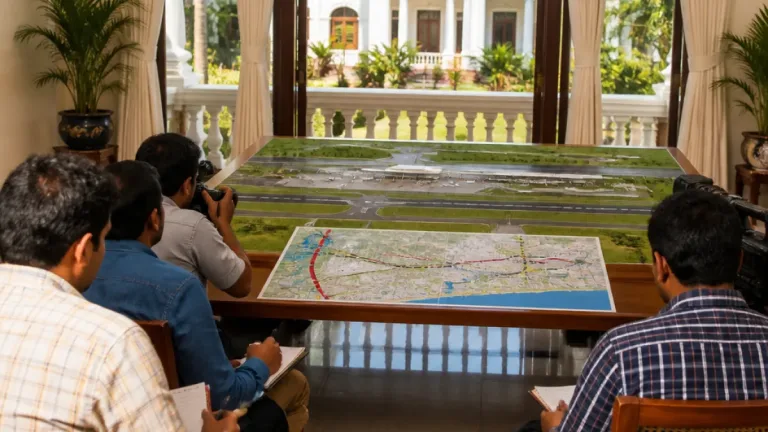
The joint operation of a regional rapid transit system and a metro service on the same infrastructure is being presented by authorities as a first‑of‑its‑kind initiative in India, aiming to provide fast intercity links while simultaneously improving intra‑city movement. The corridor will connect Meerut with key urban centres including Sahibabad, Ghaziabad and Modinagar, and will originate at Sarai Kale Khan in Delhi.
"India's first Regional Rapid Transit System"
For Meerut commuters, the operational integration promises a substantial reduction in travel time to Delhi and neighbouring towns. Officials contend that the combined arrangement will enhance daily commuting options for workers, students and traders while easing vehicular congestion on highways and arterial roads.
Operational and administrative considerations
Bringing high‑speed services into regular urban use will require coordinated timetabling, station management and safety oversight between agencies responsible for regional and metro operations. Local transport planners will also have to address first‑ and last‑mile connectivity to ensure travellers can access stations across Meerut’s expanding urban area.
The event is expected to draw senior central and state officials and will be accompanied by public addresses. The inauguration of the remaining corridor segments and the start of Meerut Metro services mark a major milestone in the region’s transport infrastructure development, and local authorities have said they will issue detailed operational schedules and guidance for passengers in the coming days.
Security, traffic management and crowd control measures around Shatabdi Nagar and along the route have been coordinated between city police and district administration ahead of the Prime Minister’s programme.
Depending on the published schedule and fares, the corridor could reshape commuting patterns across Meerut and neighbouring towns, potentially affecting property values, commercial activity near stations and the modal share of public transport in the region.