
The Karnataka government on Saturday announced the constitution of a high-level committee to review the proposed Bidadi Township, officially referred to as the Greater Bengaluru Integrated Suburb, amid growing protests by farmers, villagers and political parties over land acquisition plans.
Panel, mandate and timeline
The four-member panel is headed by retired High Court judge Justice Guhanathan Narendar. Other members include former Chief Secretary S.V. Ranganath, retired Additional Chief Secretary S.R. Umashankar and retired IAS officer Prasanna Kumar. The Chief Minister's Office (CMO) has asked the committee to submit its findings within 30 days, a timeline that precedes the assembly session beginning on 13 August.
| Member | Previous post |
|---|---|
| Justice Guhanathan Narendar | Retired High Court judge |
| S.V. Ranganath | Retired Chief Secretary |
| S.R. Umashankar | Retired Additional Chief Secretary |
| Prasanna Kumar | Retired IAS officer |
The CMO statement said the panel will examine the project from legal, humanitarian and developmental perspectives. It added that public feedback and stakeholder consultations would be taken into account to ensure the project is implemented in a people-friendly manner.
"The government has already clarified that it will give due consideration to public advice, suggestions, and opinions to implement the project in a people-friendly manner. Respecting the aspirations of the people, taking everyone into confidence, and shaping this project even better is the government's intent, and in this backdrop, the committee has been formed," the CMO said in a post on X.
Reasons for review and local response
The review follows intensified opposition on multiple fronts. Farmers and residents around Bidadi have staged demonstrations against what they say are plans for land acquisition related to the AI-enabled township proposal. Political parties in opposition, including the BJP and the Janata Dal (Secular), have indicated they will raise the matter when the Legislature meets next week.
The CMO reiterated the Chief Minister's assurance that land will not be acquired by force. The panel's formation appears aimed at addressing these assurances with a formal assessment and to provide the government with recommendations that could inform its actions during the assembly session.
Project history and current iteration
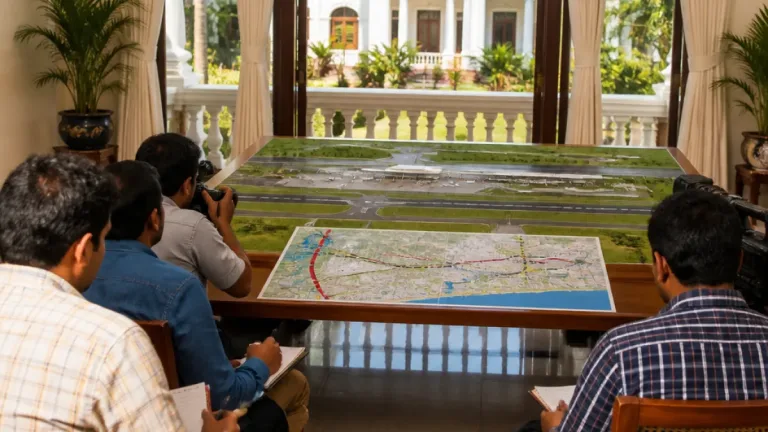
The integrated suburb concept near Bengaluru was first floated in 2006 but remained on hold for several years. The state government has since revived the plan in a revamped form that is being promoted as an AI-powered township capable of accommodating residential, commercial and infrastructural growth around the rapidly expanding metropolis.
Officials have previously framed the proposal as part of a strategy to manage Bengaluru's urban sprawl and create planned satellite townships. Critics, however, have raised questions over land-use, displacement and the consultation process with affected communities.
Potential outcomes and next steps
Depending on the committee's assessment, the government could opt to proceed with modified plans, initiate fresh consultations, or suspend certain elements of the project. The 30-day deadline means the committee's report will be available soon after the Legislature convenes, allowing both the government and opposition to cite its recommendations in ensuing debates.
Officials have not disclosed the exact terms of reference for the probe beyond the broad legal, humanitarian and developmental parameters. The CMO statement indicated that the government intends to "shape this project even better" by incorporating public suggestions.
- Panel to submit findings within 30 days.
- Assembly session begins on 13 August; opposition set to raise the issue.
- Government maintains there will be no forcible land acquisition.
The announcement is likely to draw scrutiny from farmers' unions, local elected representatives and environmental groups, all of which have an interest in how the review weighs competing development and livelihood concerns. The Karnataka government will also face political pressure from parties that have criticised the plan and questioned past land-related projects in the region.
As the committee begins its work, stakeholders in and around Bidadi, as well as observers in Bengaluru, will be watching for details on consultation mechanisms and any interim steps the state may take to allay immediate tensions on the ground.